
Quick answer
A 10-day Sri Lanka itinerary with the Kandy Esala Perahera uses the May to September version of the route: three nights at Sigiriya for the Minneriya elephant Gathering, two or three on the east coast at Trincomalee, then two nights in Kandy timed for the final processions, followed by the train to Ella. The Perahera usually falls in July or August, with dates that shift each year with the lunar calendar. Book Kandy hotels and reserved procession seats as soon as dates are announced.
Key takeaways
- The Kandy Esala Perahera usually takes place in July or August over roughly ten nights, with dates set each year by the lunar calendar.
- The final nights, culminating in the Randoli Perahera, are the largest and most spectacular processions.
- Kandy hotels fill early and often charge premium rates during the festival.
- Reserved seats along the procession route are sold in advance and are far more comfortable than standing.
- Because the festival falls in the south-west monsoon, the route uses the east coast rather than Mirissa.
What the Kandy Esala Perahera is
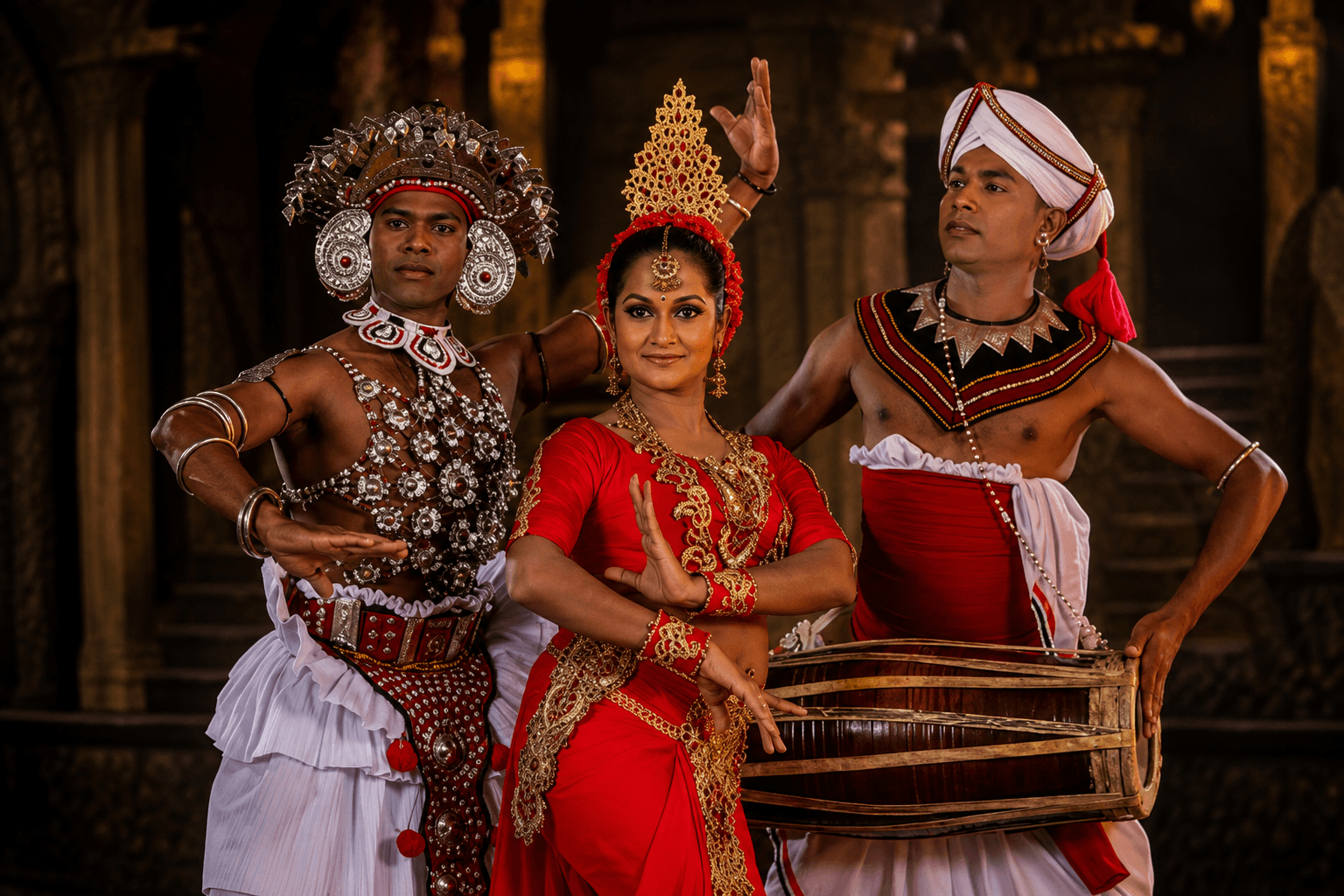
The Kandy Esala Perahera is a Buddhist festival honouring the Sacred Tooth Relic, held in the month of Esala, which usually falls in July or August. Over roughly ten nights, processions leave the Temple of the Sacred Tooth Relic and wind through the streets of Kandy, growing larger each night.
The processions include Kandyan dancers and drummers, whip-crackers, fire-dancers, and many elephants in illuminated costumes, one of which carries a replica relic casket. The final nights, known as the Randoli Perahera, are the grandest, and a daytime water-cutting ceremony at the Mahaweli River closes the festival.
The Perahera 10-day route, day by day
The Perahera version of the 10-day Sri Lanka itinerary is the summer route with Kandy extended to two nights and placed on the festival's final nights. Because the Perahera dates move every year, the order of the first half may need to shift to land Kandy on the right evenings.
Night counts: Sigiriya three, Trincomalee or Nilaveli two, Kandy two, Ella two.
- →Days 1 to 3: airport to Sigiriya; the rock and Dambulla; Polonnaruwa and the Minneriya Gathering.
- →Days 4 to 5: Trincomalee or Nilaveli; Pigeon Island and the beach.
- →Day 6: Trincomalee to Kandy, roughly four to four and a half hours; the evening Perahera.
- →Day 7: Kandy by day; the second evening Perahera.
- →Day 8: the train from Kandy to Ella.
- →Day 9: Nine Arch Bridge and Little Adam's Peak at dawn; a slow day in Ella.
- →Day 10: Ella to the airport, roughly five and a half to six and a half hours.
Seats, hotels and crowds in Kandy
Kandy fills up completely during the Perahera, and hotels often raise prices well above normal rates, with minimum stays on the final nights. Booking as soon as the festival dates are announced, often several months ahead, is the only reliable way to stay in or near the city.
Reserved seats along the procession route are sold in advance through hotels, shops and agents, and range from simple chairs on the pavement to covered stands and balconies. They are strongly recommended, since standing crowds are dense and the processions last several hours.
- →Book Kandy accommodation as soon as dates are confirmed.
- →Buy reserved seats in advance; confirm the exact location and whether it is covered.
- →Arrive at your seat well before the procession starts; roads close early.
Watching the Perahera respectfully
The Perahera is a religious procession first and a spectacle second. Dress modestly, in clothing covering shoulders and knees, stay seated when asked, and do not use flash photography on the elephants or dancers.
The festival's use of elephants is a subject of growing debate, and some visitors are uncomfortable with it. Watching from a seat rather than pressing close to the animals, and avoiding any venue that offers contact with the festival elephants, keeps your visit as respectful as possible.
Why the rest of the route moves east
The Perahera falls during the south-west monsoon, when Mirissa and the south coast are rough and whale watching there largely stops, and Yala is heading towards its usual closure between roughly September and October. The summer version of the route solves both.
The east coast around Trincomalee and Nilaveli is dry and calm in these months, with snorkelling at Pigeon Island, and the Cultural Triangle has its finest wildlife event: the Minneriya Gathering, peaking roughly July to September, when dozens of elephants graze on the reservoir bed.
- →Beach: Trincomalee or Nilaveli instead of Mirissa.
- →Wildlife: the Minneriya Gathering instead of Yala.
- →Hills: Ella as normal; showers more likely around Nuwara Eliya.
Planning a Perahera trip
Wait for the official Perahera dates, then fix Kandy first and build the route around it. Book the train from Kandy to Ella for the morning after the final procession you plan to watch.
Lankan Stays & Trails arranges reserved seating and Kandy hotels for festival trips, and our Kandy Esala Perahera and Cultural Treasures tour is built entirely around the festival. The site's Perahera guide covers its history and each night of the procession.
Frequently asked questions
When is the Kandy Esala Perahera?
It usually takes place in July or August over roughly ten nights, ending around the Esala full moon. The exact dates shift each year with the lunar calendar and are announced by the Temple of the Sacred Tooth Relic, so confirm them before booking.
Which night of the Kandy Perahera is best?
The final nights, known as the Randoli Perahera, are the largest and most spectacular, with the most elephants and performers. They are also the busiest and most expensive, so many visitors watch one of the earlier nights and one of the Randoli nights.
Do I need tickets for the Kandy Perahera?
The procession is free to watch from the street, but reserved seats along the route are sold in advance and are strongly recommended. Standing crowds are dense and the procession lasts several hours. Confirm the seat's location and whether it is covered.
How many nights should I stay in Kandy for the Perahera?
Two nights lets you watch two processions, ideally including one of the final Randoli nights, and see Kandy by day in between. On a 10-day route, that is the right balance between the festival and the rest of the island.
Is it hard to find hotels in Kandy during the Perahera?
Yes. Kandy fills completely, and prices rise well above normal, often with minimum stays on the final nights. Book as soon as the dates are announced, or stay in the hills outside the city with a driver to bring you in.
Which beach should I visit during the Perahera season?
The east coast. The Perahera falls in the south-west monsoon, so Mirissa and the south coast are rough, while Trincomalee, Nilaveli and Pasikudah are dry and calm. The 10-day Perahera route uses Trincomalee or Nilaveli for two nights.