
Quick answer
A 10-day February route in Sri Lanka: night 1 in Negombo, nights 2 and 3 in Sigiriya for the rock, Dambulla, Polonnaruwa and an elephant safari, nights 4 and 5 in Kandy with the Temple of the Tooth, night 6 in Nuwara Eliya or Haputale for Horton Plains, night 7 in Ella after the train, night 8 near Yala or Udawalawe for a safari, and nights 9 and 10 on the south coast for whales, Galle and beaches. Book trains and hotels early.
Key takeaways
- Ten days covers the classic loop comfortably in February.
- The route runs from the Cultural Triangle to the hills and the south coast.
- The Kandy to Ella train is the centrepiece; book seats when they open.
- A safari at Yala or Udawalawe links the hills to the coast.
- The south coast offers whales, Galle and beaches to finish.
Why February suits the classic loop
The classic loop crosses several climate zones, and in most months at least one of them is wet. In February all of them are dry: the Cultural Triangle, Kandy, the hill country, the dry-zone parks and the south coast. That makes it the best month to follow the route without compromise.
Clear mornings in the hills give the best views from the train and at Horton Plains. Calm seas on the south coast suit whale watching and swimming. The parks are drying out, improving wildlife viewing.
The trade-off is crowds. February is peak season, so book trains, small hotels and safari jeeps early.
- →All regions dry at once.
- →Clear hill views and calm seas.
- →Peak season: book early.
Days 1 to 3: arrival and the Cultural Triangle
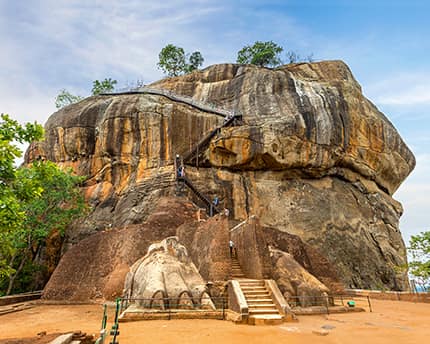
Day 1: arrive and rest in Negombo. Day 2: drive to Sigiriya, about four hours, visiting the Dambulla cave temples in the late afternoon. Day 3: climb Sigiriya at opening time, or Pidurangala at sunrise, then visit Polonnaruwa or rest, and join an afternoon elephant safari at Minneriya, Kaudulla or Hurulu.
February's heat in the Cultural Triangle means early starts and long lunch breaks. Hotels with pools make the middle of the day comfortable.
Two nights in Sigiriya allows the rock, Dambulla, a safari and either Polonnaruwa or a village experience without rushing.
- →Day 1: Negombo.
- →Day 2: Dambulla.
- →Day 3: Sigiriya and safari.
Days 4 to 6: Kandy and the high hills
Day 4: drive to Kandy, about two and a half hours, with a spice garden stop. Visit the Temple of the Tooth at the evening puja. Day 5: explore the Peradeniya gardens and a viewpoint, or take a half-day trip to the temples west of the city.
Day 6: take the morning train from Kandy to Nanu Oya, about four hours, and continue to Nuwara Eliya, or drive to Haputale. In the afternoon, visit a tea factory.
The train through the tea country is one of the highlights of the trip, and February gives the clearest views. Reserved seats open about 30 days ahead and sell out quickly.
- →Days 4 and 5: Kandy.
- →Day 6: train to Nuwara Eliya or Haputale.
- →Book train seats about 30 days ahead.
Days 7 and 8: Horton Plains, Ella and safari
Day 7: walk Horton Plains to World's End at opening time, then take the train or drive to Ella. Walk Little Adam's Peak at sunset. Day 8: visit the Nine Arch Bridge in the morning, then drive to Yala or Udawalawe, about two hours, for an afternoon safari.
Yala offers the best chance of leopards; Udawalawe the most reliable elephants. Both are good in February. Stay near the park.
This section is the busiest of the route, so keep the evenings relaxed.
- →Day 7: Horton Plains and Ella.
- →Day 8: Ella and safari.
- →Evening: rest near the park.
Days 9 and 10: the south coast
Day 9: drive to Mirissa or Weligama, about two to three hours, and spend the afternoon on the beach. Day 10: whale watching in the morning, then drive to Galle Fort for sunset on the ramparts.
Day 11: drive to the airport, about two hours by expressway, for an afternoon or evening flight. If your flight is early, spend the last night in Negombo or Bentota.
Adding one or two beach nights at the end, in Tangalle or Bentota, is the easiest way to make the trip more relaxing.
- →Day 9: beach.
- →Day 10: whales and Galle.
- →Day 11: departure.
Tips for the route
Book the train on the day reservations open, about 30 days ahead, and plan the rest of the hill country around it. Book small hotels three to six months ahead.
A private driver makes the route much easier, meeting you at the train station and carrying luggage between stops.
The planners at Lankan Stays & Trails often run this loop in February, adjusting it for pace, interests and flight times.
- →Book the train when it opens.
- →Book hotels early.
- →Use a private driver.
Frequently asked questions
Is 10 days enough for Sri Lanka in February?
Yes. Ten days covers the classic loop of the Cultural Triangle, Kandy, the hill country, a safari and the south coast. February's dry weather across all regions makes it the best month for this route. Add a few beach days if you want a slower pace.
What is the best 10-day route in February?
Start in Negombo, spend two nights in Sigiriya, two in Kandy, one in Nuwara Eliya or Haputale, one in Ella, one near Yala or Udawalawe, and two on the south coast. This follows the weather and includes the train through the hills.
Should I choose Yala or Udawalawe in February?
Yala offers the best chance of leopards but is busier. Udawalawe is the most reliable park for elephants and quieter. Both are good in February. Choose Yala if leopards are a priority and Udawalawe if you prefer elephants and fewer jeeps.
How do I book the Kandy to Ella train?
Reserved seats open about 30 days before travel and sell out quickly in February. Book on the day the window opens. If seats are sold out, try unreserved carriages or a shorter section, such as Nanu Oya to Ella.
Is the route too rushed?
It is full but manageable. If you prefer a slower pace, drop Polonnaruwa or Horton Plains, or extend the trip to 12 to 14 days with extra beach or hill nights. The south coast is the easiest place to add time.
Do I need a driver for 10 days?
A private driver makes the route much easier, handling the roads, meeting you at the train and adjusting plans. Public transport is possible but slow and crowded in February. Most travellers on this route use a driver.