
Quick answer
A 14-day Sri Lanka itinerary for wildlife lovers follows the standard route but spends two nights near Yala instead of one, dropping the Galle Fort night. It adds a birding morning at Bundala, endemic birds and sambar deer on Horton Plains, the Cultural Triangle elephants and blue whales off Mirissa. The nights split as Sigiriya three, Kandy two, Nuwara Eliya one, Ella two, Tissamaharama two and Mirissa three.
Key takeaways
- The wildlife version splits the nights as Sigiriya three, Kandy two, Nuwara Eliya one, Ella two, Tissamaharama two and Mirissa three.
- Two nights near Yala allow dawn and afternoon drives, or a full day in the park.
- Bundala National Park, roughly 30 minutes from Tissamaharama, is one of the island's best wetlands for waterbirds.
- Horton Plains is excellent for endemic highland birds and sambar deer at dawn.
- Every wildlife experience on the route is observation-only, with no riding, feeding or handling.
Why Sri Lanka suits a wildlife fortnight
Sri Lanka's wildlife is remarkably varied for its size: Asian elephants, leopards, sloth bears, blue whales, crocodiles and hundreds of bird species, many of them found nowhere else. A fortnight lets wildlife lovers see many of them in different habitats.
The standard 14-day route already visits the Cultural Triangle parks, Yala and the sea off Mirissa. The wildlife version adds more time where it matters most, and a naturalist's focus throughout.
- →Elephants: the Cultural Triangle parks and Yala.
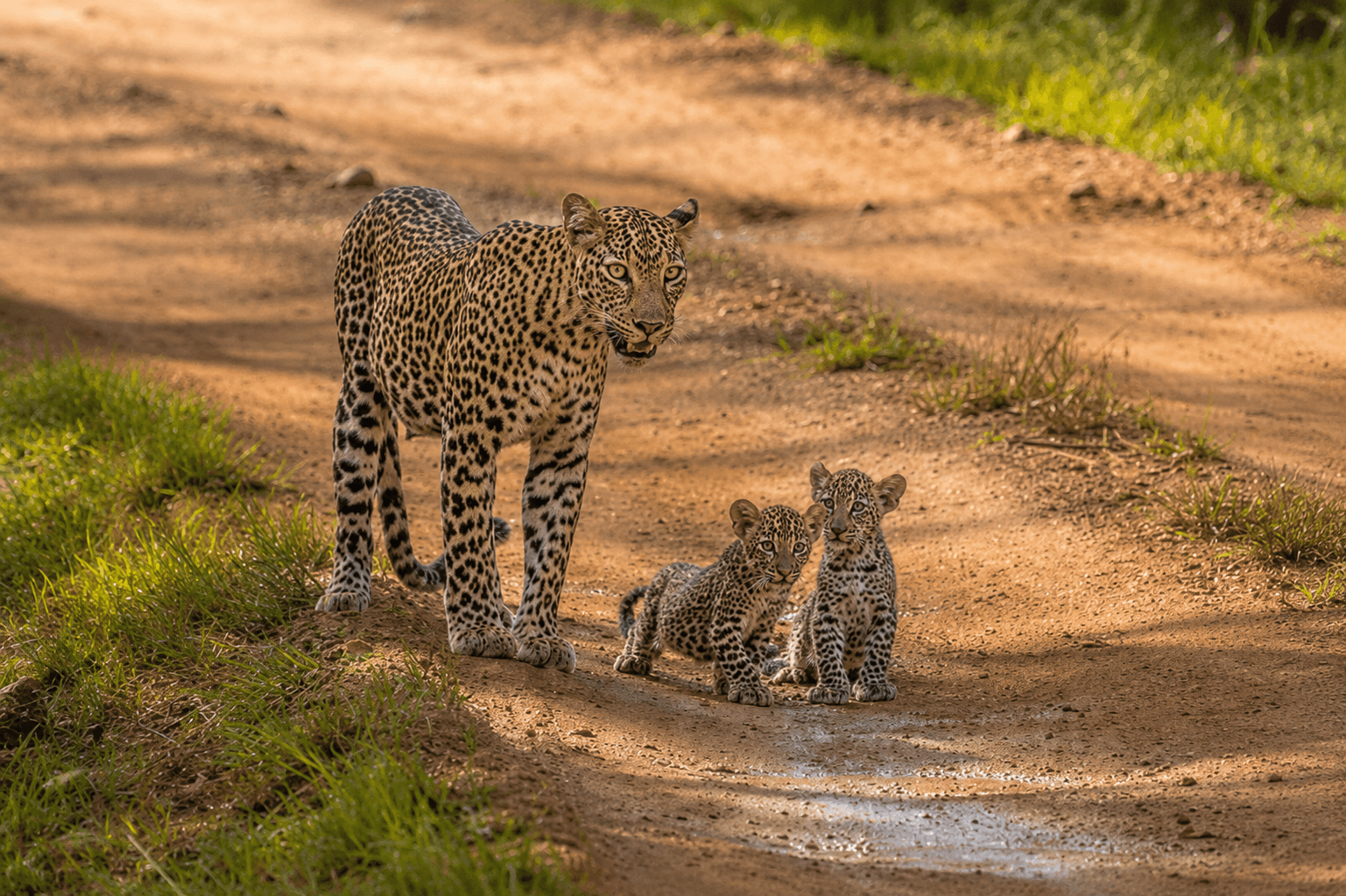
- →Leopards and sloth bears: Yala.
- →Endemic birds: Horton Plains and the hill country.
- →Waterbirds: Bundala.
- →Whales and dolphins: off Mirissa.
The wildlife 14-day route, day by day
The wildlife 14-day Sri Lanka itinerary follows the standard route with a second night near Yala and wildlife-focused choices at each stop.
- →Day 1: Airport to Sigiriya.
- →Day 2: Sigiriya Rock at opening, birds around the tank in the afternoon.
- →Day 3: Polonnaruwa, then an elephant safari at Minneriya, Kaudulla or Hurulu.
- →Days 4 and 5: Kandy, with Udawattakele forest for birds and monkeys.
- →Day 6: Nuwara Eliya, with Victoria Park for birds.
- →Day 7: Horton Plains at dawn for endemic birds and sambar, then the train to Ella.
- →Day 8: Ella.
- →Day 9: Ella to Tissamaharama; an afternoon Yala safari.
- →Day 10: A dawn Yala drive, or a morning at Bundala.
- →Day 11: Drive to Mirissa.
- →Day 12: Whale watching.
- →Day 13: A beach day.
- →Day 14: Galle Fort on the way to the airport.
Two nights near Yala, with Bundala
Two nights near Yala give wildlife lovers the time they need: an afternoon drive on arrival, then a choice on the second day between a dawn drive, a full day with a packed lunch, or a morning at Bundala National Park.
Bundala, roughly 30 minutes from Tissamaharama, is a wetland of lagoons and scrub that is one of Sri Lanka's best birding sites, with flamingos in some seasons, painted storks, pelicans and many waders. It is also quieter than Yala.
- →A full day in Yala: reaches quieter areas and increases leopard chances.
- →A dawn drive in Yala: best for leopards and birds.
- →A morning at Bundala: waterbirds and a calm pace.
Birdwatching on the 14-day route
Sri Lanka has many endemic bird species, and the 14-day route passes several good sites. Horton Plains at dawn is known for highland endemics, and the Cultural Triangle tanks and Bundala are excellent for waterbirds.
Migrant birds arrive roughly from September or October to April, which makes the December to April season especially rich. Binoculars and a local bird guide at key sites transform the experience.
Even travel days add sightings. Painted storks and pelicans gather on roadside tanks in the dry zone, eagles hunt over the scrub near Wellawaya, and the gardens of many hotels have bee-eaters, kingfishers and hornbills at breakfast.
Watching wildlife ethically
Every wildlife experience on this route is observation-only. Choose jeep drivers who keep a respectful distance, switch off engines near animals and do not crowd leopards or elephants. Choose whale-watching operators that do not chase.
Avoid elephant rides, elephant bathing, turtle handling and any attraction offering close contact with wild or captive animals. Responsible choices protect the wildlife that makes the trip special.
- →Choose drivers who keep a respectful distance.
- →Avoid rides, bathing and handling of animals.
- →Choose whale operators that do not chase.
Planning a wildlife fortnight
Book the Yala hotel and jeeps early, and consider a naturalist guide for key days. Bring binoculars, a camera with a long lens if you have one, neutral clothing and a field guide or app.
Lankan Stays & Trails plans wildlife fortnights with experienced trackers and naturalists. The two-park and Sinharaja versions of the route in this series offer further wildlife options.
Frequently asked questions
What is the best wildlife itinerary for Sri Lanka?
For a first trip, a 14-day route with the Cultural Triangle elephant parks, Horton Plains, two nights near Yala with Bundala, and whale watching off Mirissa covers the island's key wildlife. Longer trips can add Wilpattu, Sinharaja or Udawalawe.
How many days should I spend in Yala?
Two nights suits wildlife lovers, allowing an afternoon drive, then a dawn drive or a full day. One night is enough for most first-time visitors. Yala usually closes for part of roughly September to October.
Is Bundala worth visiting?
Yes, for birdwatchers. Bundala National Park, roughly 30 minutes from Tissamaharama, is a wetland known for waterbirds, including painted storks, pelicans and sometimes flamingos. It is quieter than Yala and makes an excellent morning.
Where can I see endemic birds in Sri Lanka?
Horton Plains and the hill country are good for highland endemics, and the Sinharaja rainforest for lowland endemics. A local bird guide greatly improves your chances. Early mornings are best.
When is the best time for wildlife in Sri Lanka?
Roughly February to July for Yala, roughly July to September for the Minneriya Gathering, roughly December to April for whales off Mirissa and roughly September or October to April for migrant birds. The December to April route suits most species well.
Is Sri Lanka good for leopard spotting?
Yes. Yala has one of the highest leopard densities in the world, and Wilpattu is another good park. Sightings are never guaranteed, but two nights near Yala greatly improve the chances.
What should I bring for a wildlife trip to Sri Lanka?
Binoculars, a camera with a long lens if you have one, neutral-coloured clothing, a hat, sunscreen, insect repellent and a field guide or bird app. A dust-proof bag protects gear in safari jeeps.