
Quick answer
A 2-week Sri Lanka plan for food lovers spends one night in Negombo, two at Sigiriya, two in Kandy, one in Nuwara Eliya, two in Ella, one at Tissamaharama, three on the south coast around Mirissa and Galle, and one in Colombo. Each stop has a regional speciality: lagoon seafood, village rice and curry, Kandyan sweets, hill-country tea, a home cooking class, buffalo curd with kitul treacle, sour fish curry, and Colombo's street food at sunset.
Key takeaways
- Rice and curry is Sri Lanka's daily meal, usually rice with four to eight small vegetable, lentil, fish or meat curries and sambols.
- Hoppers, bowl-shaped fermented rice-flour pancakes, are an evening and breakfast food, best eaten straight from the pan.
- Ambul thiyal, a dry, sour fish curry made with goraka, is a speciality of the south coast.
- Buffalo curd with kitul treacle is the signature dessert of the deep south around Tissamaharama.
- Kottu roti, chopped flatbread stir-fried with vegetables, egg or meat, is the island's best-known street food.
The 2-week plan for food lovers at a glance
The 2-week Sri Lanka plan for food lovers follows the standard loop but changes where the nights fall. Negombo opens the trip for its fish market, the Cultural Triangle shrinks to two nights and Colombo closes the fortnight with an evening of street food.
- →Negombo, one night: the fish market at dawn and lagoon seafood.
- →Sigiriya, two nights: a village lunch cooked over a wood fire.
- →Kandy, two nights: the central market and Kandyan sweets.
- →Nuwara Eliya, one night: tea tasting at a working factory.
- →Ella, two nights: a home cooking class.
- →Tissamaharama, one night: curd, treacle and a Yala safari.
- →Mirissa or Galle, three nights: seafood and southern curries.
- →Colombo, one night: street food and a last proper dinner.
Negombo and Sigiriya: sea and village
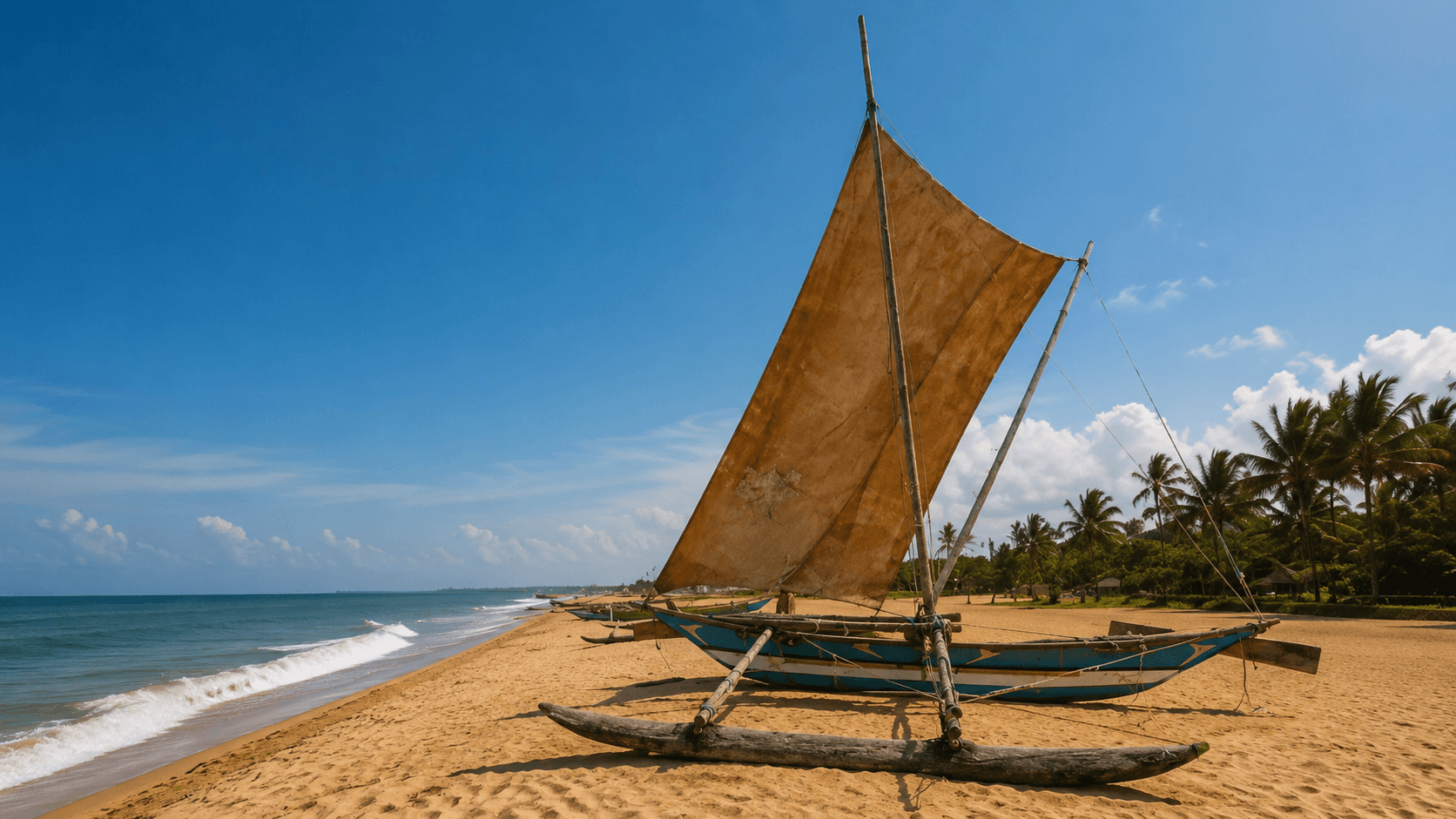
Negombo, roughly 15 to 20 minutes from the airport, has one of the island's largest fish markets. Go soon after sunrise, when the boats land tuna, seer and prawns, and fish is laid out to dry on the sand. Lagoon crab and prawn curry are the things to order that evening.
Near Sigiriya, village families cook rice and curry in clay pots over wood, often served on a lotus leaf. The meal usually includes dhal, a jackfruit or pumpkin curry, a leafy mallung and a fresh coconut sambol. It is the plainest and often the best meal of the trip.
Kandy and the hills: markets, tea and a cooking class
Kandy's central market is the place to see what goes into the curries: curry leaves, pandan, goraka, dried fish, a dozen kinds of banana. The city is also known for sweets made with rice flour, coconut and treacle, such as kavum and kokis, which appear in quantity at New Year.
In the hills, tea is tasted where it is made, and a factory visit explains why a high-grown tea is light and a low-grown one strong. Ella has many small cooking classes run in family kitchens, usually lasting two to three hours, and it is the right place on the route to learn how a curry is built.
- →Spice gardens near Matale are informative but sell at tourist prices; buy spices in a market instead.
- →A cooking class is best booked for the first Ella evening.
- →String hoppers with dhal and coconut sambol are the classic hill-country breakfast.
The deep south and the coast
Tissamaharama and the road towards it are lined with stalls selling buffalo curd in clay pots. Eaten with kitul treacle, tapped from the fishtail palm, it is rich, sour and smoky at once. The freshwater tanks nearby supply lake fish, usually fried.
On the south coast, fish is the point. Ambul thiyal, tuna cooked dry with black pepper and sour goraka, was designed to keep without refrigeration. Beach restaurants in Mirissa grill the day's catch, and Galle Fort has the most varied dining on the island outside Colombo.
Colombo: street food and the last dinner
Colombo is where the island's food traditions meet. At sunset, vendors on Galle Face Green fry isso vadai, lentil cakes topped with prawns. The Pettah district has short eats, fresh fruit and sweet milk tea. Lamprais, rice and curries baked in a banana leaf, is a legacy of the Dutch Burgher community.
Colombo is roughly one and a half to two hours from Galle by expressway, and roughly 45 minutes to an hour and a half from the airport, so a final night there fits a late flight well.
Eating well and safely over two weeks
Eating adventurously for a fortnight is easier with a few habits. Choose busy places where food is cooked to order, drink bottled or filtered water and ask for less chilli at first: local heat levels are high. Vegetarians eat very well, since most curries are vegetable-based.
Lankan Stays & Trails can arrange village lunches, market walks and cooking classes with hosts it knows, and drivers are usually glad to stop at a good roadside kitchen. Choose this plan if meals are the memory you want; choose the standard 14-day route if food is a pleasant extra.
- →Eat with the right hand only, if you eat with your fingers.
- →Carry small notes for street stalls and roadside fruit.
- →On poya days, alcohol is not sold and some restaurants close.
Frequently asked questions
What food is Sri Lanka famous for?
Sri Lanka is famous for rice and curry, hoppers, string hoppers, kottu roti, coconut sambol, sour fish curry and buffalo curd with kitul treacle. Ceylon tea and cinnamon are its best-known exports. Dishes vary by region, with seafood on the coast and vegetables inland.
Is Sri Lankan food very spicy?
It can be. Home-style curries use plenty of chilli and black pepper, though hotels often tone it down for visitors. Ask for mild food at first. Coconut milk curries, dhal and hoppers are gentle, while sambols and some fish curries are the hottest dishes.
Where is the best food in Sri Lanka?
The best food is usually in homes and small family kitchens. Village lunches near Sigiriya, cooking classes in Ella, seafood on the south coast and street food in Colombo are highlights. Jaffna in the north has its own distinct cuisine, known for crab curry.
Is street food safe to eat in Sri Lanka?
Generally yes, with care. Choose busy stalls where food is fried or cooked fresh in front of you, avoid anything that has been sitting in the sun, and drink bottled or filtered water. Fruit that you peel yourself is a safe choice.
Can I take a cooking class in Sri Lanka?
Yes. Cooking classes are offered in Ella, Kandy, Galle, Unawatuna and near Sigiriya, usually in a family kitchen. Most last two to three hours and cover rice, several curries and a sambol. Many begin with a visit to a market or garden.
What do Sri Lankans eat for breakfast?
A Sri Lankan breakfast is usually string hoppers, hoppers, milk rice or roti with dhal, coconut sambol and a mild curry. Fresh fruit and tea accompany it. Hotels serve it alongside a Western breakfast, and it is well worth choosing at least once.