
Quick answer
A 2-week Sri Lanka plan for tea lovers spends two nights in Kandy, three near Hatton in the Dimbula region, two in Nuwara Eliya, two in Haputale, two in Ella and two on the south coast, where low-grown tea is produced. It covers the main tea regions in order, from the first commercial estate at Loolecondera near Kandy to Dambatenne at Haputale, built for Sir Thomas Lipton. The plan trades the Cultural Triangle for estate stays and walks.
Key takeaways
- Sri Lanka's tea is grown in seven recognised regions: Nuwara Eliya, Dimbula, Uva, Uda Pussellawa, Kandy, Sabaragamuwa and Ruhuna.
- Loolecondera, near Kandy, was the island's first commercial tea estate, planted by James Taylor in 1867.
- High-grown teas, from above roughly 1,200 metres, are light and fragrant; low-grown teas from the south are dark and strong.
- Dimbula's best teas are made in roughly January to March, and Uva's in roughly July to September.
- The Dambatenne factory at Haputale was built for Sir Thomas Lipton in 1890 and still operates.
The 2-week plan for tea lovers at a glance
The 2-week Sri Lanka plan for tea lovers climbs from Kandy to the highest estates, crosses to the eastern slopes and descends to the coast. No drive is longer than about three hours once the hills are reached, and several legs can be done by train.
- →Kandy, two nights: the Ceylon Tea Museum and a day trip to Loolecondera.
- →Hatton and Dickoya, three nights: estate stays in the Dimbula valleys.
- →Nuwara Eliya, two nights: high-grown factories and Horton Plains.
- →Haputale, two nights: Dambatenne and Lipton's Seat.
- →Ella, two nights: Uva teas and a small factory visit.
- →South coast, two nights: a low-country estate and the sea.
Kandy: where Ceylon tea began
Kandy is the starting point of the story. The island's plantations grew coffee until a leaf disease destroyed the crop from the late 1860s, and tea replaced it within a generation. The Ceylon Tea Museum, in a former factory at Hantane above the city, keeps the old rollers and dryers and explains the change.
Loolecondera estate, roughly one and a half to two hours from Kandy on narrow roads, is where the Scottish planter James Taylor laid out the first commercial tea field in 1867. The remains of his cabin and a stone seat with a long view are still there.
Hatton and Nuwara Eliya: the western highlands
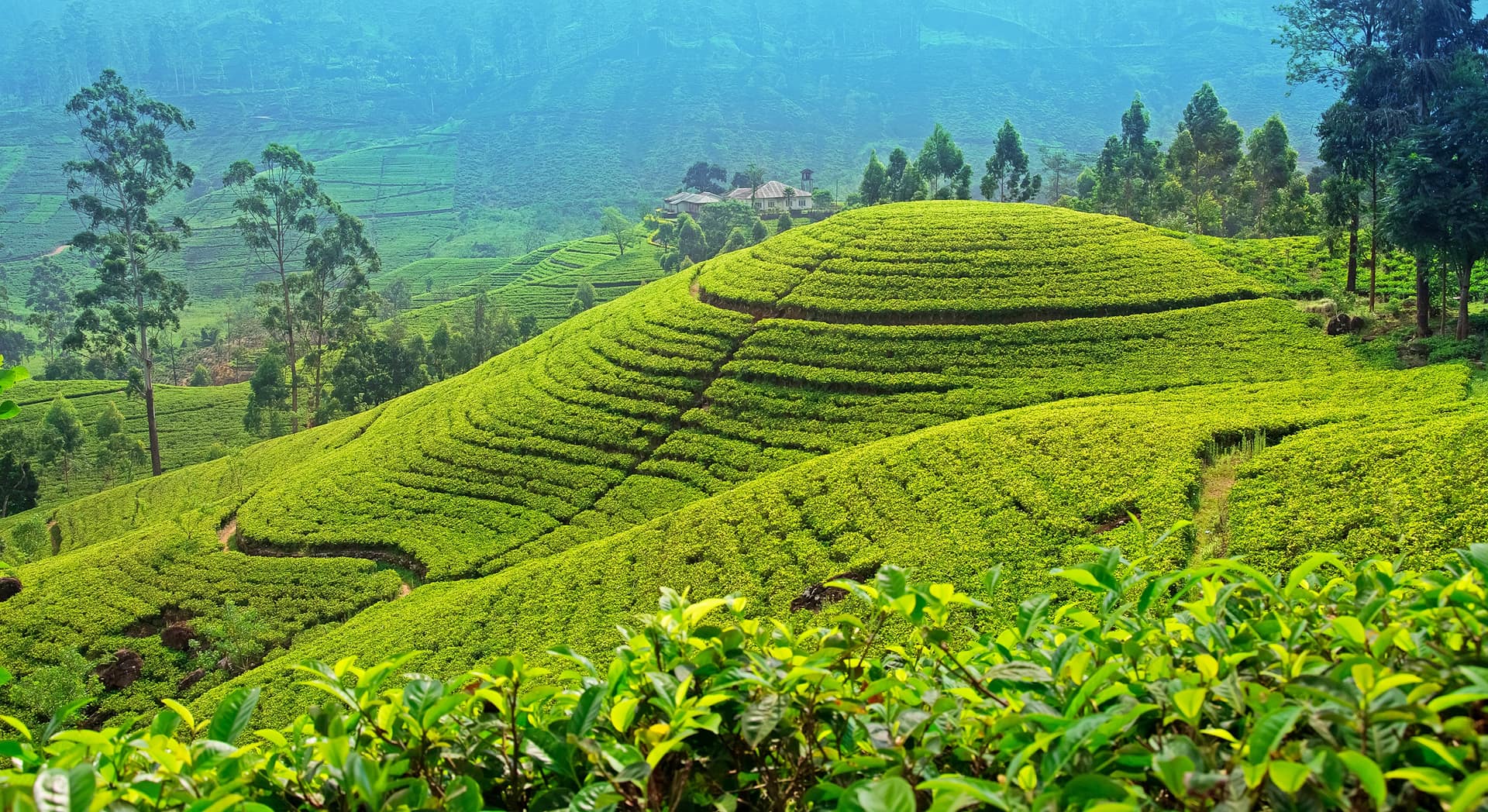
The valleys around Hatton and Dickoya, in the Dimbula region, are the most complete tea landscape in the country: reservoirs, planters' bungalows, estate villages and slopes combed into rows. Three nights here are best spent on an estate, walking the paths between divisions and visiting a working factory in the morning, when the previous day's leaf is being processed.
Nuwara Eliya, higher still at roughly 1,900 metres, makes the lightest teas on the island, often compared with champagne among wines. Factories around the town run tours of roughly 30 to 45 minutes. The western highlands are driest, and their teas at their best, in roughly January to March.
- →Withering, rolling, oxidising, firing and grading: the five steps to follow on any factory tour.
- →Grades such as OP, BOP and dust describe leaf size, not quality.
- →Factories usually do not process on Sundays or the day after a holiday; confirm before visiting.
Haputale and Ella: Lipton's hills and Uva
Haputale stands on the southern edge of the highlands. The Dambatenne factory, built for Sir Thomas Lipton in 1890, is a long, working building roughly 30 minutes from the town, and the road beyond it climbs to Lipton's Seat, his favourite viewpoint. Go at sunrise, before cloud covers the plains below.
Ella, roughly 45 minutes to an hour away, sits in the Uva region. Dry winds from roughly July to September give Uva teas a distinctive, slightly menthol character. Ella's factories are smaller, and some produce green and hand-rolled teas alongside black.
The low-grown south
Low-grown tea is the part of the story most visitors miss. In the Ruhuna and Sabaragamuwa regions, below roughly 600 metres, the bushes grow fast in heat and humidity, and the tea is dark, malty and popular in the Middle East and Russia.
Small estates inland from Galle and Koggala welcome visitors and often grow cinnamon and rubber as well. From Ella, the drive to the south coast takes roughly three and a half to four and a half hours, and two nights by the sea end the fortnight.
Planning a tea fortnight, and who it suits
A tea fortnight suits return visitors, walkers and anyone who prefers cool evenings to hot afternoons. Choose it if you have already seen Sigiriya, or are content to miss it. To keep the rock, cut Hatton to two nights and the coast to one, and add two nights at Sigiriya at the start.
Estate bungalows are few and fill early, so book them before anything else. Lankan Stays & Trails can arrange estate walks and factory visits on days when processing is under way. The people who pluck the leaf, most of them from the Hill Country Tamil community, work hard for modest pay; ask before photographing, and tip directly.
- →Best months: January to April for the whole route.
- →June to September: wet around Hatton and Nuwara Eliya, dry in Haputale and Ella.
- →Pack a warm layer: nights in Nuwara Eliya can fall below 10 degrees Celsius.
Frequently asked questions
Where is the best place to see tea plantations in Sri Lanka?
The valleys around Hatton and Dickoya, Nuwara Eliya, Haputale and Ella are the best places to see tea plantations. Hatton has the most complete estate landscape, Nuwara Eliya the highest factories, Haputale the Lipton heritage and Ella the easiest access for most itineraries.
How many tea regions does Sri Lanka have?
Sri Lanka has seven recognised tea regions: Nuwara Eliya, Dimbula, Uva, Uda Pussellawa, Kandy, Sabaragamuwa and Ruhuna. They differ mainly in altitude and climate, which is why teas from the high west are light and those from the low south are strong.
Can I stay on a tea estate in Sri Lanka?
Yes. Former planters' bungalows around Hatton, Nuwara Eliya, Haputale and Kandy take guests, usually with only a few rooms each. They are popular and limited, so book several months ahead, especially for January to April.
When is the best time to visit Sri Lanka's tea country?
January to April is best for the whole tea country, with dry weather and clear mornings. From roughly June to September the western side around Hatton and Nuwara Eliya is wet, while Haputale and Ella on the eastern side are drier.
What happens on a tea factory tour?
A tea factory tour lasts roughly 30 to 45 minutes and follows the leaf through withering, rolling, oxidising, firing and grading, ending with a tasting. Mornings are best, when machinery is running. Many factories do not process on Sundays.
Who was James Taylor in Sri Lanka's tea history?
James Taylor was a Scottish planter who established the first commercial tea field in Ceylon at Loolecondera estate, near Kandy, in 1867. He is regarded as the founder of the island's tea industry. The estate can be visited on a day trip from Kandy.