
Quick answer
A 3 day Wilpattu itinerary drives roughly three to four hours from the airport on day one, stopping at Anawilundawa wetland for birds, then takes an afternoon safari. Day two is a full-day or dawn safari among the villus, Wilpattu's sand-ringed natural lakes, where leopards and sloth bears are seen. Day three is a final dawn drive before returning to the airport. The park is best roughly February to October.
Key takeaways
- Wilpattu National Park is roughly three to four hours from Bandaranaike International Airport by road.
- Wilpattu is Sri Lanka's largest national park, known for its villus, natural lakes ringed with sand.
- The park is best roughly February to October; the north-east monsoon brings rain from roughly October or November.
- Anawilundawa Wetland Sanctuary, a Ramsar site near Chilaw, lies on the road north.
- Wilpattu sees far fewer jeeps than Yala Block 1, so sightings tend to be quieter.
The Wilpattu itinerary at a glance
The Wilpattu itinerary spends two nights near the park's main entrance at Hunuwilagama, off the Puttalam to Anuradhapura road. It gives three safari sessions in total, which is generous for a short trip.
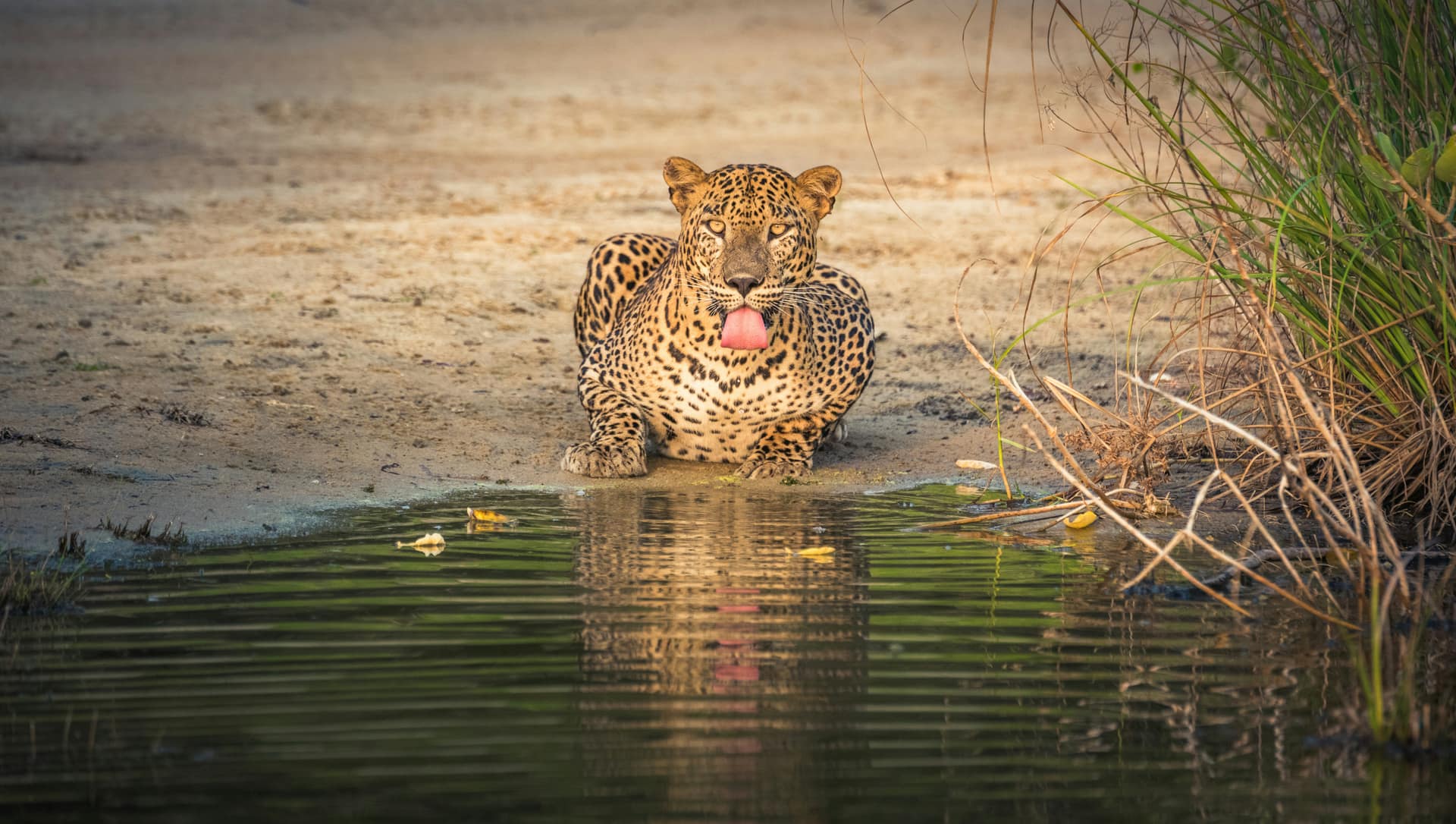
Wilpattu is quieter than Yala because the park is larger and the tracks are sandy and slow. Leopard density is lower, so sightings take patience, but when they come they are often without a crowd of jeeps. Sloth bears, elephants, spotted deer, crocodiles and many water birds are regular.
The route suits wildlife lovers, photographers and anyone who has already seen Yala. It also pairs well with a beach night at Kalpitiya or a cultural day at Anuradhapura for those with a third night.
- →Day 1: airport to Wilpattu via Anawilundawa, afternoon safari. Night near the park.
- →Day 2: full-day safari, or dawn and afternoon sessions. Night near the park.
- →Day 3: dawn safari, drive back to the airport.
Day one: the coast road north
Day one drives roughly three to four hours from Katunayake north along the coast through Negombo, Chilaw and Puttalam. Stop at Anawilundawa Wetland Sanctuary near Chilaw, a chain of ancient irrigation tanks and a Ramsar site, for an hour of birding among herons, cormorants and pheasant-tailed jacanas.
The Munneswaram Hindu temple at Chilaw is another short stop for travellers interested in the Ramayana trail. Reach your lodge near Wilpattu by early afternoon for lunch and an afternoon safari from roughly 2.30 pm to 6 pm.
Late afternoon in Wilpattu is a good time for sloth bears, which feed on termite mounds and fruiting trees in the dry months of roughly May to July.
- →Anawilundawa: best early or late in the day for birds.
- →Munneswaram temple: shoes off, shoulders and knees covered.
- →Wilpattu afternoon safari: roughly 2.30 pm to 6 pm.
Day two: a full day among the villus
Day two is the core of the trip. A full-day safari, with a packed lunch inside the park, reaches the deeper villus that half-day jeeps cannot, such as Kali Villu and Maradanmaduwa. Leopards often rest near the villu edges in the heat and move again in the late afternoon.
If a full day feels long, take a dawn session from roughly 6 am to 10 am, rest at the lodge in the heat and go out again in the afternoon. Either way, the park rewards slow, quiet driving.
Ask your driver tracker to stop the engine at sightings and to keep a respectful distance. Wilpattu's quiet is part of its value, and noisy jeeps spoil it for everyone.
- →Full-day safari: roughly 6 am to 6 pm with a picnic lunch.
- →Half-day sessions: dawn and late afternoon.
- →Bring binoculars, a neutral-coloured shirt and a dust scarf.
Day three: a last dawn and the road back
Day three takes a final dawn safari from roughly 6 am to 10 am, when the light is soft and animals active. Return for breakfast, pack and drive roughly three to four hours back to the airport, leaving by early afternoon for an evening flight.
On a later flight, stop at Negombo for the fish market and lagoon, roughly 15 to 20 minutes from the airport, and an early dinner by the sea.
Seasons and variations
Wilpattu is best roughly February to October. The north-east monsoon brings heavy rain from roughly October or November to January, when tracks flood and some sections close; confirm opening before booking in those months.
With a third night, add Kalpitiya, roughly an hour and a half from the park, for dolphin watching between roughly November or December and March or April, or for kitesurfing from roughly May to September. Culture lovers can add Anuradhapura, roughly an hour east of the park entrance.
- →Dolphins: Kalpitiya, roughly December to March, with an operator that keeps its distance.
- →Culture: Anuradhapura's dagobas and the Sri Maha Bodhi.
- →Kitesurfing: Kalpitiya's lagoon, roughly May to September.
Planning a Wilpattu trip
A private car and driver is the easiest way to reach Wilpattu in three days, with a reputable jeep and driver tracker booked for each session. Lankan Stays & Trails can arrange the car, the safari jeeps and a lodge near the park, timed around your flights.
Expect the park fee per person plus the jeep per vehicle, and confirm current prices locally. Pack sunscreen, a hat, insect repellent and a light layer for the dawn drive.
Frequently asked questions
Is Wilpattu better than Yala?
Wilpattu is better than Yala for quiet, unhurried safaris with fewer jeeps, while Yala Block 1 gives more frequent leopard sightings. Wilpattu suits patient visitors and photographers; Yala suits a first safari with limited time. Both parks have leopards, elephants and sloth bears.
How far is Wilpattu from Colombo airport?
Wilpattu's main entrance at Hunuwilagama is roughly three to four hours from Bandaranaike International Airport by road, along the coast through Chilaw and Puttalam. From Colombo, allow roughly four to 4.5 hours depending on traffic leaving the city.
Is a full-day safari at Wilpattu worth it?
A full-day safari at Wilpattu is worth it for keen wildlife watchers, because it reaches the deeper villus that half-day jeeps cannot. It runs roughly 6 am to 6 pm with a picnic lunch. Families and travellers who dislike heat may prefer two half-day sessions.
When is the best time to visit Wilpattu?
The best time to visit Wilpattu is roughly February to October, with the driest months from May to September concentrating animals at the villus. Heavy rain from roughly October or November to January can flood tracks and close sections of the park, so check before booking.
Can you see leopards in Wilpattu?
You can see leopards in Wilpattu, though less often than in Yala Block 1 because the park is larger and the cats are spread out. Three safari sessions over three days give a fair chance. Sightings tend to be quieter, often without a queue of jeeps.
Can I combine Wilpattu and Kalpitiya?
Wilpattu and Kalpitiya combine well with three nights, because they are roughly an hour and a half apart. Spend two nights near Wilpattu for safaris and one at Kalpitiya for dolphins in season or kitesurfing, then return to the airport, roughly three to 3.5 hours away.
What animals are in Wilpattu?
Wilpattu is home to leopards, sloth bears, Asian elephants, spotted and sambar deer, wild buffalo, mugger crocodiles, jackals, mongooses and many water birds. Sloth bears are seen most often in the dry months of roughly May to July, when they feed on fruiting trees.