
Quick answer
There are two places to add a safari on a Sigiriya and Ella route. Minneriya and Kaudulla sit close to Sigiriya and suit elephants, with the gathering usually strongest from roughly June to September. Udawalawe sits roughly two to two and a half hours from Ella on the descent to the coast and is reliable for elephants year round, which makes it the easier addition on most itineraries.
Key takeaways
- Minneriya and Kaudulla are close to Sigiriya, with the gathering usually strongest roughly June to September.
- Udawalawe sits roughly two to two and a half hours from Ella, directly on the route to the coast.
- Udawalawe is generally the most reliable park in Sri Lanka for elephant sightings.
- Yala is reached from Tissamaharama and its Block One is known for vehicle crowding.
- Wilpattu is quieter and better for leopards but sits well away from this route.
Slot one: Minneriya and Kaudulla near Sigiriya
Minneriya and Kaudulla national parks sit within easy reach of a Sigiriya or Habarana base, which makes them the cheapest safari to add in terms of driving. A third night in the Cultural Triangle covers it without affecting anything else in the itinerary.
They are elephant parks rather than general wildlife ones. The draw is the gathering, when receding water around the reservoirs concentrates large numbers of elephants on the grassland. It is usually strongest from roughly June to September, though it shifts between the two parks with water levels each year and should be confirmed locally rather than assumed.
Outside that window sightings are less predictable, which is the main limitation. A traveller visiting in January who adds a Minneriya afternoon expecting the gathering may be disappointed, and Udawalawe is the better choice in that case.
- →Within easy reach of a Sigiriya or Habarana base.
- →A third Cultural Triangle night covers it with no other changes.
- →The gathering is usually strongest roughly June to September.
- →It shifts between the two parks with water levels each year.
Slot two: Udawalawe on the way to the coast
Udawalawe sits roughly two to two and a half hours from Ella on the descent towards the south coast, which means it costs a night rather than a detour. That geography makes it the easiest safari to add to a standard itinerary.
It is also the most reliable park in Sri Lanka for elephants, with sightings likely year round rather than seasonal, and the open terrain makes viewing straightforward. There is an elephant transit home nearby which rehabilitates orphaned calves for release, and it is worth asking about the viewing arrangements before committing time to it.
An afternoon jeep safari fits comfortably into the transfer day from Ella, with the night spent near the park and the drive continuing to the coast the following morning. That is the version most itineraries should use.
- →Roughly two to two and a half hours from Ella, on the route south.
- →It costs a night rather than a detour.
- →The most reliable park in Sri Lanka for elephant sightings, year round.
- →An afternoon safari fits into the Ella to coast transfer day.
Yala, and the honest problem with it
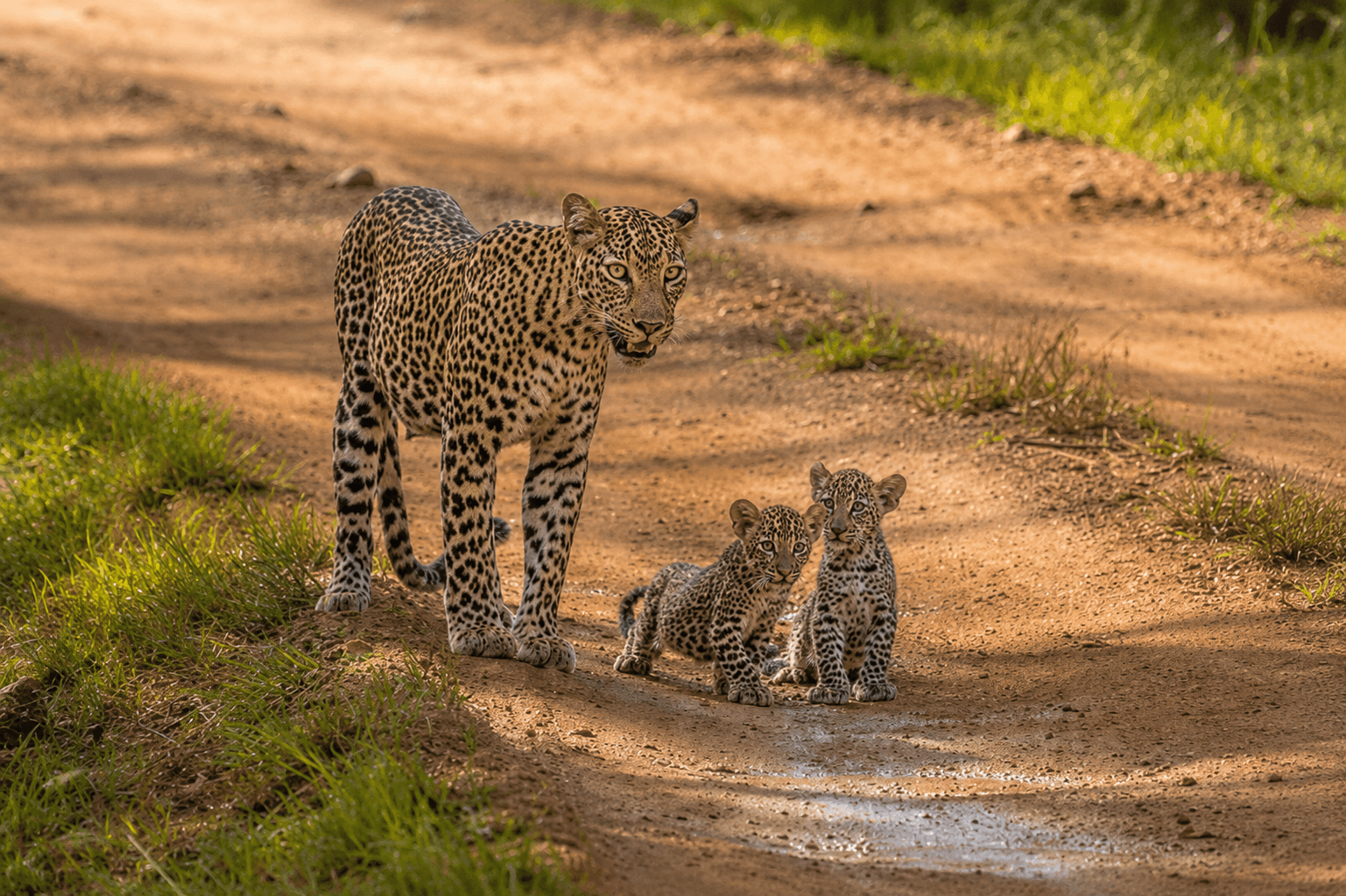
Yala is the best known park and is reached from Tissamaharama, further east along the southern route. It has the highest leopard density in Sri Lanka and a genuine chance of a sighting, which is why it draws the numbers it does.
Those numbers are the problem. Block One, the most visited section, is known for vehicle crowding, and a leopard sighting there frequently means twenty or thirty jeeps converging. That is unpleasant for visitors and demonstrably stressful for the animals.
If Yala is the choice, ask specifically about which block the operator uses and how they handle sightings. Blocks other than One are quieter. The park also closes for part of the year, usually around September, so confirm dates before building an itinerary around it.
- →Reached from Tissamaharama, with the highest leopard density in the country.
- →Block One is known for serious vehicle crowding at sightings.
- →Ask which block an operator uses and how they handle sightings.
- →The park usually closes for part of the year, around September.
What a responsible safari looks like
Observation only, always. That means no feeding, no playing recorded calls, no driving off designated tracks and no blocking an animal's path. A driver who does any of these is not giving you a better sighting, he is harassing wildlife on your behalf.
It also means accepting that you may not see the animal you came for. An operator who guarantees a leopard is telling you how they intend to achieve it, and the answer usually involves crowding or off-track driving.
Elephant riding is not part of any responsible Sri Lankan itinerary, and neither are venues offering bathing or close contact with captive elephants. Lankan Stays and Trails works only with observation-based operators and declines these requests outright rather than negotiating them.
- →No feeding, no recorded calls, no off-track driving, no blocking paths.
- →A guaranteed sighting is a warning rather than a selling point.
- →No elephant riding, bathing or close contact with captive elephants.
- →Accepting a blank day is part of responsible wildlife viewing.
Choosing between the slots
Take Minneriya or Kaudulla if you are travelling roughly June to September and are already giving the Cultural Triangle three nights. The gathering at its best is one of the more remarkable wildlife sights in Asia and it costs almost nothing in extra driving.
Take Udawalawe in every other case, and particularly on a seven to ten day trip where a single safari night has to work hard. It is reliable year round, it sits on the route rather than off it, and it avoids the Yala crowding question entirely.
Take Wilpattu only if wildlife is the main purpose of the trip. It is quieter than Yala, better for leopards without the vehicle pressure, and larger and more densely wooded, which means sightings take longer. It also sits well away from this route and needs its own place in the itinerary.
- →June to September with three Cultural Triangle nights: Minneriya or Kaudulla.
- →Every other case, especially seven to ten day trips: Udawalawe.
- →Wilpattu only if wildlife is the trip's main purpose.
- →Wilpattu is quieter and wooded, so sightings take longer.
Frequently asked questions
Where should I do a safari on a Sri Lanka trip?
Udawalawe for most itineraries. It sits roughly two to two and a half hours from Ella on the descent to the south coast, so it costs a night rather than a detour, and it is the most reliable park in Sri Lanka for elephants year round.
When is the Minneriya elephant gathering?
Usually strongest from roughly June to September, when receding water around the reservoirs concentrates large numbers of elephants on the grassland. It shifts between Minneriya and Kaudulla with water levels, so confirm locally rather than assuming.
Is Yala too crowded?
Block One, the most visited section, is known for serious vehicle crowding, with sightings often drawing twenty or thirty jeeps. Other blocks are quieter. Ask which block an operator uses, and note the park usually closes for part of the year.
Is Udawalawe or Yala better?
Udawalawe for elephants and for convenience, since it lies on the route from Ella to the coast and offers reliable year-round sightings in open terrain. Yala for leopards, accepting the crowding in Block One and the seasonal closure.
Can I add a safari without adding a night?
Only near Sigiriya. Minneriya and Kaudulla are close enough to a Cultural Triangle base for an afternoon drive, so they fit into an existing stay. Udawalawe and Yala both need a night, though Udawalawe's falls on a transfer day anyway.
Is elephant riding available in Sri Lanka?
It exists and should be avoided, along with venues offering bathing or close contact with captive elephants. Responsible wildlife viewing in Sri Lanka is observation only, from a vehicle, with no feeding, recorded calls or off-track driving.
What should I ask a safari operator before booking?
Which block or zone they use, how they behave at a sighting, and whether they stay on designated tracks. Treat a guaranteed sighting as a warning rather than a selling point, since it usually implies crowding or off-track driving.