
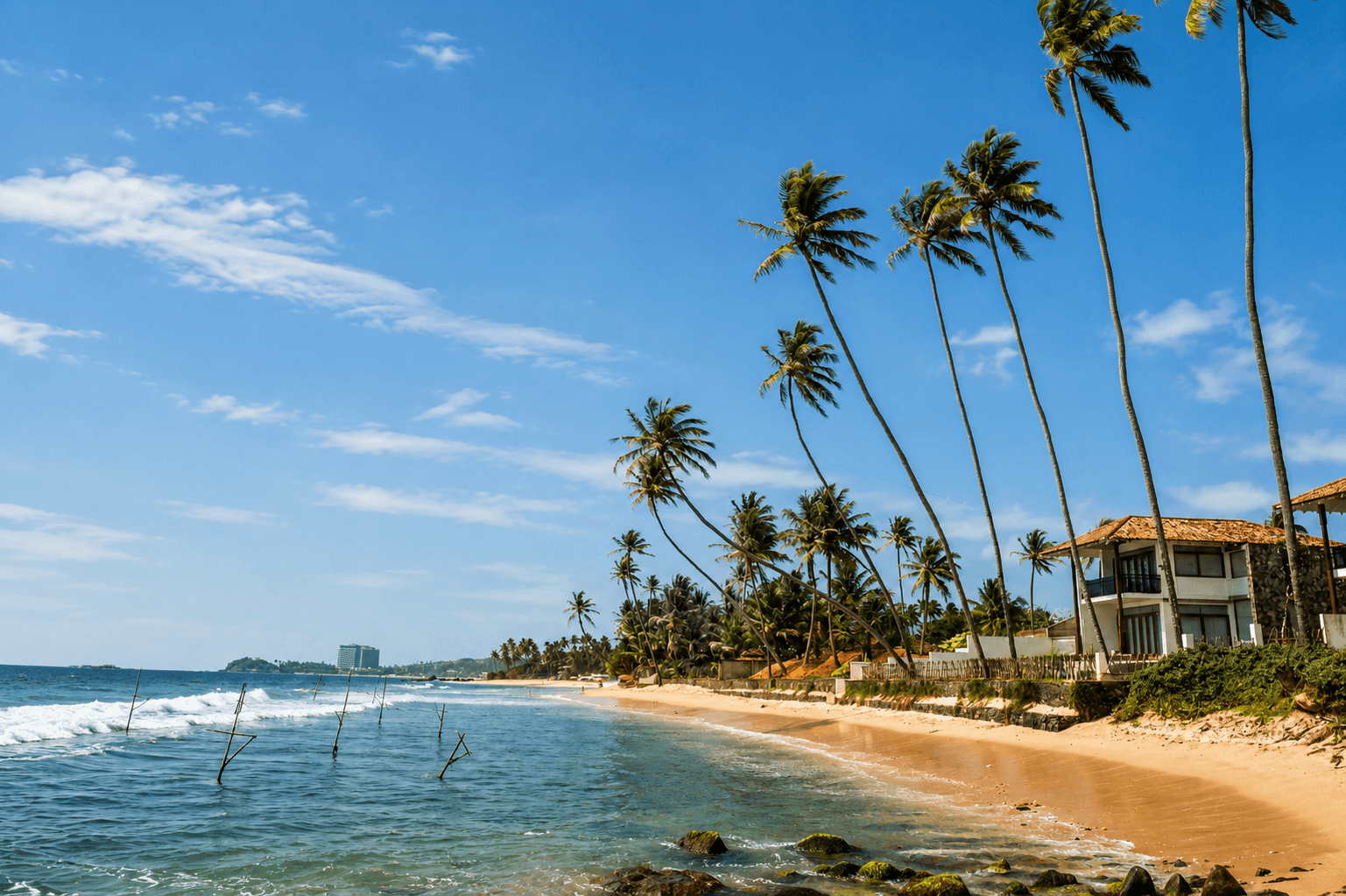
Quick answer
In January, bikinis, swimsuits and board shorts are fine on tourist beaches and at hotel pools along the south and west coasts. Topless sunbathing is not allowed anywhere. Cover up with a shirt, shorts, dress or sarong before walking into town, a shop, a cafe away from the sand or a bus. On local beaches and near temples, more modest swimwear and a cover-up are wise.
Key takeaways
- Bikinis and board shorts are normal on tourist beaches and at pools.
- Topless and nude sunbathing are not permitted.
- Cover up before leaving the sand for town, shops or transport.
- Local family beaches call for more modest swimwear.
- January's calm south and west coast seas make it peak beach season.
Why January is beach season
In January the north-east monsoon keeps rain on the east and north, leaving the south and west coasts dry and calm. Beaches from Bentota to Tangalle are at their most popular, and sea temperatures of about 27 to 28°C make swimming easy.
The east coast is the exception. Trincomalee, Pasikudah and Arugam Bay are still in their wet, rough season, and many beach businesses there are closed until spring.
Busy beaches mean more mixing of foreign visitors and local families, especially on weekends and around Duruthu poya, when Sri Lankans head to the coast too.
- →South and west: calm, dry and warm.
- →East coast: rough and wet until about March.
- →Weekends: more local families on the sand.
What swimwear is fine
On tourist beaches in Unawatuna, Mirissa, Hikkaduwa, Bentota and Weligama, any normal swimwear is fine. Bikinis, swimsuits, board shorts and trunks are all common, and nobody expects visitors to swim in clothes.
Hotel pools follow the same relaxed rules. Some upmarket hotels ask guests to wear a cover-up through the lobby or restaurant, which is standard resort etiquette.
Topless and nude sunbathing are not allowed anywhere in Sri Lanka, including at private hotel beaches. Thong bikinis are legal but uncommon and attract stares, particularly on beaches used by local families.
- →Bikinis and swimsuits: fine on tourist beaches.
- →Board shorts and trunks: fine everywhere on the sand.
- →Topless or nude sunbathing: not permitted.
Where to cover up
The beach ends where the sand ends. Walking along the main road, into a shop, a pharmacy or a cafe set back from the beach in swimwear is seen as disrespectful, even in busy beach towns.
Keep a sarong, kaftan, shirt or shorts handy. A sarong is ideal because it dries quickly, folds small and can be tied as a skirt, a dress or a shoulder wrap in seconds.
Beach restaurants and bars on the sand are relaxed, and many diners eat lunch in swimwear with a cover-up. For dinner, most people change into light clothes.
Local beaches and family days
Some beaches, such as stretches near Galle, Matara and the fishing villages between Tangalle and Hambantota, are used mainly by Sri Lankans. Local women often swim fully clothed, and families picnic on weekends.
On these beaches, a one-piece swimsuit or a rash vest with board shorts fits in better than a small bikini. Swimming in a T-shirt over swimwear is also common and protects against strong January sun.
Beaches near temples, such as those around Dondra or Kataragama roads, call for even more care. Change before arriving and keep a cover-up on when walking past religious buildings.
- →One-piece or rash vest on local beaches.
- →Cover up near temples.
- →Change before arriving, not on the beach.
Sun and sea safety in January
The January sun is fierce, and burns happen fast between eleven and three. Rash vests, hats and shade under palm trees are as important as sunscreen. Reef-safe sunscreen is better near coral at Hikkaduwa and Unawatuna.
The sea is calm on most south and west coast beaches in January, but rip currents still form on exposed beaches. Swim where locals swim, follow any red flags and ask hotel staff about conditions.
Lankan Stays & Trails recommends sheltered bays such as Unawatuna, Jungle Beach and Hiriketiya for relaxed swimming, while beaches like Tangalle's longer stretches can have a stronger shore break.
- →Rash vest and hat in the midday sun.
- →Reef-safe sunscreen near coral.
- →Follow flags and local advice on currents.
Photos and privacy
Some local visitors may want photos with foreign beachgoers. A polite refusal is fine, and most people accept it with a smile. Cover up if attention becomes uncomfortable.
Avoid photographing local women and families in the water without asking. Fishermen on the beach are usually happy to be photographed if you ask first.
Stilt fishermen near Koggala may ask for a tip for photos. Agree before shooting to avoid awkward moments later.
Frequently asked questions
Can I wear a bikini in Sri Lanka in January?
Yes. Bikinis are fine on tourist beaches and at hotel pools along the south and west coasts, which are at their busiest in January. Cover up before leaving the sand. On beaches used mainly by local families, a one-piece or a rash vest fits in better.
Is topless sunbathing allowed in Sri Lanka?
No. Topless and nude sunbathing are not permitted anywhere in Sri Lanka, including on private hotel beaches. Police can intervene, and it causes offence to local families. Standard swimwear is fine on tourist beaches, and hotel pools follow the same rule.
Can I walk around a beach town in swimwear?
It is best not to. Even in busy beach towns such as Unawatuna or Mirissa, walking along the road or into shops and cafes in swimwear is considered disrespectful. Slip on a sarong, shirt, shorts or a kaftan before leaving the sand.
What should men wear on Sri Lankan beaches?
Board shorts or swim trunks are fine on the beach. Very brief swimwear is legal but unusual. Put on a shirt before walking into town or onto a bus, since going shirtless off the beach is considered impolite in Sri Lanka.
Which beaches are best for swimming in January?
Sheltered bays such as Unawatuna, Jungle Beach, Hiriketiya and parts of Mirissa offer calm swimming in January. Bentota's beach is broad and generally calm in the dry season. Long open beaches can still have currents, so follow flags and ask locals or hotel staff.
Do I need a rash vest in Sri Lanka?
A rash vest is not required but is very useful in January. The midday sun is intense, and a long-sleeved vest protects the back and shoulders while snorkelling or surfing. It also fits in better on beaches used mainly by local families.