
Quick answer
The best places to see Sri Lanka's British colonial heritage are Colombo's Fort district, Galle Face Hotel and Cinnamon Gardens; Kandy, with the British Garrison Cemetery and colonial buildings by the lake; Nuwara Eliya, the hill station; the hill railway, with the Demodara loop and Nine Arch Bridge; tea estate bungalows; Adisham near Haputale; Trincomalee's Fort Frederick and war cemetery; and the Martello tower at Hambantota.
Key takeaways
- British rule covered the coast from 1796 and the whole island from 1815 to 1948.
- The tea industry, railway and hill stations are the main British legacies.
- Nuwara Eliya was built as a cool retreat for colonial officials.
- Many plantation workers were brought from South India, shaping the hill country.
- Several British-era hotels still operate and can be visited.
Colombo
Colombo's Fort district is the heart of British Ceylon. The Old Parliament, now the Presidential Secretariat, the Grand Oriental Hotel, Cargills department store and the clock tower lighthouse line its streets. The Galle Face Hotel, opened in 1864, still faces the sea at the end of Galle Face Green.
Cinnamon Gardens, south of the centre, has wide avenues, the Town Hall modelled on the Capitol in Washington, the National Museum in a nineteenth-century building and Viharamahadevi Park, formerly Victoria Park.
A walk through Fort early in the morning, with a guide who knows the buildings, is the best introduction.
Mount Lavinia, south of the city, grew around a governor's seaside residence built in the early nineteenth century, now the Mount Lavinia Hotel. Its terrace above the beach is a classic place for a sundowner and a reminder of how colonial leisure shaped the coast.
- →Fort: Old Parliament and clock tower.
- →Galle Face Hotel.
- →Cinnamon Gardens and the National Museum.
Kandy and the Kandyan treaty
Kandy was the last kingdom to fall to the British, in 1815. The Kandyan Convention, signed that year, handed the kingdom to the British Crown. Around the Temple of the Tooth, the British built offices, churches and the Queen's Hotel, which still overlooks the lake.
The British Garrison Cemetery, behind the temple, is a small, quiet place where soldiers, planters and their families were buried in the nineteenth century, often young, from disease and accident. Its caretakers tell their stories well.
St Paul's Church, beside the temple, was the garrison church.
- →The British Garrison Cemetery.
- →St Paul's Church.
- →The Queen's Hotel.
Nuwara Eliya, tea and the railway
Nuwara Eliya was developed by the British in the nineteenth century as a cool retreat, and it still has the feel of an English country town: a racecourse, a golf course, the Hill Club, the red-brick post office, the Grand Hotel and Holy Trinity Church. Gregory Lake was created by a British governor.
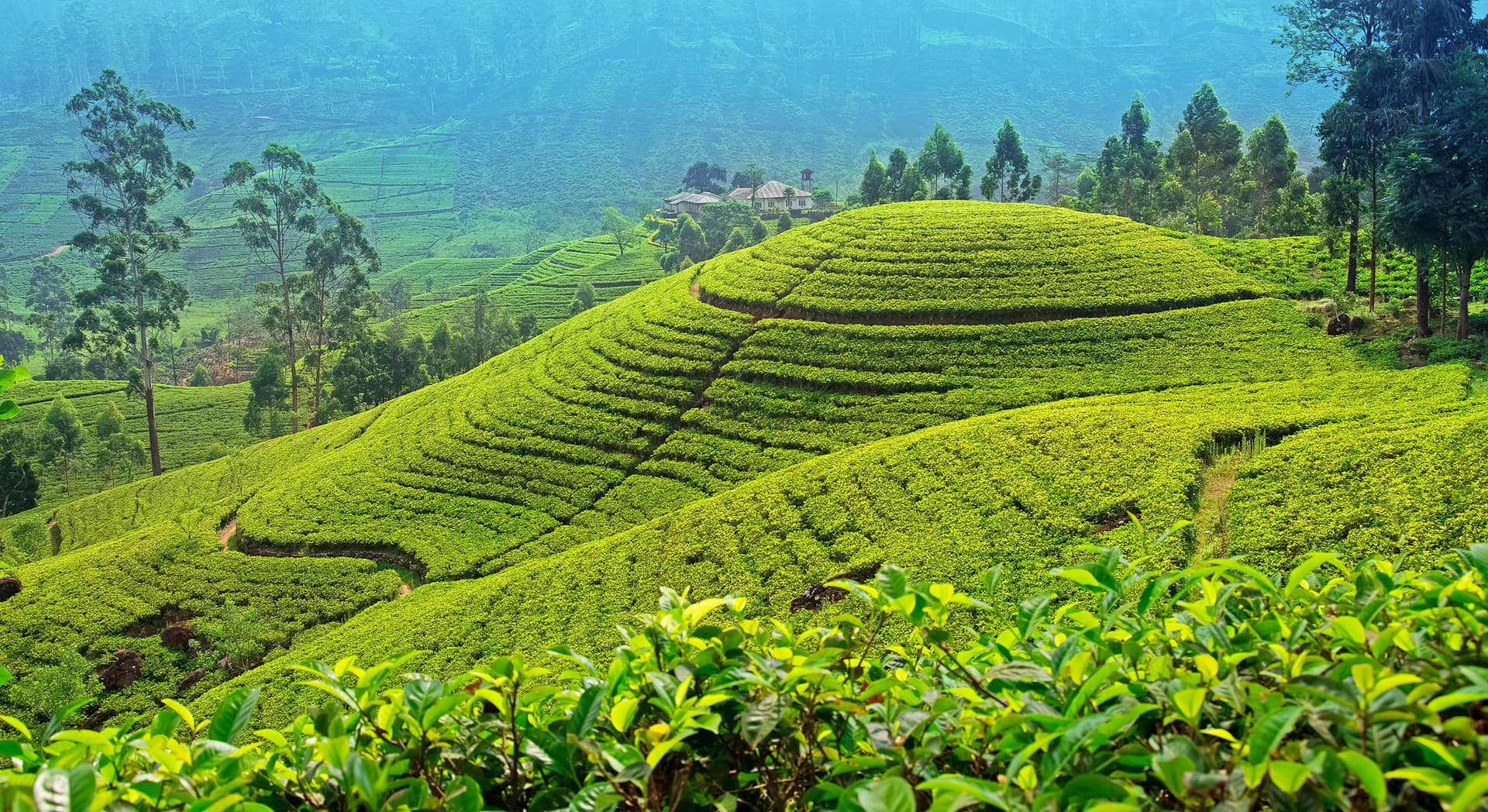
The tea industry, started in the 1860s after coffee failed, transformed the hills. Estate bungalows, some now hotels, and tea factories with their tall windowed buildings are everywhere between Hatton and Haputale. Adisham, near Haputale, is a stone country house built by a British planter and now a monastery.
The hill railway, with the Demodara loop and the Nine Arch Bridge near Ella, is one of the great engineering legacies. Tamil workers brought from South India built and worked much of this landscape, and their descendants remain the backbone of the tea estates.
- →Nuwara Eliya: the hill station.
- →Tea bungalows and factories.
- →Adisham near Haputale.
- →The Demodara loop and Nine Arch Bridge.
Trincomalee, Hambantota and the coast
Trincomalee was a key British naval base. Fort Frederick, originally Portuguese and Dutch, was garrisoned by the British, and the Commonwealth War Cemetery holds graves from the Second World War, when the harbour was attacked in 1942. The cemetery is beautifully kept and moving.
In Hambantota, a small Martello tower built in the early nineteenth century overlooks the sea. Galle, though famous for its Dutch fort, also has British-era buildings and the lighthouse.
Lankan Stays & Trails can arrange heritage-focused guides who explain both sides of the colonial story, from the grand buildings to the lives of plantation workers.
- →Trincomalee's war cemetery.
- →Hambantota's Martello tower.
- →Galle's British-era buildings.
Seeing the legacy honestly
The British left railways, roads, schools and the tea industry, but also plantation systems, social divisions and the displacement of communities. Visiting estate villages, talking to guides and reading about the period gives a fuller picture than the hotels alone.
Many colonial buildings are now government offices, schools or hotels. Some can be entered; others are seen from outside. A guided walk adds context and stories that plaques do not.
Frequently asked questions
When did the British rule Sri Lanka?
The British took control of Sri Lanka's coastal areas from the Dutch in 1796 and the Kandyan kingdom in 1815, ruling the whole island as Ceylon until independence in 1948. Their legacy includes the tea industry, railways and many buildings.
What did the British build in Sri Lanka?
The British built railways, roads, hill stations such as Nuwara Eliya, tea estates and factories, government buildings in Colombo, churches, schools and grand hotels. They also created the plantation system that brought Tamil workers from South India to the hills.
Is Nuwara Eliya British?
Nuwara Eliya was developed by the British in the nineteenth century as a cool hill retreat. It retains British-style buildings such as the post office, the Hill Club and the Grand Hotel, along with a racecourse and golf course. It is often called Little England.
What is the British Garrison Cemetery in Kandy?
The British Garrison Cemetery in Kandy is a small cemetery behind the Temple of the Tooth where British soldiers, officials and their families were buried in the nineteenth century. Its caretakers share the stories behind the graves. It is quiet and well kept.
Can I stay in a colonial tea bungalow?
You can stay in colonial tea bungalows in Sri Lanka's hill country, especially around Hatton, Nuwara Eliya and Haputale. Many have been restored as boutique hotels, offering views, fireplaces and a sense of planter life. Book ahead in busy seasons.
What is Adisham?
Adisham is a stone country house near Haputale, built by a British planter in the early twentieth century in English Tudor style. It is now a Benedictine monastery, with gardens and parts open to visitors at set times. Check opening days locally.
What are the best colonial hotels in Sri Lanka?
Well-known colonial-era hotels include the Galle Face Hotel and Grand Oriental Hotel in Colombo, the Mount Lavinia Hotel, the Queen's Hotel in Kandy and the Grand Hotel and Hill Club in Nuwara Eliya. Many restored tea bungalows also operate as boutique hotels.