
Quick answer
Binoculars and cameras for a wildlife and beach holiday should cover three settings: dusty open jeeps in Udawalawe and Yala, a moving whale boat off Mirissa and a dark beach at Rekawa. An 8x42 pair of binoculars suits most travellers, a 100 to 400 mm zoom or a superzoom bridge camera covers most wildlife, and a phone handles beaches and landscapes. Pack a dust cover, a waterproof bag and a lens cloth, and remember that flash is banned at the turtle beach.
Key takeaways
- An 8x42 pair of binoculars suits most travellers, bright enough for dawn and light enough to carry.
- A 100 to 400 mm zoom lens covers most wildlife in Yala and Udawalawe, where animals are often near the tracks.
- A superzoom bridge camera is a lighter, cheaper alternative to an interchangeable-lens system.
- Dust in the parks and salt spray on the whale boat are the main threats to gear.
- Flash photography and white light are banned on the Rekawa turtle-nesting beach.
Choosing binoculars
Binoculars are the most useful piece of gear on a wildlife and beach holiday, more so than a camera for many travellers. An 8x42 pair, meaning eight times magnification and 42 mm lenses, gives a bright, steady image at dawn and dusk and is light enough to carry all day. A 10x42 pair adds reach for birds but is harder to hold steady in a moving jeep.
Compact 8x25 binoculars are easier to pack but darker in low light. For families, one pair per person avoids queues at every sighting, and children's binoculars are a good investment.
Waterproof, fog-proof binoculars cope better with humidity and spray, which matters on the coast and at sea.
- →8x42: the best all-round choice.
- →10x42: more reach for birds, less steady.
- →8x25: compact, but darker at dawn.
Cameras and lenses
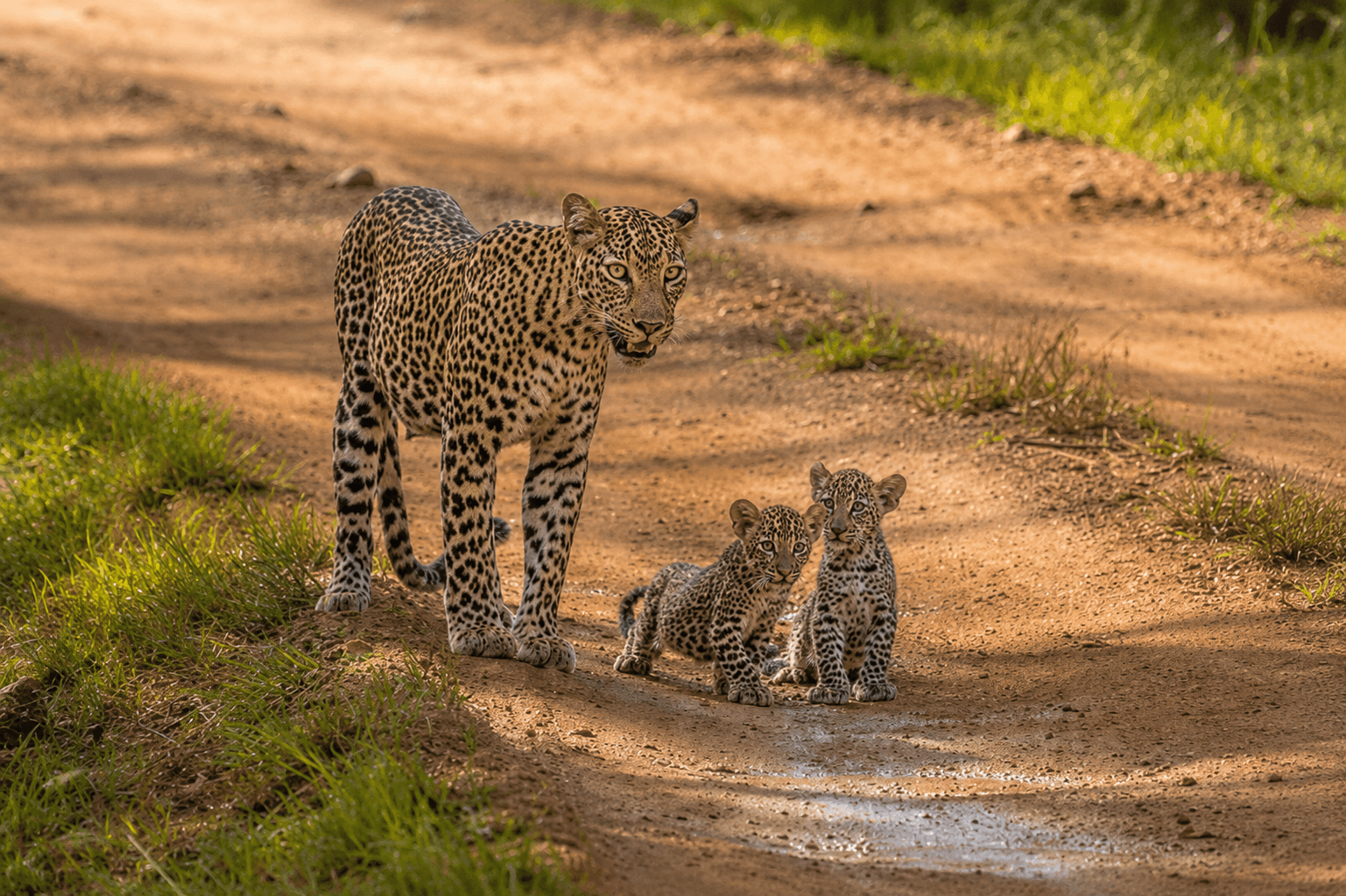
Cameras and lenses for a wildlife and beach holiday depend on how serious you are about photography. A 100 to 400 mm zoom on a mirrorless or DSLR body covers most wildlife in Yala and Udawalawe, where leopards and elephants are often close to the tracks. Birders and serious photographers may want 500 or 600 mm.
A superzoom bridge camera, with a built-in lens reaching the equivalent of 600 mm or more, is a lighter and cheaper alternative. It works well in good light, though less so at dawn.
A wide-angle or standard zoom covers beaches, Galle Fort and landscapes, and a phone does the same job for many travellers.
- →Telephoto zoom: 100 to 400 mm for most wildlife.
- →Bridge camera: light, long reach, best in good light.
- →Wide-angle: beaches and landscapes.
Phones on safari and at sea
Phones are fine for many wildlife moments on the route, especially at Udawalawe, where elephants come close, and at the Elephant Transit Home. Digital zoom degrades quickly, though, so distant leopards and birds need a real lens.
A clip-on phone adapter for binoculars, called digiscoping, can produce surprising results with a steady hand. On the whale boat, a phone in a waterproof pouch is safer than a large camera for most travellers.
- →Close animals: phones work well.
- →Distant animals: use binoculars or a real lens.
- →At sea: phone in a waterproof pouch.
Protecting gear from dust, salt and heat
Protecting gear on a wildlife and beach holiday means dealing with three threats. Dust in Yala's dry season gets into zooms and sensors, so keep cameras in a bag between sightings and use a dust cover. Salt spray on the whale boat corrodes metal, so wipe gear with a damp cloth afterwards.
Heat and humidity can fog lenses when moving from an air-conditioned car to the jeep. Let gear acclimatise for a few minutes in its bag. Silica gel packs help in humid hotels.
Lankan Stays & Trails asks drivers to carry a spare cloth and water for cleaning, which saves a lot of frustration on dusty days.
- →Dust: bag between sightings, dust cover.
- →Salt: wipe gear after the boat.
- →Humidity: let lenses acclimatise, use silica gel.
Rules at the turtle beach
Rules at the Rekawa turtle beach are strict. Flash photography and white light disturb nesting turtles and can make them return to the sea without laying, so both are banned. Guides decide when photography is allowed, usually only after the eggs are laid, and only with red light.
For most visitors, the turtle watch is best enjoyed without a camera. A few low-light shots with red light are possible for those with fast lenses.
Frequently asked questions
What binoculars are best for a Sri Lanka safari?
An 8x42 pair suits most travellers, bright enough for dawn and dusk and steady enough to hold in a moving jeep. A 10x42 pair adds reach for birds. Waterproof, fog-proof models cope better with the humidity and spray on the coast.
What lens do I need for Yala?
A 100 to 400 mm zoom covers most wildlife in Yala, where leopards and elephants are often close to the tracks. Serious bird photographers may want 500 or 600 mm. A superzoom bridge camera is a lighter alternative.
Can I use my phone on safari?
Yes, for close animals like elephants at Udawalawe. Distant leopards and birds need binoculars or a real lens, since phone zoom loses quality quickly. A binocular phone adapter can help with distant subjects.
How do I protect my camera from dust on safari?
Keep it in a bag between sightings, use a dust cover or a simple plastic bag over the lens, and avoid changing lenses in the jeep. Clean with a blower and soft brush at the end of each day.
Can I take photos of turtles at Rekawa?
Only when the guides allow it, usually after the eggs are laid, and only with red light. Flash and white light are banned because they disturb nesting turtles. Many visitors leave the camera away and simply watch.
Should I bring a tripod on safari?
No. Tripods do not fit in jeeps. A bean bag on the side rail steadies long lenses far better. A small travel tripod can be useful for sunsets at Galle Fort and on the beach.
Is it worth buying a bridge camera for a wildlife trip?
For many travellers, yes. A superzoom bridge camera reaches far enough for leopards and birds, weighs much less than a camera with a long lens and costs far less. It struggles more in low light at dawn and dusk.