
Quick answer
For photography in Yala, bring a telephoto lens of roughly 100 to 400mm or longer, a bean bag rather than a tripod, spare batteries and dust protection. The best light is the first two hours after the gate opens around 6am and the last hour before closing around 6pm. Book a private jeep, ideally a full day, with a driver who understands positioning for light and angle. Roughly May to August concentrates wildlife; the rainy season gives green landscapes.
Key takeaways
- A telephoto lens of roughly 100 to 400mm covers most Yala sightings, with longer lenses useful for distant leopards and birds.
- A bean bag on the jeep's rail is more practical than a tripod for Yala photography.
- The best light in Yala is in the first two hours after opening and the last hour before closing.
- A private jeep and a driver who understands light and angles make more difference to Yala photography than the camera.
- Yala's dry season, roughly May to August, concentrates wildlife, while the rainy season gives green landscapes and dramatic skies.
What to bring for Yala photography
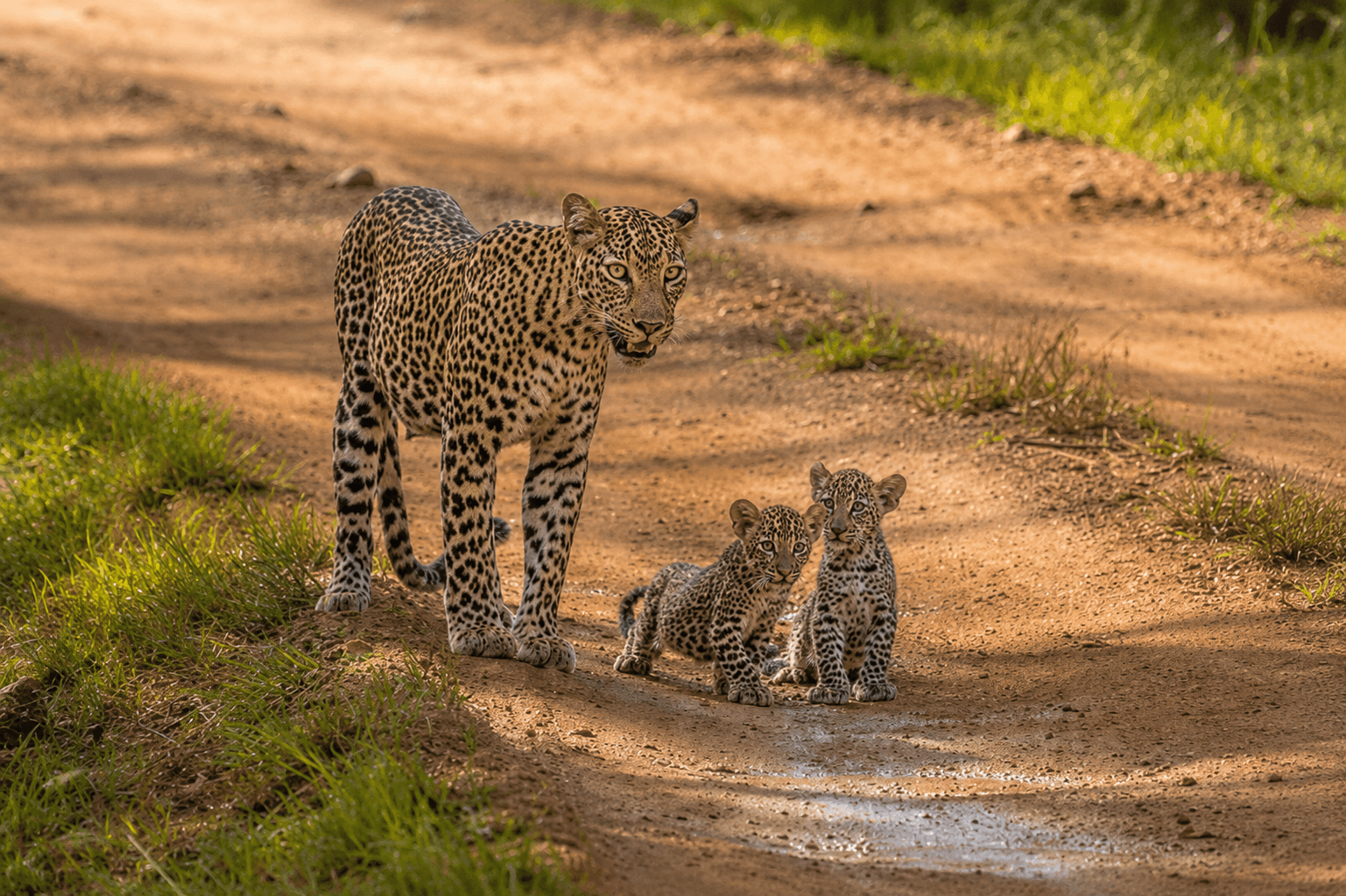
A telephoto zoom of roughly 100 to 400mm covers most Yala sightings, from elephants at close range to leopards on rocks. A longer lens, 500 or 600mm, helps with distant cats and birds. A second body with a wider lens is useful for landscapes and elephants close to the jeep.
A bean bag on the jeep's rail or door is more practical than a tripod, which is hard to use in a jeep. Bring spare batteries and memory cards, as there is nowhere to charge in the park.
- →Telephoto zoom: roughly 100 to 400mm.
- →Longer lens: 500 or 600mm for distant subjects.
- →Wider lens on a second body.
- →Bean bag for support.
- →Spare batteries, cards and dust protection.
The best light in Yala
The best light in Yala is in the first two hours after the gate opens around 6am, when the sun is low and warm, and the last hour before closing around 6pm. Midday light is harsh and flat, and animals are mostly resting.
Yala's coastal side, from the Palatupana gate, has fine early light over the lagoons and the sea. Rock outcrops catch the low sun and make strong backdrops for leopards.
The jeep and the driver
For serious photography, book a private jeep, so you control the pace and positioning. Ask for a jeep with removable side panels or open sides, room for kit and seats that allow shooting from different angles.
A driver who understands photography makes the biggest difference. They position the jeep with the light behind you, switch off to avoid vibration and wait for the animal to move into a good spot rather than chasing it.
- →Private jeep for control of pace and position.
- →Open sides or removable panels.
- →Engine off for sharp images.
- →Light behind you, not behind the animal.
Full days, blocks and seasons
Full-day drives give photographers the most time with subjects and the chance to stay with a sighting as long as it lasts. Block I has the most leopards; Block III has wilder scenery and fewer jeeps, which makes for cleaner frames.
The dry season, roughly May to August, concentrates wildlife at waterholes and gives dusty, golden light. The rainy season, roughly October to January, gives green landscapes, dramatic skies and reflections.
Ethics behind the lens
A good photograph is never worth stressing an animal. Do not ask your driver to get closer, block an animal's path, leave the track or crowd a sighting. Flash photography is discouraged and drones are banned in Yala.
Lankan Stays & Trails books photographers with drivers who understand both light and ethics. The best Yala photographs come from patience and quiet, not from pushing in.
- →Never ask a driver to get closer than is respectful.
- →Never block an animal's path or leave the track.
- →No flash, no drones.
- →Leave when an animal is stressed.
Frequently asked questions
What lens do I need for Yala?
A telephoto zoom of roughly 100 to 400mm covers most Yala sightings. A longer lens of 500 or 600mm helps with distant leopards and birds. A wider lens on a second body is useful for landscapes and elephants close to the jeep.
Can I use a tripod in Yala?
Tripods are hard to use in a Yala jeep. A bean bag resting on the jeep's rail or door is more practical and stable. Some photographers use a monopod or a clamp mounted on the jeep frame.
What is the best time of day for photography in Yala?
The first two hours after the gate opens around 6am and the last hour before closing around 6pm give the best light in Yala. Midday light is harsh and flat, and most animals are resting then.
Is a private jeep worth it for photography in Yala?
Yes. A private jeep lets you control the pace and positioning, wait for the animal to move into good light and avoid other passengers moving the jeep. For serious photographers it makes a large difference to results.
Can I fly a drone in Yala for photography?
No. Drones are not allowed in Yala National Park without special permission from the Department of Wildlife Conservation, which is not given for tourist use. Flying one can lead to confiscation and fines. For aerial views of the region, look outside protected areas and check local rules first.
What is the best month for photography in Yala?
For wildlife, roughly May to August, when the dry season concentrates animals at waterholes. For landscapes, the rainy season, roughly October to January, gives green scenery and dramatic skies. Avoid September and early October, when Block I is usually closed.