
Quick answer
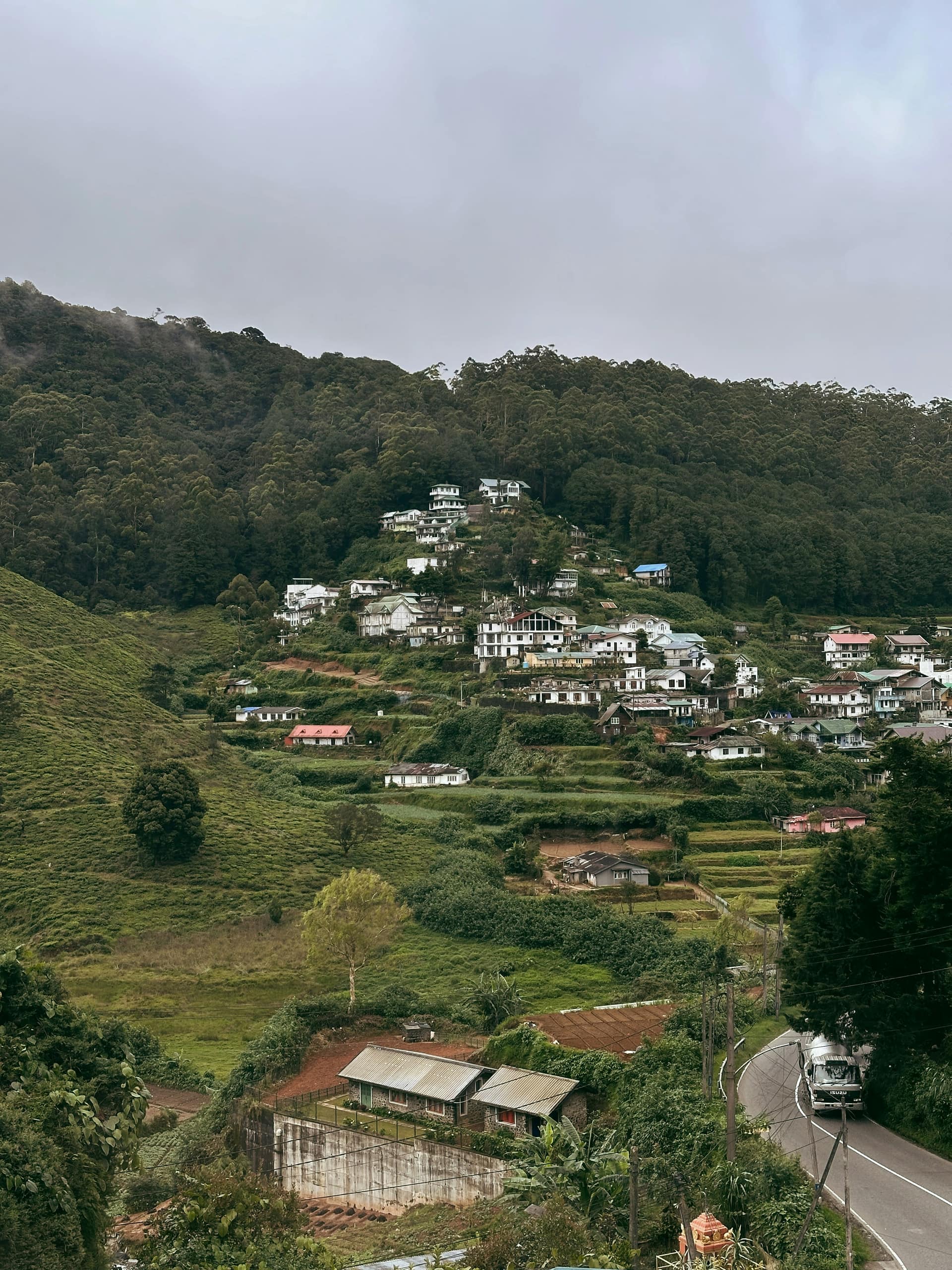
Sri Lanka's hill country, centred on Nuwara Eliya, Ella and the route through Kandy, sits at real elevation, Nuwara Eliya is roughly 1,868 metres above sea level, giving daytime temperatures typically 16 to 20 degrees Celsius and a landscape of tea plantations, pine forest and cool mist that has no equivalent on Turkey's Mediterranean or Aegean coast. It is reachable from Sri Lanka's tropical west or south coast within a few hours by road, letting a traveller combine a cool green interlude with a beach holiday in one trip, something a single Turkish Riviera resort stay is not built to offer.
Key takeaways
- Nuwara Eliya sits at roughly 1,868 metres above sea level, with daytime highs typically 16 to 20 degrees Celsius and night temperatures sometimes dropping close to or below 10 degrees Celsius, especially December to February.
- Sri Lanka's tea-growing hill country, including Nuwara Eliya, Ella and Haputale, is reachable from the tropical west or south coast in a few hours by road, unlike Turkey's coast where no comparable cool highland region sits so close.
- Kandy, roughly midway between the coast and the higher hill country, serves as a common staging point and is home to the Temple of the Sacred Tooth Relic, one of Buddhism's most significant sites.
- The Turkish Riviera, Antalya, Bodrum, Fethiye and the rest, stays at or near sea level throughout, with its own hill and mountain scenery generally set apart from the resort towns themselves rather than a short drive from them.
- The train journey between Nanu Oya (near Nuwara Eliya) and Ella runs through tea estates and mountain scenery and is widely considered one of the more scenic rail routes on the island.
Why a change in altitude matters on a tropical trip
A week spent entirely at one Turkish Riviera resort, in Bodrum, Fethiye or Marmaris, delivers a consistent Mediterranean or Aegean climate from arrival to departure: warm, dry and coastal throughout. That consistency is part of the appeal for many travellers, but it also means the scenery and temperature never really change.
Sri Lanka's hill country offers the opposite experience within a single trip: a genuine shift in altitude, temperature and landscape reachable by road in a matter of hours, so a traveller who wants variety within one holiday, rather than a single unchanging week, has a real option that a Riviera stay does not.
Nuwara Eliya: Sri Lanka's coolest town
Nuwara Eliya sits at roughly 1,868 metres above sea level, giving it a noticeably cooler climate than anywhere on Sri Lanka's coast, with daytime highs typically 16 to 20 degrees Celsius and night-time temperatures that can drop close to or below 10 degrees Celsius, particularly December to February. Colonial-era buildings, manicured gardens and surrounding tea estates give the town a distinct character often described as resembling a hill station.
Tea estate visits around Nuwara Eliya typically include a walk through the plantation rows and a tour of a working tea factory, ending with a tasting of Ceylon tea, Sri Lanka's globally recognised export, grown at this elevation specifically for its character.
- →Nuwara Eliya: roughly 1,868 metres elevation, with daytime highs typically 16 to 20 degrees Celsius.
- →Night temperatures can drop close to or below 10 degrees Celsius, especially December to February.
- →Tea factory visits typically combine a plantation walk with a tasting of Ceylon tea.
Ella: tea terraces and mountain views
Ella, a small hill country town at a somewhat lower elevation than Nuwara Eliya, is known for tea-terraced hillsides, walking trails and views over the surrounding mountains, with a more relaxed, traveller-oriented pace than Nuwara Eliya's colonial-town feel. It is a common base for a night or two within a wider hill country stop.
The rail journey between Nanu Oya, the station serving Nuwara Eliya, and Ella runs through tea estates, tunnels and mountain scenery, and is widely regarded as one of Sri Lanka's most scenic train routes, though seats should be reserved ahead where possible since demand is high.
Kandy: the gateway between coast and hill country
Kandy sits at a lower elevation than Nuwara Eliya or Ella, giving it a milder climate that serves as a natural staging point between Sri Lanka's tropical coast and its higher hill country. The city is home to the Temple of the Sacred Tooth Relic, one of the most significant sites in Buddhism, and to the Royal Botanical Gardens at nearby Peradeniya.
Many hill country routes pass through Kandy on the way up or down, making it a practical overnight stop as well as a destination with its own cultural weight, distinct from the purely scenic appeal of Nuwara Eliya and Ella.
Why the Turkish Riviera has no equivalent within reach
Turkey has its own mountain and highland scenery, but it generally sits apart from the Riviera's specific resort towns rather than a short drive from them, and it is not paired with tea cultivation or a hill-station character in the way Sri Lanka's hill country is. A Bodrum or Antalya holiday is typically shaped around one coastal base for the full stay.
The genuine point of contrast is not that Sri Lanka's hills are objectively better than any part of Turkey's landscape, but that Sri Lanka lets a traveller reach a cool, green, tea-terraced region from the tropical coast within the same trip, a shape of holiday a single Riviera resort stay is not designed to offer.
Building tea country into a coastal trip from Turkey
For a Turkish traveller flying the non-stop Turkish Airlines route from Istanbul to Colombo, roughly nine to ten hours, a common itinerary shape runs from the west or south coast inland to Kandy, up to Nuwara Eliya or Ella, then back down to the coast for the final days, rather than treating hill country as a separate trip.
We at Lankan Stays & Trails build this loop as a standard part of our multi-region itineraries, since the road distances between coast and hill country are manageable within a single day's drive, and pack a light layer for the hill country evenings since temperatures there are genuinely cooler than the coast.
Frequently asked questions
Is Sri Lanka's hill country cold?
Not cold in an absolute sense, but noticeably cool relative to the tropical coast. Nuwara Eliya typically sees daytime highs of 16 to 20 degrees Celsius, with nights sometimes dropping close to or below 10 degrees Celsius, especially December to February.
How far is Nuwara Eliya from the coast?
This depends on the starting point, but it is generally a few hours' drive from Sri Lanka's west or south coast, often routed via Kandy. Exact travel time varies with traffic and the specific coastal base chosen.
Does the Turkish Riviera have anywhere like Sri Lanka's tea country?
Not within easy reach of the resort towns themselves. Turkey has its own mountain and highland areas, but they generally sit apart from Antalya, Bodrum or Fethiye and are not paired with tea cultivation or a hill-station climate the way Sri Lanka's hill country is.
Is the Kandy to Ella train worth it?
Many travellers rate it highly for the scenery through tea estates and mountains, particularly the stretch after Nanu Oya. It is a popular route, so reserving seats ahead of time is recommended rather than relying on availability on the day.
What should I pack for Sri Lanka's hill country?
A light jacket or warm layer is worth packing, since Nuwara Eliya and Ella are genuinely cooler than the tropical coast, especially in the evenings and December to February. Daytime layers that can be added or removed work well given the temperature swing.
Can you visit Sri Lanka's tea country and beaches in one trip?
Yes, this is one of the more common Sri Lanka itinerary shapes: coastal days combined with a hill country loop through Kandy, Nuwara Eliya or Ella, connected by a few hours of road travel rather than requiring a separate trip.
Does Lankan Stays & Trails include tea country in its itineraries?
Yes, hill country stops at Nuwara Eliya, Ella or Haputale are a standard part of our multi-region driver-guided itineraries, typically routed through Kandy between the tropical coast and the higher elevations.