
Quick answer
Sri Lanka's Cultural Triangle, centred on Sigiriya, Dambulla and Polonnaruwa, holds ancient sites more than 1,000 to 2,000 years old, reachable within a few hours' drive of tropical south or west coast beaches such as Mirissa. This lets a traveller combine ancient temples and rock fortresses with warm-water beach days in a single touring trip, unlike a typical Turkish Riviera holiday, which is usually built around one resort stay for the whole week. Turkey's own ancient sites, Ephesus and Troy among them, remain genuinely significant in their own right; the difference here is trip shape, not historical superiority.
Key takeaways
- Sigiriya, an ancient rock fortress in Sri Lanka's Cultural Triangle, dates back roughly 1,500 years and involves a climb of around 1,200 steps to the summit.
- Dambulla Cave Temple contains Buddhist murals and statues, some dating back over 2,000 years, carved into and painted within a series of natural caves.
- Polonnaruwa, Sri Lanka's medieval capital, holds an extensive complex of ancient ruins that can generally be explored on foot or by bicycle within half a day.
- Sri Lanka's Cultural Triangle sites sit roughly three to five hours by road from tropical south or west coast beaches, making a combined culture-and-coast route practical within one trip.
- Turkey's own ancient sites, including Ephesus near the Aegean coast and Troy further north, are genuinely significant in their own right; Sri Lanka's contribution is a different trip shape, not a claim of superior antiquity.
An honest comparison: not older, but combinable
Turkey has its own deep ancient history, Ephesus, one of the best-preserved classical cities in the Mediterranean, and Troy, a UNESCO World Heritage site with archaeological layers stretching back thousands of years, both sit within reach of the Aegean coast. Claiming Sri Lanka's ancient sites are objectively older or more impressive would be dishonest and unnecessary.
The genuine point of difference is trip shape. A Turkish Riviera holiday built around Bodrum or Fethiye can include a day trip to Ephesus, but it remains fundamentally a single-resort beach stay. A Sri Lanka trip more naturally strings together several regions, ancient sites, hill country and tropical coast, within one touring itinerary.
Sigiriya: the rock fortress at the centre of the Cultural Triangle
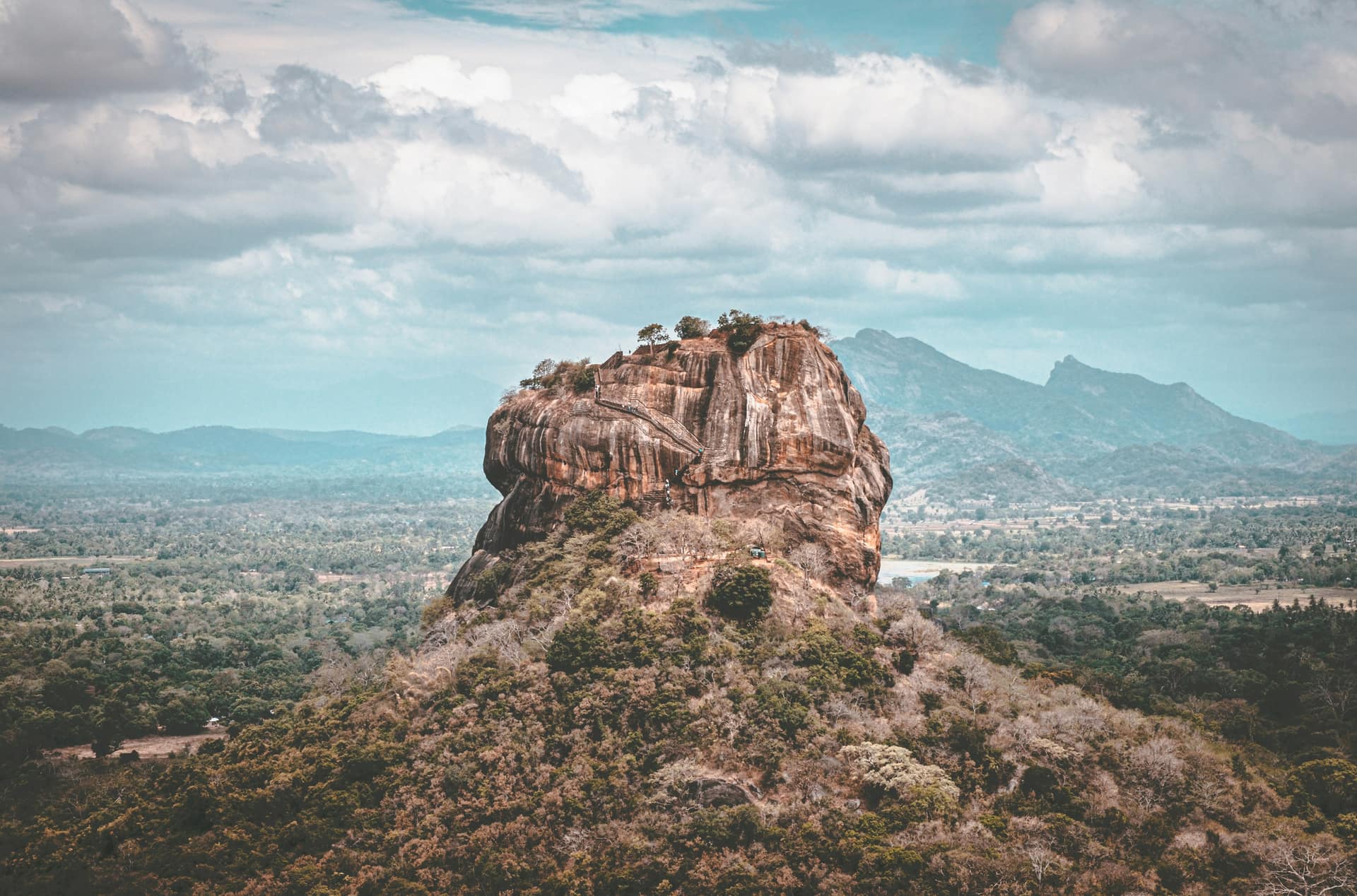
Sigiriya is an ancient rock fortress rising from the surrounding plain, dating back roughly 1,500 years, with the remains of a royal palace at its summit and well-known frescoes partway up the rock face. Reaching the top involves a climb of around 1,200 steps, best attempted in the cooler early morning before the heat and crowds build.
The site is a UNESCO World Heritage Site and is generally treated as the anchor stop of any Cultural Triangle route, with most itineraries allowing a half-day for the climb and the surrounding water gardens at its base.
- →Sigiriya rock fortress: roughly 1,500 years old, with a climb of around 1,200 steps to the summit.
- →Best climbed early morning, both for cooler temperatures and to beat the busiest crowds.
- →A UNESCO World Heritage Site and the usual anchor point of a Cultural Triangle itinerary.
Dambulla Cave Temple: murals inside a mountain
Dambulla Cave Temple, a short drive from Sigiriya, is a complex of natural caves containing Buddhist statues and murals, some dating back over 2,000 years, still used as an active place of worship rather than existing purely as a historical site. Visitors climb a moderate set of steps up the rock to reach the cave entrances, with views over the surrounding countryside along the way.
Because it remains an active temple, modest dress, shoulders and knees covered, is expected, and shoes are removed before entering the caves, a point worth planning for given the exposed rock underfoot can be warm in the middle of the day.
Polonnaruwa: the medieval capital's ruins
Polonnaruwa, Sri Lanka's medieval capital, holds an extensive complex of ancient ruins, including temples, statues and the remains of a royal palace complex, spread across a site generally explored on foot or, popularly, by bicycle over roughly half a day. The scale and relatively flat, walkable layout distinguish it from the vertical climb at Sigiriya.
The Gal Vihara, a group of large Buddha statues carved directly into a single granite rock face, is generally considered the highlight of a Polonnaruwa visit and is best seen without the midday sun directly overhead for photography.
- →Polonnaruwa: Sri Lanka's medieval capital, with ruins generally explored on foot or by bicycle.
- →The Gal Vihara Buddha statues, carved into a single granite rock face, are the site's noted highlight.
- →A half-day visit is typically sufficient to see the main complex at a comfortable pace.
Combining the Cultural Triangle with tropical beaches
Sigiriya, Dambulla and Polonnaruwa all sit within a broadly similar area of Sri Lanka's dry zone, making them practical to visit together over two or three days before continuing on to the coast. From there, tropical beaches such as Mirissa or Bentota are typically a further few hours south by road.
This coast-culture-coast, or culture-then-coast, structure is the shape of trip Sri Lanka is genuinely well suited to, and it is the shape a single Turkish Riviera resort stay does not offer, since that holiday is generally anchored at one seafront base for its duration.
Planning a culture-and-coast route from Turkey
For a Turkish traveller flying the non-stop Turkish Airlines route from Istanbul to Colombo, roughly nine to ten hours, a common route runs from Colombo or Negombo up to the Cultural Triangle, then down through Kandy to the south coast, ending with several days at the beach before the return flight.
We at Lankan Stays & Trails build this route as one of our standard driver-guided itineraries, sequencing the ancient sites earlier in the trip when energy for climbing and walking is higher, before finishing on the coast to unwind.
Frequently asked questions
Is Sigiriya older than Ephesus?
Not necessarily; both sites have long histories and comparing exact ages is not the useful question. Sigiriya dates back roughly 1,500 years, while Ephesus has occupation layers stretching back much further. Each is significant in its own right rather than one being objectively older.
How many steps are there to climb at Sigiriya?
Reaching the summit of Sigiriya involves a climb of around 1,200 steps, including some steep sections and spiral staircases partway up. Most visitors take one to two hours for the full climb and descent at a comfortable pace.
Can you visit Sigiriya and the beach on the same trip?
Yes, this is a common Sri Lanka itinerary shape. Sigiriya and the wider Cultural Triangle sit a few hours by road from tropical south or west coast beaches, so a culture-then-coast route within one trip is straightforward to plan.
How many days do you need for the Cultural Triangle?
Roughly two to three days generally allows time for Sigiriya, Dambulla and Polonnaruwa without rushing, though this depends on pace and whether Anuradhapura is also included. Hedge this figure and confirm timing against your specific route.
What should I wear to visit Dambulla Cave Temple?
Modest dress is expected since Dambulla remains an active place of worship: shoulders and knees should be covered, and shoes are removed before entering the caves. Light, breathable clothing suits the warm climb up to the cave entrances.
Is Polonnaruwa or Sigiriya better to visit?
They suit different preferences rather than one being better: Sigiriya offers a dramatic climb and views, while Polonnaruwa offers a larger, flatter complex generally explored by bicycle. Many itineraries include both since they sit close together.
Does Sri Lanka's ancient history compare to Turkey's?
Both have genuinely significant ancient history in their own right, Turkey at Ephesus and Troy, Sri Lanka in its Cultural Triangle, and neither is objectively superior. The practical difference is that Sri Lanka's sites combine easily with a tropical coast within one trip.
Does Lankan Stays & Trails run Cultural Triangle and beach itineraries?
Yes, our driver-guided itineraries commonly combine Sigiriya, Dambulla and Polonnaruwa with a south or west coast beach stay, sequenced so cultural sites come earlier in the trip and beach time closes it out.