
Quick answer
The key words at Cultural Triangle ruins are: stupa or dagoba, a dome-shaped monument holding relics; vatadage, a circular relic house built around a small stupa; image house or gedige, a shrine for Buddha statues; pokuna, a pond or bath; wewa, an irrigation reservoir or tank; vihara, a monastery or temple; sandakada pahana, a moonstone; and muragala, a guardstone. Knowing these few terms makes signboards at Anuradhapura, Polonnaruwa and Dambulla far easier to follow.
Key takeaways
- A stupa, called a dagoba or chaitya in Sri Lanka, is a solid dome-shaped monument that enshrines relics and is never entered.
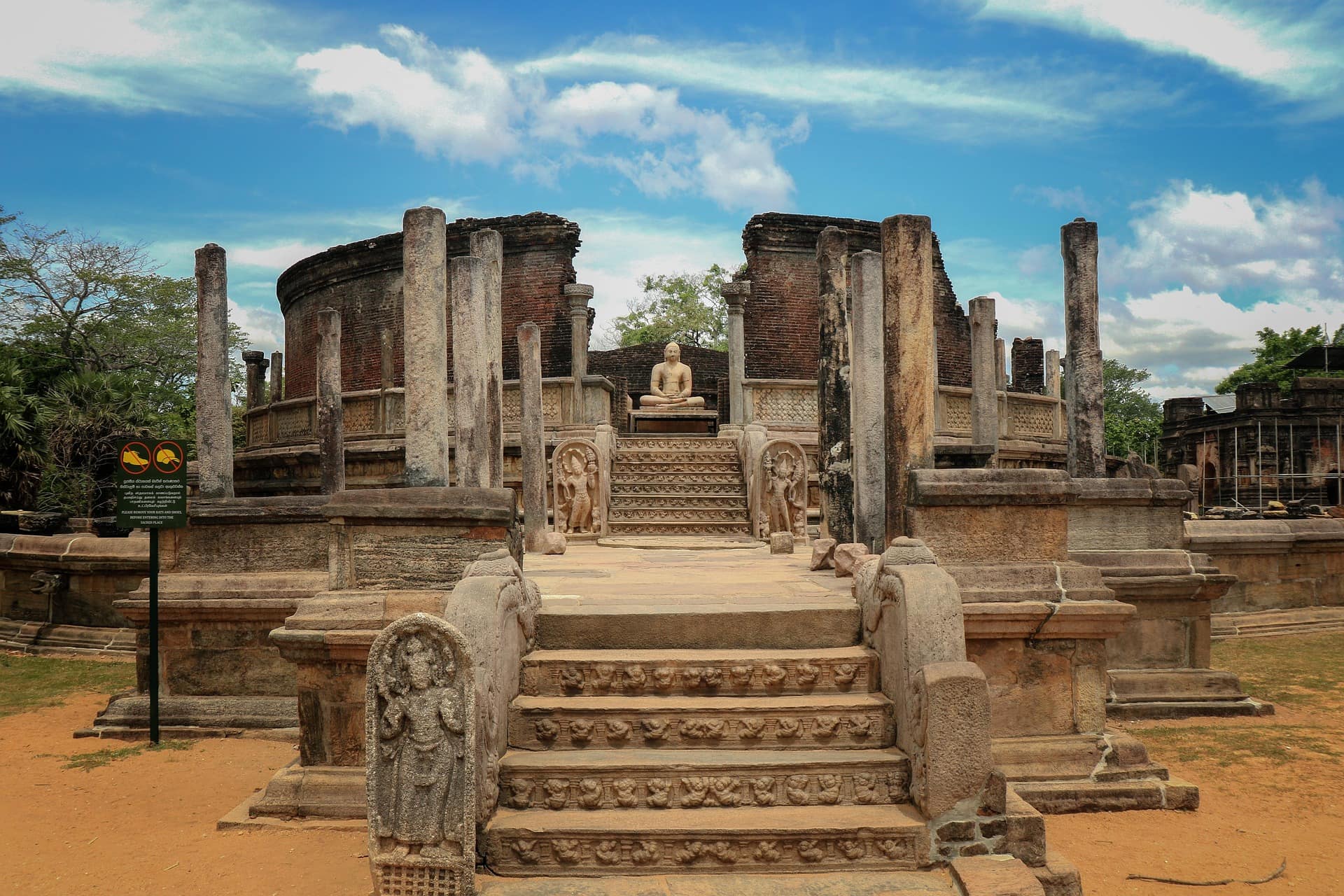
- A vatadage is a circular relic house built around a small stupa, with the finest examples at Polonnaruwa and Medirigiriya.
- A wewa is an ancient irrigation reservoir; Sri Lanka's dry zone holds thousands of them, many still in use.
- A sandakada pahana, or moonstone, is a carved semicircular stone at the foot of a shrine's steps.
- Vihara means a Buddhist monastery or temple, and appears in names such as Gal Vihara and Isurumuniya Vihara.
Monuments and shrines
The most common monument in the Cultural Triangle is the stupa, known in Sri Lanka as a dagoba or chaitya. A stupa is a solid dome, usually of brick and plaster, enshrining relics of the Buddha or a revered monk. It is never entered, and pilgrims walk around it clockwise.
A vatadage is a circular building around a small stupa, originally probably roofed, with rings of stone pillars. A gedige is a vaulted shrine built of stone or brick, as at Nalanda Gedige and Polonnaruwa's Thuparama. An image house, or patimaghara, holds Buddha statues.
Stupas in the Cultural Triangle follow recognisable shapes, described with Sinhala names such as bubble, bell, pot and paddy-heap. Ruwanwelisaya is the classic bubble shape. Above the dome sits a square box called the hatares kotuwa, which held relics or symbols, and above that a spire called the kotha. Guides use these terms when comparing stupas across Anuradhapura and Polonnaruwa.
- →Stupa, dagoba or chaitya: a solid relic mound.
- →Vatadage: a circular relic house around a small stupa.
- →Image house: a shrine for Buddha statues.
- →Gedige: a vaulted shrine of stone or brick.
- →Bodhighara: a shrine around a Bo tree.
Monastery words
Monastery vocabulary appears constantly in the Cultural Triangle. A vihara is a monastery or temple, often with a stupa, image house, Bo tree and monks' quarters. An aramaya is a monastic park or complex, as in Jetavanaramaya and Thuparamaya. A pirivena is a monastic college.
Padhanaghara are the double-platform meditation buildings found in forest monasteries such as Ritigala. Uposathaghara is a chapter house where monks meet on full moon days.
- →Vihara: monastery or temple.
- →Aramaya: monastery park or complex.
- →Pirivena: monastic college.
- →Padhanaghara: meditation building of forest monks.
Water words
Water vocabulary in the Cultural Triangle reflects the region's ancient engineering. A wewa is an irrigation reservoir or tank, from small village wewas to giants such as Parakrama Samudra and Kala Wewa. Samudra means sea, used for the largest.
A pokuna is a pond or bath, often stone-lined, as in Kuttam Pokuna, the twin ponds of Anuradhapura. A bisokotuwa is the valve pit built into a tank's embankment to control the outflow, an ancient Sri Lankan invention.
Water words matter because the ancient tanks shaped the entire Cultural Triangle. A village tank with its paddy fields and temple formed the basic unit of dry-zone life, a pattern still visible on the drive between Dambulla and Anuradhapura. Ela means canal, as in Jaya Ganga, the canal that carried water from Kala Wewa to Anuradhapura.
- →Wewa: irrigation reservoir.
- →Samudra: sea, used for the very largest tanks.
- →Pokuna: pond or bath.
- →Bisokotuwa: valve pit in a tank's embankment.
Carvings and decoration
Carved stone details in the Cultural Triangle have their own names. A sandakada pahana, or moonstone, is a carved semicircular slab at the foot of a shrine's steps. A muragala, or guardstone, flanks the steps, usually showing a naga king. A korawakgala is the balustrade, often ending in a curling makara.
A makara is a mythical beast combining several animals, often on balustrades and archways. Frescoes are wall paintings, as at Sigiriya and Dambulla.
Other words appear on signboards beside carvings. Vahalkada are the decorated frontispieces at the four cardinal points of some stupas, as at Kantaka Chetiya in Mihintale. Torana is a gateway, often of wood or stone. Siri pathula is the footprint of the Buddha, carved in stone and found at several Cultural Triangle sites.
- →Sandakada pahana: moonstone.
- →Muragala: guardstone.
- →Korawakgala: balustrade.
- →Makara: composite mythical beast.
Using the words on a visit
Using these words on a visit to the Cultural Triangle helps in two ways. Signboards make sense, and conversations with guides go deeper. Asking a guide to show you a good bisokotuwa or the best muragala in Anuradhapura usually brings out their best stories.
Lankan Stays & Trails guides often start a first Anuradhapura day with a short glossary at the museum, then point out each element on site, which quickly trains the eye.
A few greetings also help. Ayubowan, meaning may you live long, is the traditional Sinhala greeting, used with palms together.
Frequently asked questions
What is the difference between a stupa and a dagoba?
There is no real difference. Dagoba is the Sinhala-derived word for a stupa, the solid dome-shaped monument enshrining relics. Chaitya is another term used in Sri Lanka. All refer to the same type of monument.
What is a vatadage?
A vatadage is a circular relic house built around a small stupa, with concentric rings of stone pillars that probably once supported a roof. Fine examples stand at Polonnaruwa, Medirigiriya and Thuparamaya in Anuradhapura.
What does wewa mean?
Wewa is the Sinhala word for an irrigation reservoir or tank. The Cultural Triangle has thousands, built by ancient kings and villagers, many still used to water rice fields. Kala Wewa and Parakrama Samudra are among the largest.
What is a pokuna?
A pokuna is a pond or bath, usually stone-lined. The best known in the Cultural Triangle is Kuttam Pokuna, the twin ponds of Anuradhapura, and the Kumara Pokuna royal bath in Polonnaruwa.
What is a gedige?
A gedige is a vaulted shrine built of stone or brick, often in a style influenced by south Indian architecture. Nalanda Gedige near Matale and the Thuparama gedige at Polonnaruwa are good examples.
What does vihara mean?
Vihara means a Buddhist monastery or temple. It appears in many names, such as Gal Vihara, the rock temple in Polonnaruwa, and Isurumuniya Vihara in Anuradhapura. Raja Maha Vihara means a royal great temple, as at Dambulla.