
Quick answer
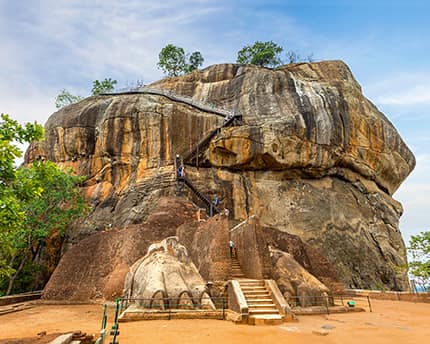
Dambulla is a good visit in December. The cave temple's five painted caves are sheltered from the rain, which makes it one of the best Cultural Triangle sights on a showery day. The climb up the rock takes about 15 to 20 minutes on stone steps that can be slippery when wet, so morning is the best time. December is green and cooler than the dry months, around 28 to 30°C. Expect worshippers on the Unduvap full moon poya and bigger crowds in the last ten days of the month.
Key takeaways
- The painted caves are under the rock, so the visit works in rain.
- The climb takes 15 to 20 minutes on steps that get slippery after showers.
- Mornings are usually drier and less crowded.
- Poya days bring worshippers and a special atmosphere.
- Dambulla pairs easily with Sigiriya, about 30 minutes away.
Dambulla's December weather
Dambulla sits at the edge of the dry zone, close to the centre of the island. In December the north-east monsoon brings it rain, often in heavy afternoon showers. Mornings are usually bright and humid, and temperatures stay around 28 to 30°C, comfortably below the dry-season peak.
The rock and the surrounding scrub are green in December, and the reservoirs around the town are full. The views from the cave terrace across the plains, with Sigiriya rock on the horizon on a clear day, are at their freshest after rain, though cloud can hide the distance in the afternoon.
Rainfall tends to ease towards the end of the month. Early December has the highest chance of a wet afternoon, while late December often brings longer dry spells. Either way, the caves themselves remain dry and open.
- →Mornings: usually bright and humid.
- →Afternoons: showers common, especially early in the month.
- →Caves: sheltered and open in any weather.
Inside the cave temple
The temple has five main caves, each with painted walls and ceilings and many Buddha statues, including a large reclining figure in the first cave. The paintings cover more than 2,000 square metres and date from several periods, with much of what you see restored in the Kandyan era. The second cave, the Maharaja Viharaya, is the largest and most impressive.
Because the caves are under the overhang, rain makes little difference once you are inside. The light can be dim on a cloudy day, which actually suits the paintings, though photography without flash is the rule and some areas ask for no photographs at all.
Shoes are left at the entrance to the cave terrace, and the stone can be cold and wet in December. Thin socks are helpful. Clothing must cover shoulders and knees, and hats must be removed. Guides are available at the bottom and can bring the paintings to life.
- →Five caves with painted ceilings and Buddha statues.
- →Maharaja Viharaya: the largest cave.
- →No flash photography; respect signs.
Timing your visit
The climb from the ticket office to the caves takes about 15 to 20 minutes on stone steps and sloping rock. In December the rock can be slippery after rain, so take care and wear shoes with grip for the climb, changing into bare feet only at the terrace.
Mornings are best for the climb, both for drier conditions and for smaller crowds. If you are climbing Sigiriya at dawn, Dambulla fits well into the late morning, before the afternoon showers. Alternatively, keep Dambulla for a wet afternoon, since the caves are sheltered and the climb is short.
The large golden Buddha and the museum at the foot of the hill are part of the newer complex. They are quick to see and less interesting than the caves, so do not let them eat into a dry window.
Poya days and crowds
The Unduvap full moon poya in December brings families in white clothing with flowers and offerings, and the caves are busy with worshippers from early morning. It is a beautiful time to visit, as long as you are respectful, move quietly and avoid blocking people at prayer.
In the last ten days of December, holiday traffic increases at all Cultural Triangle sights. Dambulla is usually less crowded than Sigiriya, but mid-morning can still be busy with tour groups. The first hour after opening and the late afternoon are the calmest times.
The planners at Lankan Stays & Trails often place Dambulla on the same day as a Sigiriya or Pidurangala climb in December, choosing the order based on the forecast so that the open-air climb gets the driest window.
- →Unduvap poya: worshippers in white, respectful atmosphere.
- →Late December: busiest mid-morning.
- →Calmest: first hour and late afternoon.
Combining Dambulla with other sights
Dambulla is about 30 minutes from Sigiriya, an hour from Habarana and about two hours from Kandy, so it sits naturally on the road between the Cultural Triangle and the hill country. Many routes stop at Dambulla on the way south to Kandy.
The area also has smaller sites that are quiet in December: the Ibbankatuwa megalithic tombs near the town, the Nalanda Gedige temple on the Kandy road and the spice gardens around Matale. These fit well around showers and add variety to a heavy temple day.
- →Sigiriya: about 30 minutes.
- →Kandy: about two hours south.
- →Nalanda Gedige and Matale spice gardens on the way.
Frequently asked questions
Is Dambulla worth visiting in December?
Yes. The cave temple's painted caves are sheltered under the rock, so the visit works even on a showery afternoon. December is green and cooler than the dry months, and crowds are lighter than at Sigiriya. Climb in the morning if you can, as the steps are slippery after rain.
Can I visit the Dambulla caves in the rain?
Yes. The caves are under a large overhang and stay dry, which makes Dambulla one of the best Cultural Triangle sights for a rainy day. The 15 to 20 minute climb is slippery when wet, so take it slowly, wear shoes with grip and change to bare feet at the terrace.
How long does Dambulla cave temple take?
Allow about one and a half to two hours, including the climb of 15 to 20 minutes, time in the five caves and the walk back down. With a guide, two hours is comfortable. The golden Buddha and museum at the foot of the hill add another half hour.
Is Dambulla busy on Unduvap poya?
Yes, families in white visit with flowers and offerings, especially in the morning. It is a lovely atmosphere to experience. Dress modestly, move quietly and avoid blocking worshippers. Remember that alcohol sales stop island-wide on poya days.
Should I visit Dambulla or Sigiriya first in December?
Choose by the forecast. Sigiriya is fully open-air, so give it the driest morning, ideally at opening time. Dambulla's caves are sheltered, which makes it a good choice for a showery afternoon. The two are about 30 minutes apart and often fit in one day.
What should I wear to Dambulla cave temple?
Clothes covering shoulders and knees, a hat to remove at the terrace, and shoes with grip for the climb. Shoes come off at the cave entrance, and the stone can be cold and wet in December, so thin socks help. Carry a light rain jacket for the walk up.
Is Dambulla hot in December?
It is warm and humid rather than very hot, usually around 28 to 30°C. Cloud cover keeps it cooler than in the dry months. The climb is short but steep, so carry water and take it at an easy pace, especially in the middle of the day.