
Quick answer
No. Sri Lanka's monsoons decide which coast your trip finishes on, not whether Sigiriya or Ella comes first. The airport to Sigiriya drive of roughly four to five hours, the airport to Ella drive of roughly seven to eight, and the climbing direction of the Kandy to Ella railway are all fixed in every month. What moves with the season is the beach: the south from December to March, the east from May to September.
Key takeaways
- Drive times and the railway's climbing direction do not change with the season.
- The south and west coasts are in season roughly December to March.
- The east coast is in season roughly May to September.
- The Cultural Triangle sits in the dry zone and is workable year round.
- Ella catches cloud at roughly 1,000 metres in any month, which is altitude rather than monsoon.
Two questions that get merged into one
There are really two separate decisions inside a Sri Lankan itinerary. The first is the order of the inland stops, which is governed by distance from the airport, road speeds and the direction of the railway. The second is which coast to finish on, which is governed almost entirely by the monsoons.
Because both get discussed under the heading of route planning, travellers often assume that a change in season should change everything. In practice the first decision is fixed and the second is seasonal, and treating them separately removes most of the confusion.
A useful way to hold it: the inland half of the route is a constant, and the coastal half is a variable. Settle the constant first and the variable will resolve itself from the dates.
- →Inland order is governed by distances, roads and the railway.
- →The coastal choice is governed by the monsoons.
- →Both get discussed as route planning, which merges them.
- →Settle the inland constant first, then choose the coast from the dates.
What does not move with the season
Bandaranaike International Airport to Sigiriya is roughly four to five hours in January and roughly four to five hours in July. Airport to Ella is roughly seven to eight in both. Rain slows Sri Lankan roads at the margin but it does not change which of two drives is longer.
The railway is equally fixed. The Kandy to Ella line climbs through Nanu Oya into the tea country and the scenic stretch takes roughly two and a half to three hours, in whichever direction the weather is coming from. It runs better towards Ella in every month of the year.
The effort curve is also constant. The Sigiriya climb of roughly 1,200 steps is the hardest thing on the route and benefits from rested legs and an early start regardless of season, and Ella's short walks remain the gentler half of the pair.
- →Airport to Sigiriya: roughly four to five hours in any month.
- →Airport to Ella: roughly seven to eight hours in any month.
- →The railway climbs towards Ella regardless of season.
- →Sigiriya remains the harder stop and Ella the gentler one year round.
What genuinely moves with the season
The coast is the main thing. From roughly December to March the north-east monsoon affects the east and north, leaving the south and west dry, so a trip finishes at Mirissa, Weligama or Unawatuna. From roughly May to September the south-west monsoon reverses that, and the trip finishes at Trincomalee, Nilaveli, Pasikuda or Arugam Bay.
Whale watching moves with it. Off Mirissa the season runs roughly December to April; off Trincomalee roughly May to September. In both cases trips leave very early and last roughly four to six hours at sea, and responsible operators keep their distance rather than chasing.
Wildlife viewing in the dry zone shifts too. The elephant gathering around the Minneriya and Kaudulla reservoirs is usually strongest from roughly June to September, when receding water concentrates animals on the grassland, though it varies with water levels each year.
- →December to March: finish on the south or west coast.
- →May to September: finish on the east coast.
- →Whale watching: Mirissa roughly December to April, Trincomalee roughly May to September.
- →The Minneriya gathering is usually strongest roughly June to September.
The one case where the season reshapes the route
There is a genuine exception worth naming. Because Trincomalee sits within reasonable reach of Sigiriya and Habarana, a May to September trip can run inland to the Cultural Triangle, out to the east coast, and back to the airport without crossing the whole island.
That shape puts the beach in the northern half of the trip rather than at the southern end, which changes where the coastal nights sit in the sequence. It is not a reversal of Sigiriya and Ella so much as a different way of closing the loop.
The Arugam Bay version does something similar from Ella, bending south-east rather than south-west. In both cases the inland order is untouched and only the exit changes, which is the general pattern rather than an exception to it.
- →Trincomalee is within reach of Sigiriya and Habarana.
- →A summer loop can put the beach in the northern half of the trip.
- →Arugam Bay is reachable from Ella without returning through Kandy.
- →In both cases the inland order stays the same and only the exit moves.
How to plan when the season is uncertain
Travellers with fixed dates in April or October face the least predictable conditions, since those are inter-monsoon months with afternoon thunderstorms and no settled pattern. The answer is not to reorder anything but to add slack.
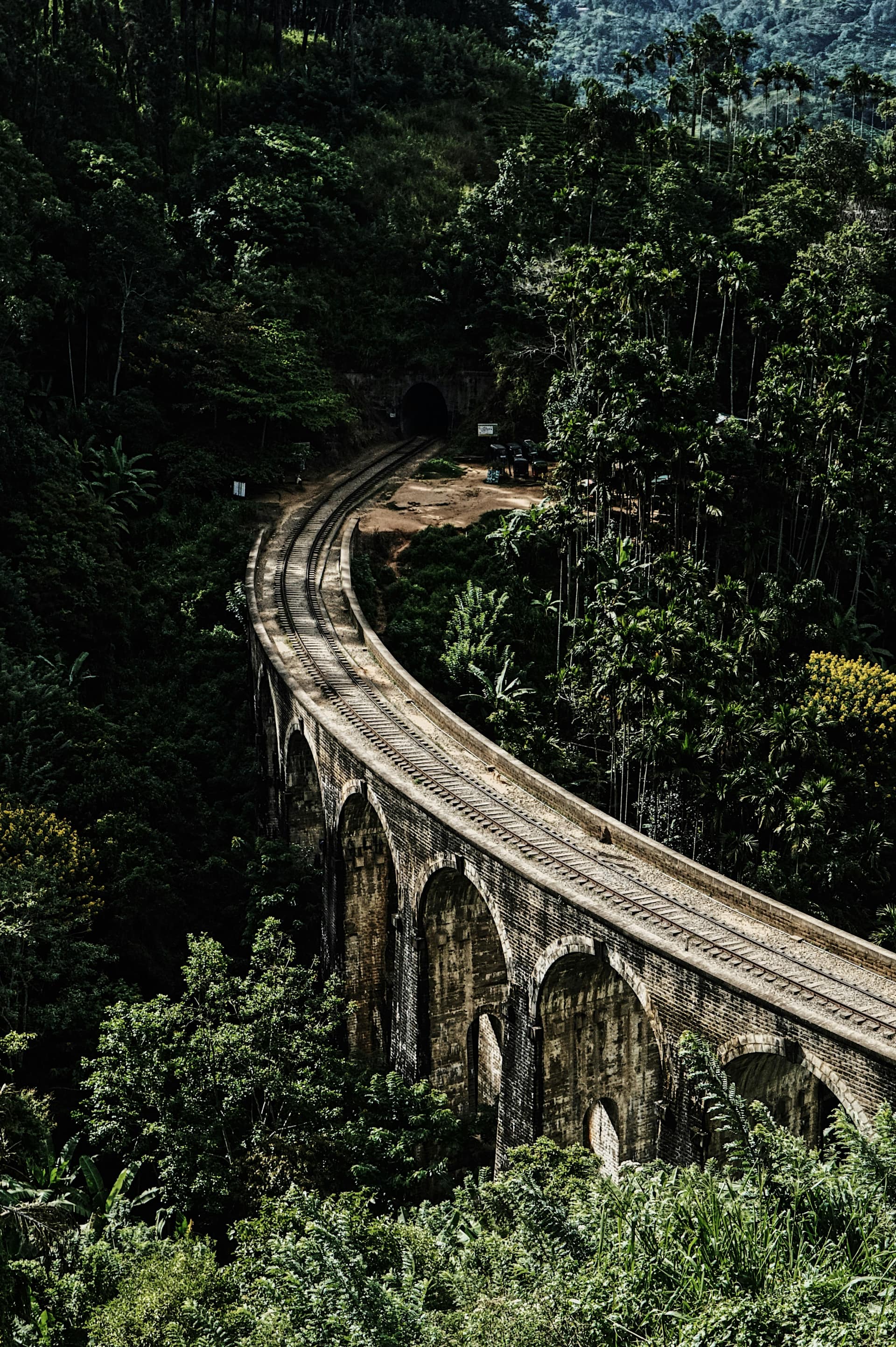
Two nights at Sigiriya gives a fallback morning for the climb. Two nights in Ella doubles the chance of a clear morning at the Nine Arch Bridge, which is worth more at roughly a thousand metres than most people expect, since cloud there is an altitude effect present in every month.
Lankan Stays and Trails sets the inland sequence from the flight times and the coastal section from the dates, in that order, and keeps the beach provisional as long as booking allows. That approach handles every season without needing a different route for each one.
- →April and October are inter-monsoon months with unsettled weather.
- →Add slack rather than reordering: a spare morning at each anchor.
- →Ella cloud is an altitude effect and occurs in every month.
- →Set the inland sequence from flights and the coast from the dates.
Frequently asked questions
Does the monsoon affect which order I visit Sri Lanka's sights?
Not the inland order. Drive times from the airport and the climbing direction of the Kandy to Ella railway are the same in every month. What the monsoons decide is which coast you finish on: the south from December to March, the east from May to September.
Which coast is best in Sri Lanka and when?
The south and west from roughly December to March, when the north-east monsoon affects the other side of the island. The east, around Trincomalee, Nilaveli, Pasikuda and Arugam Bay, from roughly May to September when the pattern reverses.
Is the Cultural Triangle affected by monsoon?
Much less than the coasts. Sigiriya, Habarana, Polonnaruwa and Anuradhapura sit in the dry zone and stay comparatively dry through the south-west monsoon, which makes the Cultural Triangle the most reliable region from May to September.
Does it rain in Ella all year?
Cloud is common in every month because Ella sits at roughly a thousand metres, which is an altitude effect rather than a monsoon one. Two nights rather than one doubles your chance of a clear morning at the Nine Arch Bridge.
Can I visit Sri Lanka at any time of year?
Yes. The island has two monsoons arriving from opposite directions, so there is almost always a coast in season and the Cultural Triangle is workable throughout. Only the beach section of an itinerary genuinely needs to move with the dates.
What are the worst months to visit Sri Lanka?
There is no universally bad month, only badly matched itineraries. October is the least predictable, as the north-east monsoon establishes while the south has not fully opened, and it is also the quietest and best value time to travel.
Should I book the coast before or after the inland section?
Set the inland sequence from your flight times first, then choose the coast from your dates. Keep the beach provisional as long as booking allows, particularly in April or October when either side of the island might turn out to be the better option.