
Quick answer
In the shoulder months of April and October, visit Sigiriya first and keep the itinerary flexible. These inter-monsoon periods sit between Sri Lanka's two monsoons, so rain is possible on either coast and afternoon thunderstorms are common. The standard order still holds, but build a spare morning into the Sigiriya stay and be ready to swap the coastal section between the south and the east.
Key takeaways
- April and October are inter-monsoon months sitting between Sri Lanka's two rainfall patterns.
- Afternoon thunderstorms are common in both windows, while mornings are more often clear.
- Crowds thin noticeably and accommodation is easier to secure at shorter notice.
- April is typically the hottest month in the dry zone around Sigiriya.
- The Sinhala and Tamil New Year falls in mid-April and affects travel and opening hours.
What the shoulder months are
Sri Lanka's weather is organised around two monsoons arriving from opposite directions. The south-west monsoon runs roughly May to September and the north-east monsoon roughly December to March. April and October are the gaps between them, when neither pattern is fully established.
In practice that means convectional rainfall rather than monsoon rainfall: heat builds through the day and releases as an afternoon thunderstorm, often short and heavy. Mornings in both windows are more often clear than not.
This is genuinely different from monsoon weather, which tends to be more persistent and more geographically predictable. A shoulder-month forecast is less reliable than a high-season one, but the rain is usually briefer.
- →The south-west monsoon runs roughly May to September.
- →The north-east monsoon runs roughly December to March.
- →April and October sit between the two with convectional rainfall.
- →Afternoon thunderstorms are common; mornings are more often clear.
What that means for the route
The structural arguments for Sigiriya first are unchanged, because drive times and the railway's direction do not vary with the weather. What changes is how much slack the itinerary needs.
The single most useful adjustment is a spare morning in the Cultural Triangle. Two nights at Sigiriya or Habarana gives one full day plus a fallback, and in a shoulder month that fallback is more likely to be needed than at any other time of year.
The second adjustment is to keep the coastal section provisional for as long as booking allows. April usually favours the south, October can favour either, and being able to move a beach stay from Mirissa to Trincomalee a fortnight out is worth more than a small deposit saving.
- →Drive times and railway direction are unaffected by season.
- →Two nights at Sigiriya gives the fallback morning these months need.
- →Keep the coastal section provisional as long as booking allows.
- →April usually favours the south; October can favour either coast.
April, the heat and the New Year
April is typically the hottest month in the dry zone, which matters at Sigiriya more than anywhere else on the route. A rock with almost no shade in the hottest month makes the opening start around seven less of a recommendation and more of a requirement.
The Sinhala and Tamil New Year falls in mid-April and is the largest domestic travel period of the year. Roads are busy, trains fill with families, many businesses close for several days, and hotel availability tightens sharply. The dates shift slightly and should be confirmed before booking.
It is a genuinely interesting time to be in the country if you plan around it rather than into it. What does not work is expecting a normal week of opening hours and transport in the days immediately around the New Year.
- →April is typically the hottest month in the dry zone around Sigiriya.
- →The opening start around seven becomes a requirement rather than advice.
- →The Sinhala and Tamil New Year falls in mid-April; dates shift slightly.
- →Roads, trains and hotels are all heavily affected for several days.
October and the second inter-monsoon
October is the wetter and less predictable of the two shoulder months, and it is also the quietest and cheapest. The north-east monsoon is beginning to establish itself, so the east coast season is closing while the south has not fully opened.
Ella in October is often cloudy, which is worth planning for rather than hoping against. The Nine Arch Bridge and Little Adam's Peak both want a clear morning, and giving Ella two nights rather than one doubles your chances of getting one.
The compensations are real. Sites that are uncomfortable with crowds are quiet, the landscape is at its greenest after months of rain, and accommodation that would be unobtainable in January is available at short notice. Lankan Stays and Trails treats October as the best value month for travellers who can tolerate an uncertain forecast.
- →October is wetter and less predictable than April.
- →The east coast season is closing while the south has not fully opened.
- →Ella is often cloudy; two nights doubles your chance of a clear morning.
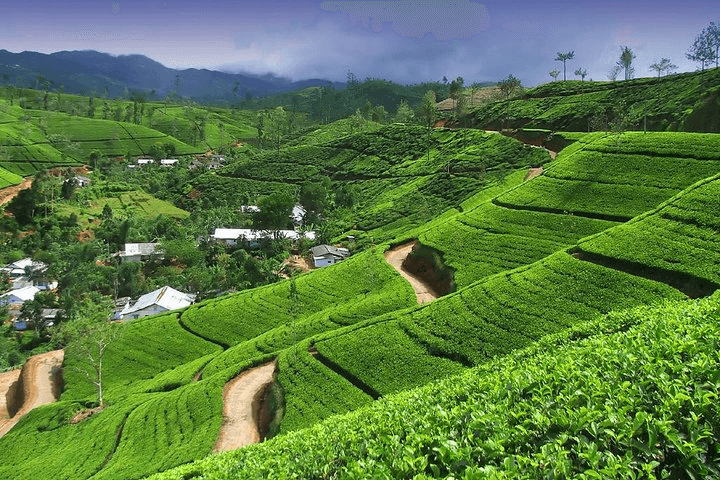
- →Sites are quiet and the landscape is at its greenest.
Making a shoulder-month trip work
Front-load the mornings. In both windows the clear weather tends to come early and the rain in the afternoon, so an itinerary that does its sightseeing before noon and rests afterwards works with the pattern rather than against it.
Carry a light waterproof and accept that it will be used. A short heavy shower is not a reason to cancel a plan, and most sites remain perfectly visitable through one. Dambulla Cave Temple is entirely indoors once you are up, which makes it the natural wet-afternoon option from a Sigiriya base.
Finally, book fewer fixed things. The whole advantage of a shoulder month is that availability exists, so leaving a night or two unallocated and deciding on the ground is easier than at any other time of year and produces a better trip.
- →Sightsee in the morning and rest in the afternoon.
- →Carry a light waterproof and expect to use it.
- →Dambulla Cave Temple is the natural wet-afternoon option near Sigiriya.
- →Leave a night or two unallocated; availability exists in these months.
Frequently asked questions
Is April a good time to visit Sri Lanka?
It is good value with caveats. April is an inter-monsoon month with afternoon thunderstorms and clearer mornings, and it is typically the hottest month in the dry zone. The Sinhala and Tamil New Year in mid-April affects transport and opening hours.
What is the weather like in Sri Lanka in October?
Unpredictable and often wet, as the north-east monsoon begins to establish. It is the quietest and cheapest month, with the landscape at its greenest, and mornings are more often clear than afternoons. Expect short heavy showers rather than all-day rain.
Does shoulder season change the Sigiriya and Ella order?
No. Drive times and the climbing direction of the railway do not vary with weather. What changes is how much slack the itinerary needs, so build a spare morning into the Sigiriya stay and keep the coastal section provisional.
When is the Sinhala and Tamil New Year?
Mid-April, though the exact dates shift slightly each year and should be confirmed before booking. It is the largest domestic travel period of the year, with busy roads, full trains, many businesses closed and tight hotel availability for several days.
What can I do in Sri Lanka when it rains?
Dambulla Cave Temple is entirely indoors once you have made the fifteen to twenty minute climb, which makes it the natural wet-afternoon option from a Sigiriya base. Galle Fort also works under cloud, as the ramparts and old town are unaffected.
Is it cheaper to visit Sri Lanka in the shoulder months?
Noticeably. Accommodation that would be unobtainable in January is often available at short notice, sites are quiet, and prices soften. The trade is a forecast that deserves less trust, which suits travellers who can leave part of the itinerary open.
How hot is Sigiriya in April?
April is typically the hottest month in the dry zone, and the rock has almost no shade and radiates stored heat from mid-morning. An opening start around seven stops being a recommendation and becomes the only sensible way to climb it.