
Quick answer
Sigiriya sits in Sri Lanka's dry zone and stays comparatively dry through the south-west monsoon from May to September, with its wetter period falling roughly October to January. Ella at roughly 1,000 metres catches cloud and mist in every month of the year, which is an altitude effect rather than a monsoon one, so a clear morning there is never guaranteed whatever the season.
Key takeaways
- Sigiriya sits in the dry zone and is sheltered from the south-west monsoon.
- The dry zone's wetter period falls roughly October to January with the north-east monsoon.
- Ella catches cloud in any month because of its altitude, not the season.
- April is typically the hottest month in the dry zone around Sigiriya.
- Two mornings in Ella rather than one is the only reliable insurance against cloud.
Why the two differ so much
Sri Lanka has two monsoons arriving from opposite directions. The south-west monsoon runs roughly May to September and affects the south and west coasts and the western slopes of the highlands. The north-east monsoon runs roughly December to March and affects the east and north.
Sigiriya sits in the dry zone, in the rain shadow of the central highlands relative to the south-west monsoon. That is why it stays comparatively dry in exactly the months travellers often write the island off, and why its own wetter period comes later, roughly October to January.
Ella sits on the eastern side of the highlands at roughly a thousand metres. It is less affected by the south-west monsoon than Nuwara Eliya or the western slopes, but its dominant weather feature is altitude rather than monsoon: cloud forms and sits in the valleys at any time of year.
- →South-west monsoon: roughly May to September, south and west.
- →North-east monsoon: roughly December to March, east and north.
- →Sigiriya lies in the dry zone rain shadow; its wetter period is October to January.
- →Ella's dominant feature is altitude cloud rather than monsoon rain.
Sigiriya through the year
The dry zone is hot year round and the variation is more about rainfall and humidity than temperature. Roughly February to April is dry and increasingly hot, with April typically the hottest month and the one where an opening climb around seven stops being advisable and becomes necessary.
Roughly May to September is the dry zone's strongest period relative to the rest of the island. It stays comparatively dry while the south-west coasts are wet, which makes the Cultural Triangle the most reliable region in that window.
Roughly October to January brings the north-east monsoon and the dry zone's own wetter spell. Rain tends to come in heavy bursts rather than all day, so sightseeing remains possible, but a clear summit view is less certain and the climb can be slippery on worn stone.
- →February to April: dry and increasingly hot, with April the hottest.
- →May to September: comparatively dry and the most reliable region.
- →October to January: the dry zone's wetter period, in heavy bursts.
- →Worn stone on the lower staircases can be slippery after rain.
Ella through the year
Ella is cooler than the lowlands throughout, with evenings that want a light layer and mornings that can be genuinely chilly. Temperature falls by roughly six degrees Celsius per thousand metres of altitude, so the difference from Sigiriya is several degrees day and night.
The consistent feature is cloud. Mist forms in the valleys and sits on the ridges, often burning off by mid-morning and often not. This happens in January as readily as in July, which is why travellers who plan around the monsoon calendar alone are frequently surprised.
The wettest spells tend to fall with the north-east monsoon around October to December, and the drier, clearer periods around February to April and again in the south-west monsoon shadow months. None of that is reliable enough to plan a single morning around.
- →Several degrees cooler than Sigiriya, with chilly mornings.
- →Valley mist and ridge cloud occur in every month.
- →Cloud often burns off by mid-morning, and often does not.
- →Wettest roughly October to December; clearer around February to April.
Planning around it rather than predicting it
The practical response to Ella's cloud is structural rather than predictive: two nights rather than one. That gives two mornings at the Nine Arch Bridge and two chances at a clear view from Little Adam's Peak, which roughly doubles your odds on the single thing weather can ruin there.
At Sigiriya the equivalent insurance is also a second night, giving a fallback morning if rain arrives or the stone is slippery. The rock is climbable in light rain but it is less pleasant and less safe on the exposed upper stairways.
Carry a light waterproof regardless of season, particularly in the hill country. It doubles as a windproof layer on the ridges and at Lipton's Seat above Haputale before dawn, where the exposure is more noticeable than the temperature suggests.
- →Two Ella nights give two mornings at the Nine Arch Bridge.
- →A second Sigiriya night gives a fallback if rain arrives.
- →The rock is climbable in light rain but less pleasant and less safe.
- →A light waterproof doubles as a windproof on the ridges.
What to do when the weather closes in
Near Sigiriya, Dambulla Cave Temple is the answer. It is entirely indoors once you have made the roughly fifteen to twenty minute climb, the five caves hold roughly 150 Buddha statues and painted ceilings, and rain makes no difference to any of it.
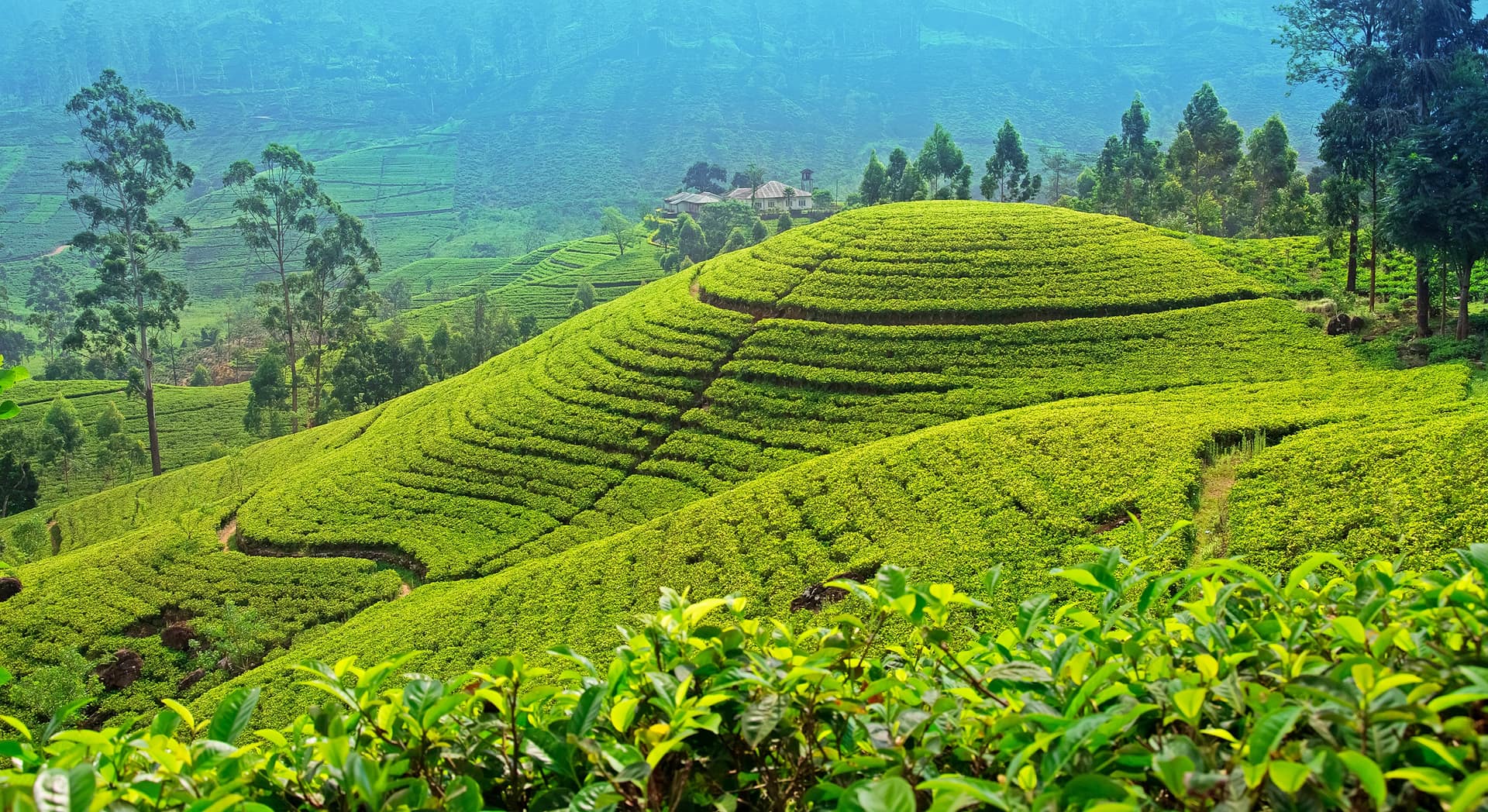
In Ella, a tea estate and factory visit works in any weather, and the cloud that spoils a viewpoint often improves the estates themselves. Travellers frequently report the misted tea slopes as more memorable than the clear ones.
Lankan Stays and Trails keeps a wet-weather alternative attached to every outdoor day rather than improvising on the morning, which is the difference between a rearranged day and a lost one. The weather in both places is workable; it is only the specific viewpoint that is not.
- →Dambulla Cave Temple is entirely indoors once you are up.
- →Roughly fifteen to twenty minutes up; about an hour inside.
- →Tea estate and factory visits work in any weather.
- →Keep a wet-weather alternative attached to every outdoor day.
Frequently asked questions
What is the weather like at Sigiriya?
Hot year round, since it sits in the dry zone. It stays comparatively dry through the south-west monsoon from roughly May to September, and its own wetter period falls roughly October to January with the north-east monsoon, usually in heavy bursts.
Is Ella always cloudy?
Cloud and valley mist occur in every month, because Ella sits at roughly 1,000 metres and this is an altitude effect rather than a monsoon one. It often burns off by mid-morning, and often does not, which is why two mornings there beat one.
When is Sigiriya hottest?
Typically April, at the end of the dry period before the inter-monsoon rains. That is when an opening climb around seven stops being advisable and becomes the only sensible option, since the rock has almost no shade and radiates stored heat.
Can you climb Sigiriya in the rain?
It is possible but less pleasant and less safe. The worn stone on the lower staircases becomes slippery and the exposed metal stairways higher up are unappealing in weather. A second night at the base gives you a fallback morning.
What can I do in Sri Lanka if it rains?
Near Sigiriya, Dambulla Cave Temple is entirely indoors once you have made the fifteen to twenty minute climb. In Ella, a tea estate and factory visit works in any weather, and misted tea slopes are often more memorable than clear ones.
Does the national forecast work for Sri Lanka?
Not usefully. Sigiriya in the dry zone and Ella at roughly 1,000 metres have genuinely different climates roughly 160 kilometres apart, and the two monsoons affect opposite sides of the island, so a single national figure tells you very little.
How much cooler is Ella than the lowlands?
Several degrees, day and night. Air temperature falls by roughly six degrees Celsius per thousand metres of altitude, and Ella sits about nine hundred metres above Sigiriya. Evenings want a light layer and mornings can be genuinely chilly.