
Quick answer
Pack for two climates: breathable long sleeves, a hat and proper walking shoes for the heat and sun at Sigiriya, plus a light fleece or jumper and long trousers for Ella, where evenings at roughly 1,000 metres are cool and rooms usually have no heating. Carry a scarf or sarong throughout for temple dress, and socks for Dambulla, where shoes come off on hot stone.
Key takeaways
- Ella sits at roughly 1,000 metres with cool evenings, and hill-country rooms rarely have heating.
- Shoulders and knees must be covered at Dambulla Cave Temple and the Temple of the Sacred Tooth Relic.
- Socks matter at Dambulla, where shoes come off and the stone courtyard gets very hot by midday.
- Shoes with grip beat sandals at Sigiriya, where the stone is uneven and worn smooth in places.
- A light waterproof is sensible in the hill country in any month, since cloud arrives year round.
The two climates you are packing for
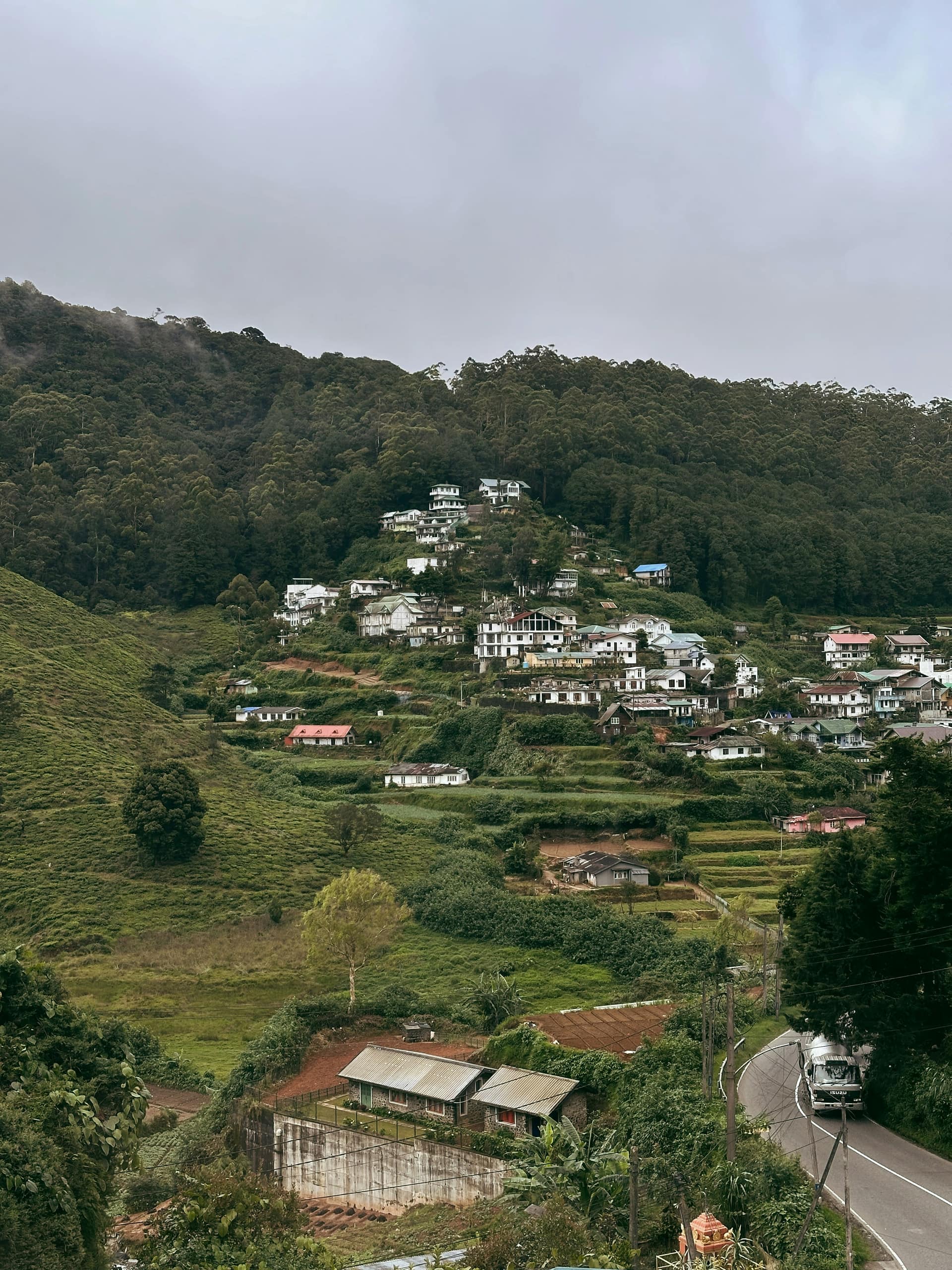
Sigiriya sits at around a hundred metres on the dry-zone plain, where the middle of the day is consistently hot and the rock itself radiates stored heat. Ella sits at roughly a thousand metres, where evenings are cool enough to want a layer and mornings can be genuinely chilly.
As a working rule, air temperature falls by roughly six degrees Celsius per thousand metres of altitude, so the gap between the two is several degrees day and night. Nuwara Eliya, higher again at roughly 1,900 metres, extends the same pattern and is cold by tropical standards.
The packing error almost everyone makes is treating Sri Lanka as uniformly hot. Travellers arrive with beach clothes and spend a cold evening in the hill country wearing everything they own.
- →Sigiriya: around 100 metres, hot dry-zone plain.
- →Ella: roughly 1,000 metres, cool evenings and chilly mornings.
- →Nuwara Eliya: roughly 1,900 metres and cold at night.
- →Roughly six degrees Celsius cooler per thousand metres gained.
For Sigiriya and the Cultural Triangle
Breathable long sleeves rather than bare shoulders. They protect against sun on a climb with almost no shade, and they double as temple-appropriate dress, which saves carrying a separate outfit.
Proper shoes with grip rather than sandals. The stone on the lower staircases is uneven and worn smooth in places, and the metal stairways higher up are steep. Flip-flops are a genuinely poor choice on roughly 1,200 steps.
A hat, sunscreen and more water than you expect to need. There is no shade anywhere useful on the rock, and the descent is thirstier than the ascent. A small daypack that leaves your hands free for the handrails is worth more than a shoulder bag.
- →Breathable long sleeves for sun protection and temple dress.
- →Shoes with grip; the stone is uneven and worn smooth in places.
- →A hat, sunscreen and more water than you think you need.
- →A daypack rather than a shoulder bag, so hands stay free.
For Ella and the hill country
A light fleece or jumper is the item most often left behind and most often wanted. Evenings at roughly a thousand metres are cool, and accommodation in the hill country frequently has no heating because it is not needed often enough to install. Blankets are provided and are usually sufficient once you are in bed.
Long trousers for the evening serve the same purpose and are more comfortable than shorts on a cool verandah. Something warmer to sleep in than you would choose for the coast is worth the space, particularly if Nuwara Eliya is on the itinerary.
A light waterproof is sensible in any month. The hill country catches cloud year round, which is an altitude effect rather than a monsoon one, and the same jacket doubles as a windproof layer on the Ella ridges and at Lipton's Seat before dawn.
- →A light fleece or jumper; hill-country rooms rarely have heating.
- →Long trousers for cool evenings on a verandah.
- →Warmer sleepwear than the coast would need.
- →A light waterproof that doubles as a windproof on the ridges.
Temple dress, which applies throughout
Shoulders and knees must be covered at Dambulla Cave Temple, the Temple of the Sacred Tooth Relic in Kandy and every other working religious site. This is not negotiable and is enforced at the entrance, so a scarf or sarong carried permanently in the daypack solves it without planning.
Shoes and hats come off before entering temple precincts. At Dambulla that means walking barefoot across a stone courtyard that becomes very hot underfoot by the middle of the day, which is genuinely painful and entirely avoidable: carry socks, which are not considered disrespectful.
Avoid clothing with Buddha images or motifs, including tattoos that are visible. This causes real offence in Sri Lanka and has occasionally caused travellers serious difficulty, so cover any such tattoo rather than assuming it will pass unnoticed.
- →Shoulders and knees covered at all working religious sites.
- →A scarf or sarong carried permanently solves it without planning.
- →Socks for Dambulla: shoes come off and the courtyard burns by midday.
- →Avoid Buddha images on clothing, and cover such tattoos.
The things that actually get used
Insect repellent, particularly at dusk in the dry zone and around water. Mosquito-borne illness including dengue exists in Sri Lanka, so repellent is a practical item rather than a comfort one, and long sleeves in the evening help.
A power bank, because early starts at Sigiriya and long train journeys both drain a phone being used for photographs. Sri Lanka uses a mix of socket types, so a universal adaptor is more reliable than a single-standard one.
Finally, pack light overall. A trip covering both anchors involves four or five hotel changes and a train where you carry your own luggage along a platform, and a bag you can lift easily is worth more than any individual item in it. Lankan Stays and Trails routinely sees travellers using around half of what they brought.
- →Insect repellent, especially at dusk in the dry zone.
- →A power bank for early starts and long train journeys.
- →A universal adaptor; socket types vary.
- →Pack light: four or five hotel changes and a train platform to cross.
Frequently asked questions
Do I need warm clothes in Sri Lanka?
For the hill country, yes. Ella at roughly 1,000 metres has cool evenings and rooms usually have no heating, so a light fleece or jumper and long trousers are worth packing. Nuwara Eliya at roughly 1,900 metres is colder again.
What should I wear to climb Sigiriya?
Breathable long sleeves for sun protection, a hat, and proper shoes with grip rather than sandals, since the stone is uneven and worn smooth in places. Carry more water than you expect to need, as there is almost no shade on the rock.
What is the dress code for temples in Sri Lanka?
Shoulders and knees covered at all working religious sites including Dambulla Cave Temple and the Temple of the Sacred Tooth Relic. Shoes and hats come off before entering. A scarf or sarong in your daypack covers it without extra planning.
Why do I need socks for Dambulla?
Shoes come off before the cave terrace and the stone courtyard becomes very hot underfoot by the middle of the day, which is genuinely painful. Socks are not considered disrespectful, and a late afternoon visit avoids the worst of it.
Can I wear shorts in Sri Lanka?
Generally yes in towns and at the coast, but not at temples, where knees must be covered. Long trousers are also more comfortable in the hill country in the evening and offer better protection against mosquitoes at dusk.
Are tattoos of Buddha a problem in Sri Lanka?
Yes, and seriously so. Buddha images on clothing or as visible tattoos cause real offence and have occasionally caused travellers significant difficulty. Cover any such tattoo rather than assuming it will go unnoticed.
Do I need a raincoat in Sri Lanka?
A light waterproof is sensible in the hill country in any month, since cloud at roughly 1,000 metres is an altitude effect rather than a seasonal one. It also doubles as a windproof layer on the Ella ridges and at Lipton's Seat before dawn.