
Quick answer
Sigiriya needs moderate fitness rather than athleticism: roughly 1,200 steps over two to three hours, with heat and exposure being harder than the gradient. Ella's walks are gentler, with Little Adam's Peak at roughly forty-five to ninety minutes return and Ella Rock at three to four hours. At both, heat and vertigo defeat more visitors than fitness does.
Key takeaways
- Sigiriya is roughly 1,200 steps over two to three hours including the descent.
- Vertigo on the open upper stairways defeats more visitors than fitness does.
- The Sigiriya descent is harder than the ascent for anyone with knee or hip problems.
- Little Adam's Peak is roughly forty-five to ninety minutes return on a clear path.
- Much of Sigiriya, including the water gardens and museum, is on largely level ground.
Sigiriya, described honestly
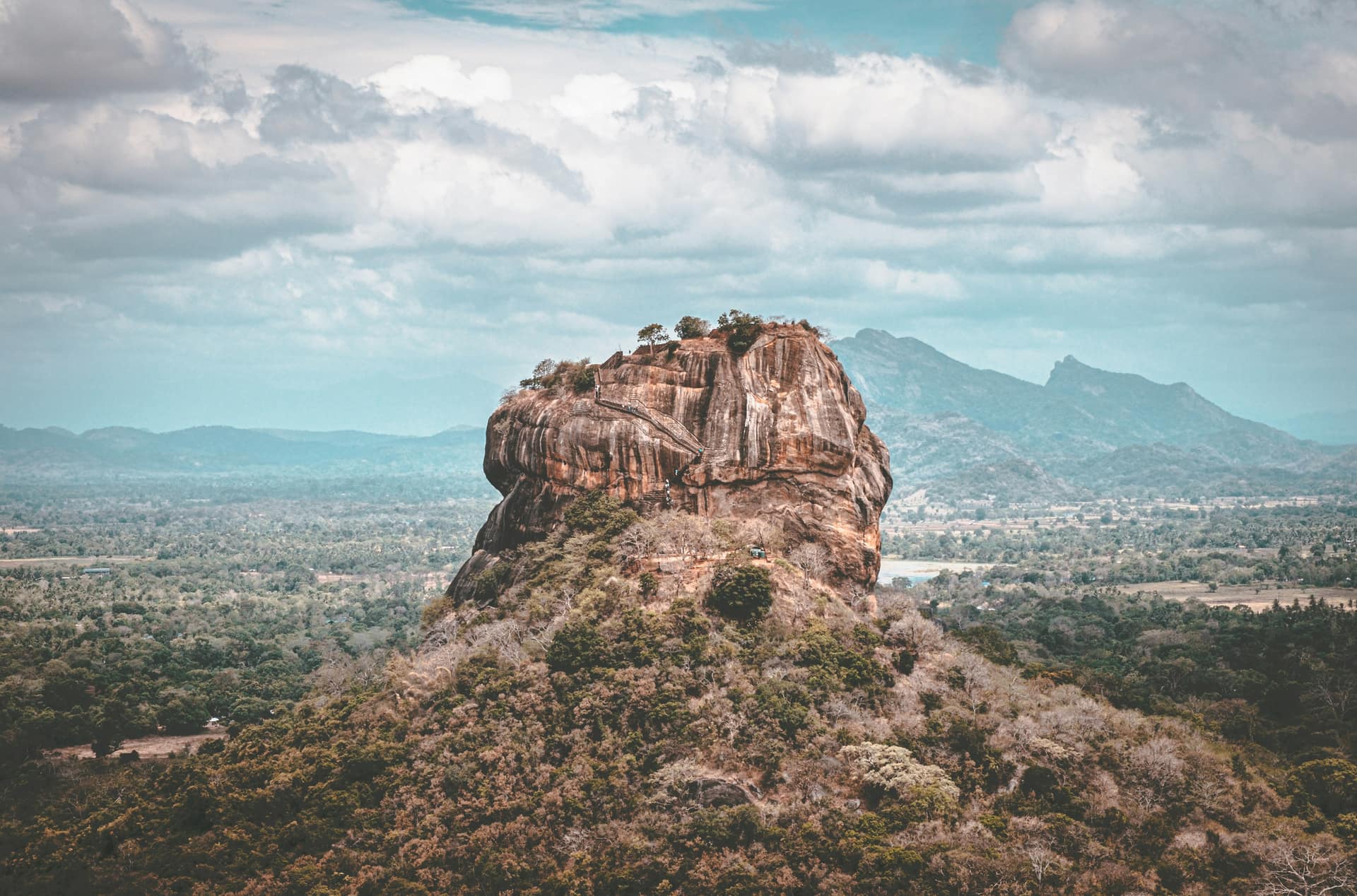
Roughly 1,200 steps from the base to the summit, taking most visitors two to three hours including the descent and time at the fresco gallery and the palace ruins. The lower half is stone staircases winding through the boulder gardens, with shade in places and natural points to stop.
The upper half changes character. Metal stairways are bolted to the rock face, including a spiral staircase up to the fresco gallery, and there is no shade at all. The structure is narrow and effectively one-way, so you cannot easily pause without holding up the people behind you.
In fitness terms this is a moderate demand: someone who can climb ten flights of stairs at home with a rest partway will manage it. What makes it harder than that sounds is that you are doing it in dry-zone heat on a rock that stores and radiates warmth from mid-morning.
- →Roughly 1,200 steps, two to three hours including the descent.
- →The lower half has shade and natural places to stop.
- →The upper half is exposed metal stairways with no shade.
- →Comparable to ten flights of stairs, done in sustained heat.
What actually stops people
Vertigo, first and most commonly. The upper stairways are open structures with the drop visible through the treads, and the exposure is real. People who manage the gradient without difficulty turn back here, and turning back is itself awkward on a narrow one-way staircase when it is busy.
Heat, second. Visitors who start at ten rather than at opening around seven face a hot rock, a crowded staircase and their own accumulated frustration, and the combination accounts for a large share of those who stop partway.
Knees and hips, third, and usually on the way down. The descent puts sustained load on the joints over a long stepped route, and travellers routinely judge the climb by how they feel going up and find the return considerably worse.
- →Vertigo on the open upper stairways is the most common reason.
- →Turning back is awkward on a narrow one-way staircase.
- →Heat, especially for anyone starting later than about eight.
- →The descent is harder than the ascent with joint problems.
What Sigiriya offers without the climb
A substantial amount, and this is worth knowing before deciding. The water gardens at the base are a significant piece of fifth-century hydraulic engineering, laid out symmetrically across level ground with moats and ramparts.
The boulder gardens and lower terraces follow on gentle ground with some steps, and the on-site museum is worth about an hour and improves the rest of the visit considerably. A traveller who does all of that and stops before the metal stairways has seen the site properly.
Dambulla Cave Temple nearby is the gentler alternative for anyone who would rather avoid the rock altogether. Roughly fifteen to twenty minutes of stepped path with shade and rest points leads to five caves with roughly 150 Buddha statues. Carry socks: shoes come off and the stone gets very hot by midday.
- →The water gardens, moats and ramparts are on level ground.
- →Boulder gardens and lower terraces are gentle with some steps.
- →The on-site museum is worth about an hour.
- →Dambulla is roughly fifteen to twenty minutes up, with shade and rest points.
Ella's walks, graded
Little Adam's Peak is the easy one: roughly forty-five to ninety minutes return on a clear path that climbs steadily, with a set of steps near the top. Most reasonably mobile visitors manage it comfortably, and the cool air at roughly a thousand metres makes it far less demanding than the same effort would be at Sigiriya.
Ella Rock is the genuine walk at roughly three to four hours return. It follows the railway line out of town before climbing through eucalyptus and tea, and route finding is ambiguous in several places, so a local guide is worth taking rather than relying on a map.
The Nine Arch Bridge can be reached on foot by several routes of different lengths, and a vehicle can get reasonably close, which is worth asking a driver about rather than assuming the walk is compulsory. Viewing it from a tea shop above is a perfectly good version of the experience.
- →Little Adam's Peak: roughly forty-five to ninety minutes return, steady climb.
- →Ella Rock: roughly three to four hours return with ambiguous route finding.
- →A local guide is worth taking on Ella Rock.
- →A vehicle can get reasonably close to the Nine Arch Bridge.
Preparing sensibly
The single most effective preparation is not training but scheduling. Climb at opening around seven, keep the middle of the day free, and put the rock on a morning after a proper night's sleep rather than after a long transfer day.
Practical items matter more than fitness. Shoes with grip rather than sandals, since the stone is uneven and worn smooth in places. More water than you expect to need, because there is almost no shade. A hat, and breathable long sleeves for sun protection rather than bare shoulders, which also covers temple dress requirements.
Lankan Stays and Trails asks about mobility and heat tolerance before building a Cultural Triangle day rather than after, and will say which parts of a site are level and which are not. Knowing in advance is what produces a good visit rather than a disappointing one halfway up a staircase.
- →Scheduling matters more than training: climb at opening, rest at midday.
- →Shoes with grip rather than sandals; the stone is worn smooth in places.
- →Carry more water than you expect to need.
- →Breathable long sleeves cover both sun and temple dress requirements.
Frequently asked questions
How hard is it to climb Sigiriya?
Moderate rather than athletic. Roughly 1,200 steps over two to three hours, comparable to ten flights of stairs with rests, but done in dry-zone heat with no shade on the upper section. Heat and exposure are harder than the gradient.
What stops most people reaching the top of Sigiriya?
Vertigo rather than fitness. The upper stairways are open metal structures with the drop visible through the treads, and turning back is awkward on a narrow one-way staircase when busy. Heat and a late start are the next most common reasons.
Is Sigiriya harder going up or down?
Up for most people, but down for anyone with knee or hip problems. The descent puts sustained load on the joints over roughly 1,200 steps, which surprises visitors who judge the climb by how comfortable they felt on the way up.
How difficult is Little Adam's Peak?
Easy for most reasonably mobile visitors. Roughly forty-five to ninety minutes return on a clear path that climbs steadily, with steps near the top. Ella's cool air at roughly 1,000 metres makes it far less demanding than the same effort at Sigiriya.
Do I need a guide for Ella Rock?
It is worth taking one. The route follows the railway line out of town before climbing through eucalyptus and tea, and route finding is genuinely ambiguous in several places. The walk takes roughly three to four hours return.
Can I enjoy Sigiriya without climbing it?
Yes. The fifth-century water gardens, moats and ramparts are on level ground, the boulder gardens and lower terraces are gentle, and the on-site museum is worth about an hour. Stopping before the metal stairways still gives a proper visit.
What should I wear to climb Sigiriya?
Shoes with grip rather than sandals, since the stone is uneven and worn smooth in places. Breathable long sleeves for sun protection, which also covers temple dress requirements at Dambulla, plus a hat and more water than you expect to need.