
Quick answer
Sigiriya sits on the hot dry-zone plain at around 100 metres, while Ella sits at roughly 1,000 metres in the hill country where evenings are cool enough for a light jumper. As a rough guide temperature falls by about six degrees Celsius for every thousand metres gained, so Ella typically runs several degrees cooler than Sigiriya day and night. That gap argues for climbing Sigiriya early in a trip and resting in Ella later.
Key takeaways
- Sigiriya sits at around 100 metres on the dry-zone plain; Ella sits at roughly 1,000 metres.
- Temperature falls by roughly six degrees Celsius per thousand metres of altitude gained.
- Sigiriya's rock has almost no shade and radiates stored heat from mid-morning onwards.
- Ella evenings are cool enough for a light jumper, and hill-country rooms often have no heating.
- The altitude gain is far too small to cause altitude sickness at any point on this route.
The temperature gap, and where it comes from
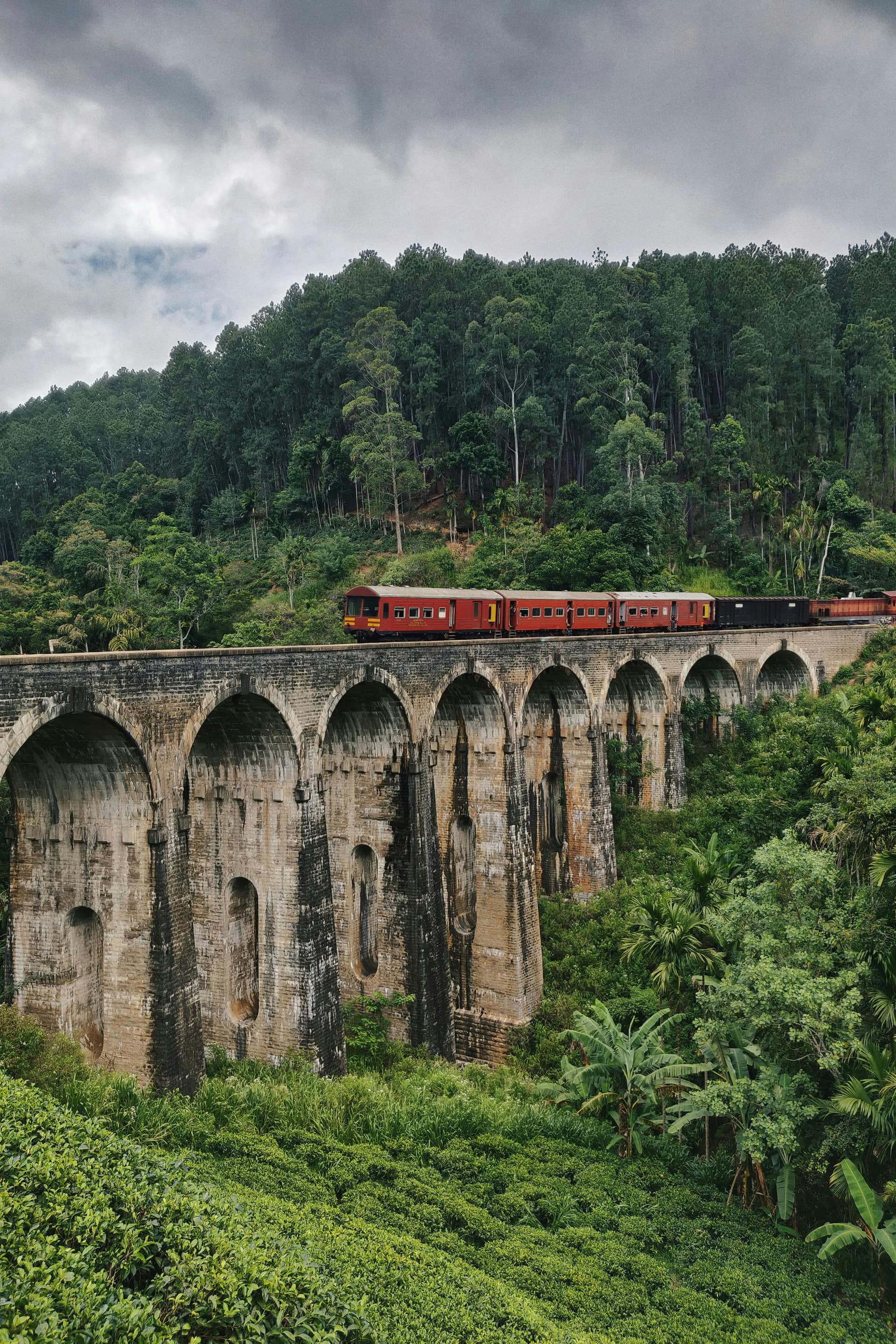
Sigiriya lies in Sri Lanka's dry zone at around a hundred metres above sea level, in flat country that holds heat. Ella lies in the southern hill country at roughly a thousand metres, on a ridge with air moving across it. The difference between them is mostly altitude, and altitude behaves predictably.
As a working rule, air temperature drops by roughly six degrees Celsius for every thousand metres gained. In practice that means Ella typically runs several degrees cooler than Sigiriya both day and night, and the difference feels larger than the number suggests because of humidity and wind.
Nuwara Eliya, higher again at roughly 1,900 metres, extends the same pattern and is noticeably cold at night by tropical standards. Travellers who assume Sri Lanka is uniformly hot are consistently caught out by this, and it is the single most common packing error on a first trip.
- →Sigiriya: around 100 metres, dry-zone plain, holds heat.
- →Ella: roughly 1,000 metres, ridge country with moving air.
- →Nuwara Eliya: roughly 1,900 metres and genuinely cold at night.
- →Rule of thumb: about six degrees Celsius cooler per thousand metres.
What Sigiriya's heat does to the climb
Sigiriya is a granite monolith standing about 200 metres above the surrounding plain, and it behaves like a stone radiator. The rock absorbs heat through the morning and releases it, so the upper sections feel hotter than the air temperature suggests, particularly on the metal stairways where there is no shade at all.
The climb is roughly 1,200 steps and takes most visitors two to three hours including the descent. Started at opening, usually around seven, it is a warm but manageable morning. Started at ten, it becomes a genuinely hard one, and the proportion of people who turn back rises sharply.
Carry more water than you expect to need, wear a hat, and treat the shaded fresco gallery and the mirror wall as rest points rather than photo stops. Dambulla Cave Temple has a related problem for a different reason: shoes come off before the terrace, and the stone courtyard becomes very hot underfoot by the middle of the day, so socks help.
- →The rock stores and radiates heat, so the upper climb feels hotter than the air.
- →Roughly 1,200 steps, two to three hours, almost no shade anywhere.
- →Opening around seven is the difference between a warm climb and a hard one.
- →At Dambulla, shoes come off and the stone courtyard gets very hot by midday.
What Ella's altitude feels like
Ella at roughly a thousand metres is the point where Sri Lanka stops feeling tropical in the evenings. Days are pleasant and often warm in direct sun, but from late afternoon the temperature drops quickly, and most visitors want a light jumper or fleece by dinner.
Accommodation in the hill country frequently has no heating, because it is not needed often enough to install. Blankets are provided and are usually sufficient, but travellers who packed exclusively for a beach holiday tend to have an uncomfortable first night.
The cool air is also why walking in Ella is pleasant at hours that would be unthinkable at Sigiriya. Little Adam's Peak at roughly forty-five to ninety minutes return and Ella Rock at roughly three to four hours are both manageable mid-morning, which is exactly what the dry-zone plain will not allow.
- →Evenings in Ella are cool enough for a light jumper or fleece.
- →Hill-country rooms usually have no heating; blankets are standard.
- →Little Adam's Peak: roughly forty-five to ninety minutes return.
- →Ella Rock: roughly three to four hours return, and best started early anyway.
Why the gap argues for Sigiriya first
The climate difference supports the conventional order for a simple reason: heat tolerance is highest at the start of a trip and drops as fatigue accumulates. Putting the hottest, hardest morning on day two rather than day six uses that tolerance while it exists.
There is a comfort argument as well. A trip that moves from hot and demanding to cool and slow decelerates, which is how most people want a holiday to feel. Running it the other way means finishing in the hottest place on the tiredest days.
Lankan Stays and Trails builds inland sections around this progression as a default, putting the dry-zone climbing early and the hill-country walking later. It is not a rule so much as a recognition that the map and the body agree on this one.
- →Heat tolerance is highest in the opening days of a trip.
- →Hot and hard first, cool and slow later, reads as a trip that unwinds.
- →The reverse finishes in the hottest place on the most tired days.
- →The altitude gain is gradual and spread over several days either way.
Packing for both climates in one bag
The practical consequence is that a Sri Lankan itinerary containing both places needs two wardrobes in one bag, and the hill-country half is the one people forget. A light fleece or jumper, long trousers for the evening and something to sleep in that is warmer than you would choose for the coast all earn their place.
For Sigiriya and the Cultural Triangle the requirements invert: breathable long-sleeved layers for sun protection, a hat, and proper footwear for uneven stone rather than sandals. Shoulders and knees need covering at Dambulla Cave Temple and at the Temple of the Sacred Tooth Relic in Kandy, so a scarf or sarong is worth carrying throughout.
Rain is a separate matter from temperature and does not follow altitude neatly. The hill country catches cloud at any time of year, so a light waterproof is sensible regardless of season, and it doubles as a windproof layer on the Ella ridges.
- →For Ella: a light fleece or jumper, long trousers, warmer sleepwear.
- →For Sigiriya: breathable long sleeves, a hat, and proper footwear for stone.
- →Carry a scarf or sarong for shoulders and knees at temples throughout.
- →A light waterproof is sensible in the hill country in any season.
Frequently asked questions
How hot does it get at Sigiriya?
The dry-zone plain around Sigiriya is consistently hot through the middle of the day, and the rock itself stores and radiates heat so the climb feels hotter than the air temperature. Starting at opening around seven is what makes the roughly 1,200 steps comfortable.
Is Ella cold at night?
Cool rather than cold, but noticeably so by tropical standards. At roughly 1,000 metres most visitors want a light jumper or fleece by dinner. Hill-country accommodation generally has no heating, though blankets are provided and are usually sufficient.
How much cooler is Ella than Sigiriya?
Several degrees, day and night. Air temperature falls by roughly six degrees Celsius per thousand metres of altitude, and Ella sits about nine hundred metres higher than Sigiriya. Humidity and wind make the difference feel larger than the figure suggests.
Do I need warm clothes for Sri Lanka?
For the hill country, yes. A light fleece or jumper and long trousers for the evening are worth packing for Ella, and more so for Nuwara Eliya at roughly 1,900 metres. For the coast and the Cultural Triangle they are unnecessary.
Can you get altitude sickness in Sri Lanka?
No. The highest point most itineraries reach is Nuwara Eliya at roughly 1,900 metres, which is far below the altitudes where sickness occurs, and the gain happens gradually over several days of travel. The altitude affects temperature, not your health.
What should I wear to climb Sigiriya?
Breathable long sleeves for sun protection, a hat, and proper shoes with grip rather than sandals, since the stone is uneven and the metal stairways are steep. Carry more water than you expect to need, because there is almost no shade on the rock.
Is it hot walking in Ella?
Far less so than in the Cultural Triangle. The cool air at roughly 1,000 metres means Little Adam's Peak at forty-five to ninety minutes return is comfortable mid-morning, which would be unwise on the dry-zone plain at the same hour.