
Quick answer
Eco lodges in Sigiriya are small properties set in scrub, forest or farmland, usually with cabins, chalets or treehouses built from local materials. Genuine ones limit plastic, use solar power or rainwater, employ and buy from nearby villages, cook from local produce and leave wildlife habitat intact. Ask specific questions about energy, water, waste, staff and suppliers, because the word eco is used freely and is not regulated.
Key takeaways
- Eco lodges around Sigiriya are typically small, low-rise properties in scrub or farmland.
- The word eco is not regulated, so specific practices matter more than the label.
- Good signs include solar power, refillable water, local staff and food from nearby farms.
- Expect fewer facilities than a resort, but more contact with nature and village life.
- Asking about energy, water, waste, staff and suppliers quickly separates genuine practice from marketing.
What an eco lodge is here
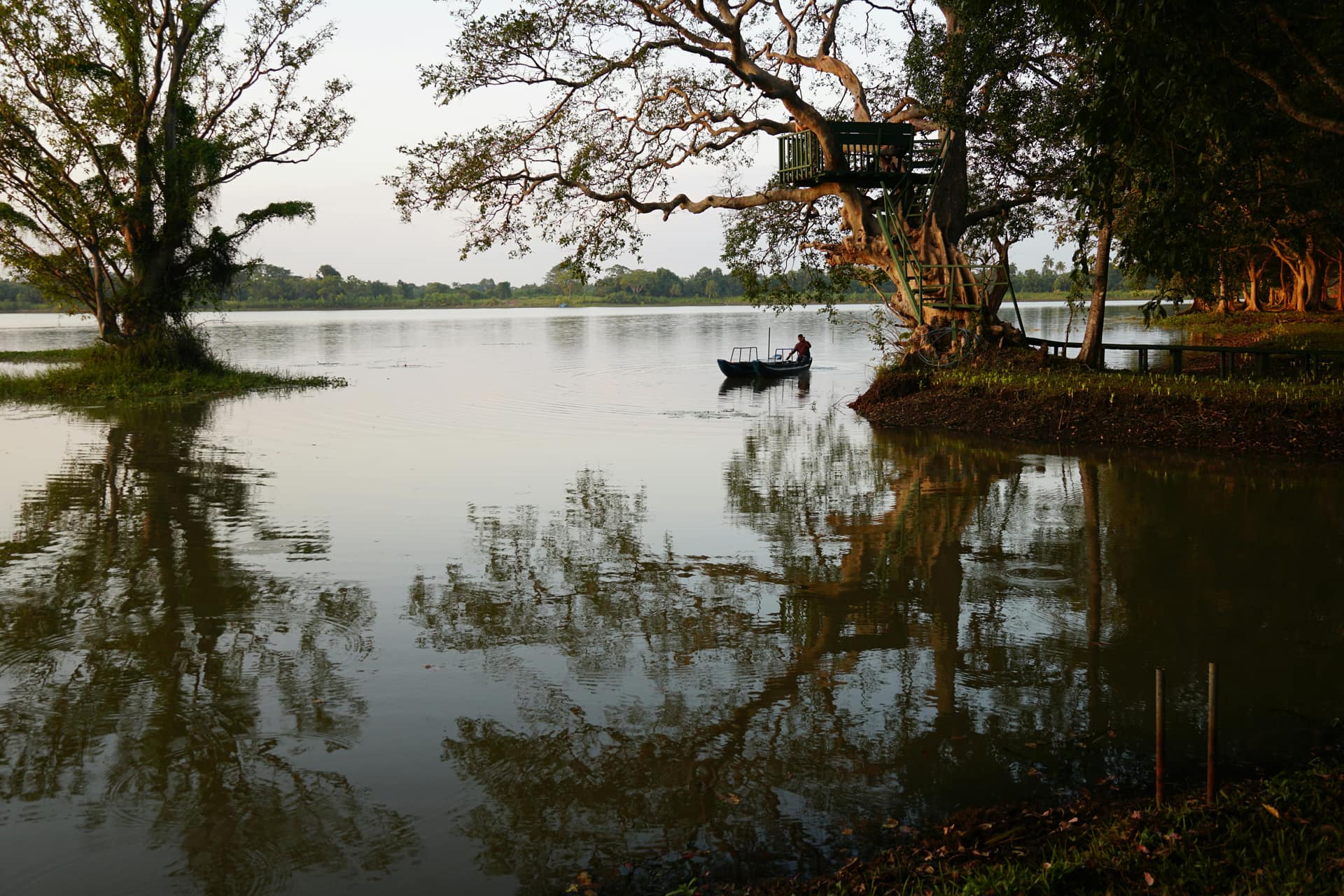
An eco lodge in Sigiriya is usually a small property of perhaps four to fifteen rooms, set on a plot of scrub, forest or farmland around the village, Kibissa or the Pidurangala road. Rooms are typically cabins, chalets, mud-walled huts or treehouses, built low and spread out among trees rather than in a single block.
Many are owned by local families or small companies, and some grew from guesthouses. Meals are often served in an open-sided dining area, with Sri Lankan rice and curry built around vegetables from the garden or local farms.
The setting is the appeal: birds, monkeys and sometimes elephants passing at a distance, and quiet nights well away from the main roads.
What genuine practice looks like
Genuine eco practice in a Sigiriya lodge shows in small, concrete things. Refillable water rather than plastic bottles. Solar panels for hot water or electricity. Rainwater harvesting or careful water use in a dry area. Composting and separated waste. Native trees left standing, with paths and buildings fitted around them.
The social side matters as much. Staff from nearby villages, fair wages, food bought from local farmers and activities run with village families rather than imported guides. Some lodges support local schools or conservation work; ask what, and how.
None of these alone makes a lodge eco, but a property that can describe several of them in detail is usually serious.
- →Refillable drinking water, little single-use plastic.
- →Solar power or solar hot water.
- →Careful water use and waste separation.
- →Local staff, local food and village partnerships.
Rooms, comfort and setting
Rooms in Sigiriya eco lodges trade some comfort for setting. Many rely on fans and cross-ventilation, sometimes with air-conditioning as an option. Bathrooms may be open-air or semi-open, which is lovely by day and full of insects by night. Wi-fi may be limited to the dining area.
Expect mosquito nets, simple furniture, verandas facing the scrub and lighting kept low at night to protect wildlife. In the hottest months, from March to May, ask whether air-conditioning is available, as nights can be very warm.
- →Cooling: often fans; air-conditioning sometimes optional.
- →Bathrooms: may be semi-open.
- →Wi-fi: may be limited.
- →Lighting: low at night.
Wildlife and safety
Wildlife around Sigiriya eco lodges is part of the reason to stay. Hornbills, peafowl, bee-eaters and kingfishers are common, as are toque macaques and langurs. Some lodges border elephant corridors, and guests occasionally hear or see elephants at night from a safe distance.
That brings responsibilities. Follow staff instructions about walking after dark, use lit paths and never approach elephants. Keep food sealed and doors closed against monkeys. Do not feed wildlife, even if other guests do.
A good lodge will brief you on these things at check-in. If it does not, ask.
Food and activities
Food and activities often make an eco lodge stay memorable. Many lodges cook rice and curry with vegetables from their own gardens or neighbouring farms, and some offer cooking classes in an outdoor kitchen. Breakfasts may include hoppers, string hoppers, fresh fruit and curd with treacle.
Activities typically include bird walks, cycling through villages, visits to farms and tanks, and evening talks about local wildlife. Ask whether these are run by local people and how they are paid.
- →Food: garden vegetables and local produce.
- →Classes: outdoor kitchens, village cooks.
- →Walks: birds, farms and tanks.
- →Ask: who runs activities and how they are paid.
Questions to ask
Questions to ask an eco lodge in Sigiriya cut through the label quickly. How is electricity and hot water produced? How is drinking water provided? What happens to waste? Where do staff come from? Where is the food bought? What do you do for local wildlife or communities?
A genuine lodge answers easily and in detail. Vague replies, or a focus on decor rather than practice, are a warning sign. At Lankan Stays & Trails, we ask these questions of every lodge we recommend and visit them ourselves.
- →How is power and hot water produced?
- →How is drinking water supplied?
- →Where do staff and food come from?
- →What happens to waste?
Frequently asked questions
What is an eco lodge in Sigiriya?
It is usually a small, low-rise property in scrub, forest or farmland near Sigiriya, with cabins, chalets or treehouses built from local materials. Genuine eco lodges limit plastic, use solar power, conserve water, employ local people and cook from local produce.
How can I tell if a Sigiriya eco lodge is genuine?
Ask specific questions about power, water, waste, staff and food suppliers. Genuine lodges answer in detail and can describe their practices. Vague answers, or talk only about design and decor, suggest the word eco is being used as marketing rather than practice.
Do eco lodges in Sigiriya have air-conditioning?
Some do, often as an option, and many rely on fans and cross-ventilation. In the hottest months, from March to May, nights can be very warm, so ask before booking if you need air-conditioning to sleep.
Are eco lodges in Sigiriya close to the rock?
Most lie within about 5 to 20 minutes of the rock by tuk-tuk, around Sigiriya village, Kibissa and the Pidurangala road. Some are more remote, which adds to the quiet but means early starts take longer. Check the distance to the ticket office.
Will I see wildlife at a Sigiriya eco lodge?
Very likely. Birds such as hornbills, peafowl and kingfishers are common, as are monkeys. Some lodges lie near elephant corridors, and guests occasionally see or hear elephants at a distance. Follow staff advice and never approach wild animals.
Are eco lodges more expensive than hotels in Sigiriya?
Not necessarily. Eco lodges range from budget to high-end. Some cost no more than a mid-range hotel, while a few are priced as luxury stays. The price reflects setting, comfort and service more than the eco label itself.
Are eco lodges in Sigiriya good for families?
Many are, especially for children who enjoy nature. Check the room layout, the distance to the dining area, any open water or steep paths, and whether family rooms are available. Ask how staff manage wildlife encounters around children.