
Quick answer
Treehouse stays in Sigiriya are rooms built on stilts or in trees, usually of timber with thatched or tin roofs, inspired by the dry zone's elephant watch huts. They range from simple rooms with fans and shared bathrooms to comfortable cabins with air-conditioning and private bathrooms. Expect forest sounds, insects, steep steps and an early wake-up from birds. Ask about air-conditioning, bathrooms, mosquito nets and the stairs before booking.
Key takeaways
- Sigiriya's treehouses are inspired by the traditional elephant watch huts of dry-zone farmers.
- Comfort varies widely, from fan-cooled huts with shared bathrooms to cabins with air-conditioning.
- Steep wooden steps or ladders make some treehouses unsuitable for small children and anyone with limited mobility.
- Forest noise, insects and heat are part of the experience; mosquito nets matter.
- One or two nights in a treehouse, combined with a more conventional stay, suits most travellers.
What a Sigiriya treehouse is
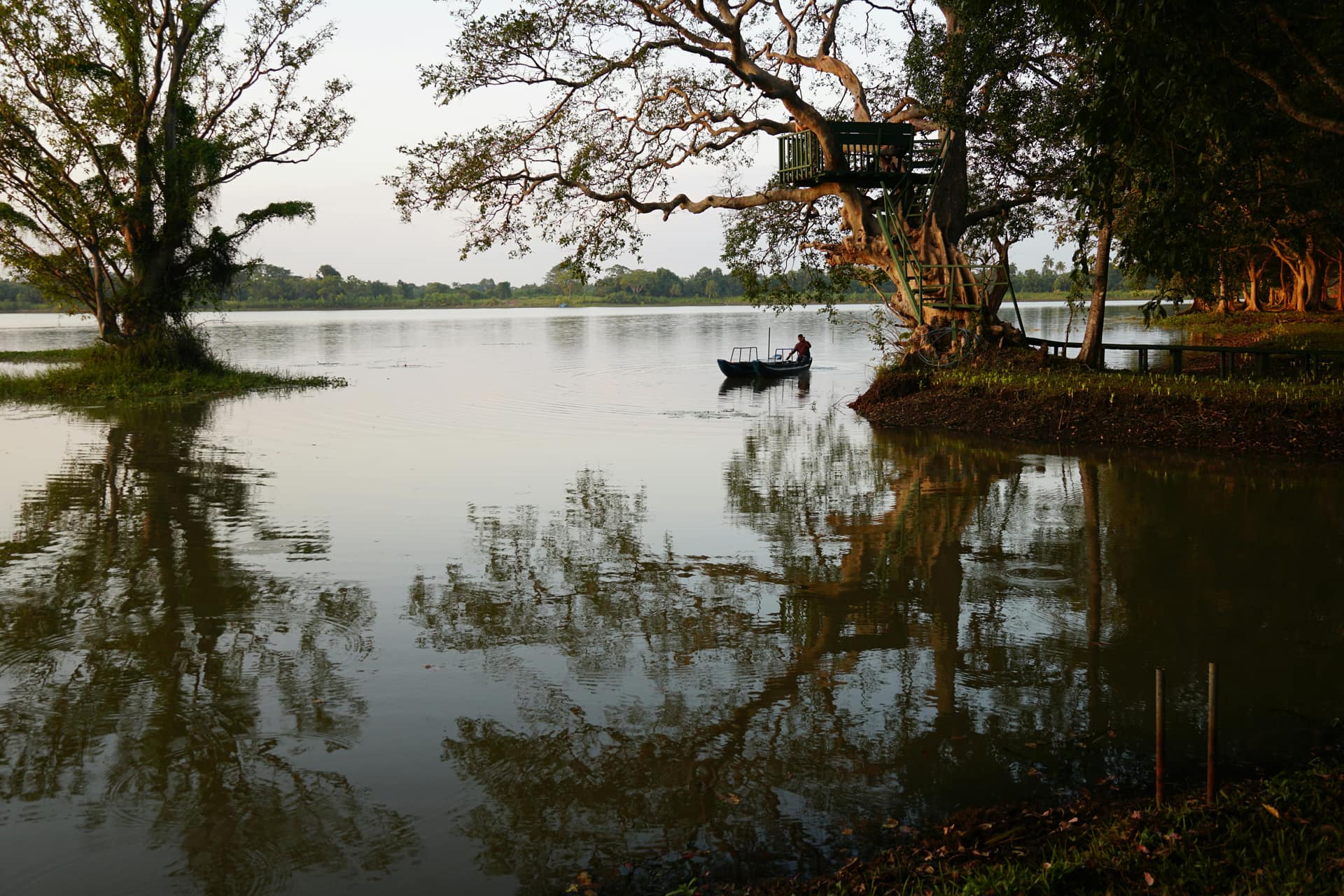
A Sigiriya treehouse is a guest room raised above the ground, either built into a large tree or set on tall posts among trees. The idea comes from the pela, the watch hut that dry-zone farmers built high in trees or on stilts to keep watch over crops and to stay safe from elephants at night.
Modern versions range from simple wooden platforms with walls of woven palm to solid cabins with glass, balconies and en-suite bathrooms. Most are found in small eco-style properties in the scrub and forest around Sigiriya village and the Pidurangala road, where trees are large enough.
The appeal is the setting: waking at canopy level, with birds and monkeys at eye height, and the sounds of the forest through the walls.
Comfort levels
Comfort levels in Sigiriya treehouses vary more than in any other type of stay. At the simple end, you get a mattress, a fan, a mosquito net and a shared bathroom at ground level. At the comfortable end, there are air-conditioning, hot water, private bathrooms and a deck facing the forest or the rock.
Photographs online rarely show the differences clearly. A treehouse that looks romantic may have no air-conditioning, which matters in the hottest months from March to May. Others are fully enclosed and feel much like a cabin.
- →Simple: fan, net, shared bathroom.
- →Mid-range: fan or air-conditioning, private bathroom.
- →Comfortable: air-conditioning, hot water, deck.
- →Ask: which of these you are actually booking.
The reality of a night in the trees
The reality of a night in a Sigiriya treehouse is more wild than most hotel rooms. Expect insects, from moths around the lights to the occasional gecko or spider. Mosquito nets are essential in open-sided rooms. Monkeys may visit the deck, so keep food sealed and doors closed.
Noise is part of the experience: frogs and insects at night, birds from before dawn, sometimes a distant elephant trumpeting. Light sleepers should bring earplugs. Heat can be a problem in fan-cooled rooms in the hottest months, while in the wetter months rain on a thatched roof is loud but atmospheric.
Most guests find these things part of the charm. A few find them a reason never to do it again. Knowing in advance makes the difference.
- →Bring: earplugs and a head torch.
- →Expect: insects, geckos, monkeys on the deck.
- →Use: the mosquito net every night.
- →Keep: food sealed and doors closed.
Safety and access
Safety and access are worth checking before booking a Sigiriya treehouse. Many are reached by steep wooden steps or ladders, sometimes without handrails. That makes them awkward for small children, older travellers and anyone with knee or balance problems, especially at night or after rain.
Ask how high the room is, what kind of stairs lead to it, whether there are railings on the deck and where the bathroom is. A shared bathroom at ground level means climbing down in the dark. Families with young children should look for treehouses with enclosed decks or choose a ground-level room.
Elephants sometimes pass through properties at night. Follow the hosts' advice about walking after dark, and stay on lit paths.
Who treehouses suit
Treehouses in Sigiriya suit travellers who want nature close up: couples, solo travellers, keen birdwatchers and families with older children who enjoy adventure. They suit a stay of one or two nights particularly well, as a contrast to more conventional hotels elsewhere on the trip.
They suit less well travellers who need air-conditioning to sleep, light sleepers who dislike noise, those with limited mobility and anyone very uneasy about insects. For them, a ground-level eco lodge room gives a similar setting with more comfort.
- →Suits: couples, nature lovers, older children.
- →Suits: one or two nights as a contrast.
- →Less suited: light sleepers and those with limited mobility.
- →Alternative: an eco lodge room at ground level.
Questions to ask before booking
Questions to ask before booking a Sigiriya treehouse save disappointment. Ask about air-conditioning or fans, the bathroom, hot water, mosquito nets, the stairs and railings, power and charging points, and how far it is from the rock. Ask whether meals are served and whether the kitchen can prepare early breakfasts for sunrise climbs.
Read recent reviews for comments on insects, noise and cleanliness. At Lankan Stays & Trails, we visit the treehouses we suggest and match each guest to a comfort level, often pairing one treehouse night with a pool hotel.
Frequently asked questions
What is a treehouse stay in Sigiriya like?
It is a room raised on stilts or built into a tree, often in a small eco-style property. You sleep close to the forest canopy, with birds, insects and monkeys nearby. Comfort ranges from simple fan-cooled huts to cabins with air-conditioning and private bathrooms.
Do Sigiriya treehouses have air-conditioning?
Some do and many do not. Simple treehouses rely on fans and open sides, while more comfortable ones are enclosed with air-conditioning. Always ask before booking, especially for visits from March to May, when nights can be very warm.
Are treehouses in Sigiriya safe?
They are generally safe if you follow your hosts' advice. Check the stairs, railings and bathroom location before booking, use the mosquito net and keep food sealed from monkeys. Elephants sometimes pass through properties at night, so do not wander unlit areas after dark.
Are Sigiriya treehouses suitable for children?
Older children often love them. For toddlers and young children, steep steps, high decks and ground-level bathrooms can be a worry. Look for treehouses with enclosed decks and railings, or choose a ground-level room in the same property.
How many nights should I stay in a treehouse?
One or two nights suits most travellers. It is enough to enjoy the setting and the sounds of the forest without the novelty of insects and noise wearing thin. Many people pair a treehouse with a more conventional hotel elsewhere on their trip.
Do treehouses in Sigiriya have bathrooms?
Comfortable treehouses have private bathrooms, sometimes at deck level and sometimes below. Simpler ones share a bathroom at ground level, which means climbing down at night. Ask exactly where the bathroom is and whether it has hot water.
Are treehouses close to Sigiriya rock?
Most are within about 5 to 15 minutes of the rock by tuk-tuk, around Sigiriya village and the Pidurangala road. Some have views of the rock from their decks. Ask about the view and the distance to the ticket office before booking.