
Quick answer
February is the driest month for much of Sri Lanka. Colombo averages roughly 60 to 90 mm of rain, the south coast is sunny with a calm sea, the hill country has clear mornings and cool nights, and the Cultural Triangle is dry and warm with highs around 31 °C. The northeast monsoon fades on the east coast and in the north, where February rain is light, though the sea on the east often stays choppy until March.
Key takeaways
- February is the driest month for Colombo, the south coast and the Cultural Triangle in an average year.
- The northeast monsoon is almost over, so the east coast and the north get only occasional showers.
- The hill country keeps its clear January mornings, with slightly warmer nights and less chance of frost.
- The sea is calm on the southwest coast; the east coast sea starts settling late in the month but is not yet reliable.
- Temperatures start to climb towards the March and April peak, especially in the dry zone.
February at a glance
February is the end of the northeast monsoon. The wind still blows from the northeast for most of the month, but it carries much less moisture than in December, and many places on the island have their driest weeks of the year. For the classic first trip, through the Cultural Triangle, the hills and the south coast, February is as close to a guarantee as Sri Lanka gets.
The other side of that reliability is the heat starting to build. February is still more comfortable than April, but by the last week the plains around Sigiriya and Anuradhapura reach about 32 °C by early afternoon. Humidity stays moderate, which makes the heat feel lighter than it will a few weeks later.
For the east coast, February is a transition. Rain is light and the sun is out, but the sea often remains choppy, and many beach hotels on the east open fully only in March or April.
- →West and south coasts: driest weeks, calm sea, roughly 31 °C.
- →Hill country: clear mornings, cool nights, low rainfall.
- →Cultural Triangle: dry, warming up, green fading to gold.
- →East coast and north: light rain, sea still settling.
The west and south coasts
Colombo averages roughly 60 to 90 mm of rain in February, usually in two or three short showers. Galle, Mirissa and Tangalle are similar. The sea is flat on sheltered bays such as Unawatuna, Mirissa and Hiriketiya, visibility is good for snorkelling, and the wind is light.
Whale-watching from Mirissa is in its best stretch, because a calm sea means more trips go out and the water is clear. Surfers find small, clean waves at Weligama and Midigama, and the bigger breaks at Hikkaduwa are consistent. The weather risk is heat: by midday the sand is hot and the shade matters.
Evenings are dry and warm, around 24 °C, which makes February one of the best months for sunset walks on the Galle Fort ramparts and dinners outdoors.
The hill country
The hill country keeps its clear mornings in February. Rainfall in Nuwara Eliya is low, roughly 50 to 80 mm in an average February, and the cloud that rolls over the ridges in the afternoon usually clears again by evening. Views from Lipton's Seat, Horton Plains and Little Adam's Peak are at their best before about 10 am.
Nights warm up slightly compared with January. Nuwara Eliya falls to about 10 °C after dark and frost becomes rarer. Ella has highs around 26 °C and is one of the most pleasant places on the island to walk in February.
Kandy is warm and dry, with highs around 30 °C, and February is often the month of the Navam Perahera in Colombo, so the region around the capital is busy as well.
- →Nuwara Eliya: roughly 50 to 80 mm of rain, nights about 10 °C.
- →Ella: highs around 26 °C, dry mornings.
- →Kandy: highs around 30 °C, mostly dry.
The Cultural Triangle
February is the driest month in much of the dry zone. Sigiriya, Dambulla and Polonnaruwa receive very little rain, and the paddy harvest turns the fields from green to gold during the month. Anuradhapura is similar.
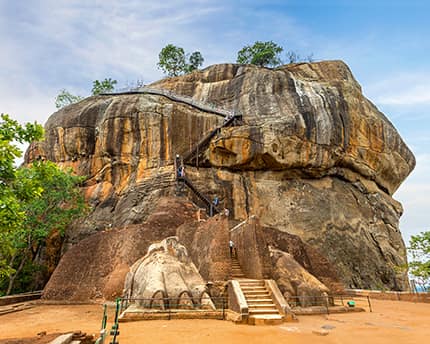
Climbing Sigiriya or Pidurangala is comfortable before about 9.30 am, with morning temperatures around 22 to 23 °C. By early afternoon highs reach about 31 to 32 °C, so most visitors plan the climbing for early morning and the ruins for late afternoon.
The east coast and the north
Trincomalee averages roughly 60 to 100 mm of rain in February, and Batticaloa is similar. Most days are sunny. The northeast wind still pushes swell onto the east coast, though, and the sea at Nilaveli and Pasikudah is often choppy until early March. Calm days do come, and snorkelling at Pigeon Island is sometimes possible late in the month.
Arugam Bay is still out of surf season, with small, onshore waves, but the lagoons and parks inland, such as Kumana, are dry and good for birds. Jaffna is dry, warm and less windy than in January, and February is a good month for the north if the trip is not built around swimming.
- →Trincomalee: roughly 60 to 100 mm of rain, sea settling late.
- →Arugam Bay: quiet, small onshore waves.
- →Jaffna: dry, warm, a good month to visit.
Planning around February weather
February suits almost any first route. The weather limit is mainly the heat in the plains, so plan climbs and long walks for early mornings and leave the middle of the day for travel or rest. On the coast, choose a hotel with shade and a pool for the hottest hours.
February is still high season, and the school half-term holidays in Europe add demand in the middle of the month. Lankan Stays & Trails books trains and safari jeeps for February well ahead, and keeps the east coast for later in the year unless the trip is built around the north.
Frequently asked questions
What is the weather like in Sri Lanka in February?
February is the driest month for much of Sri Lanka. The west and south coasts are sunny with a calm sea, the hills have clear mornings and cool nights, and the Cultural Triangle is dry with highs around 31 °C. The east coast is mostly sunny but its sea is often choppy until March.
Is February the driest month in Sri Lanka?
For Colombo, the south coast and much of the Cultural Triangle, February is the driest month in an average year, with roughly 60 to 90 mm of rain in Colombo. On the east coast, February is drier than January but the driest months there are May to August.
Can you swim on the east coast of Sri Lanka in February?
Sometimes. Rain is light on the east coast in February, but the northeast wind still brings swell, and the sea at Nilaveli, Uppuveli and Pasikudah is often choppy and murky. Calm days become more frequent late in the month. For reliable swimming there, March to September is better.
How hot is Sigiriya in February?
Sigiriya has morning temperatures of about 22 to 23 °C in February and highs of roughly 31 to 32 °C by early afternoon. That is cooler than the April to August peak. Climb before about 9.30 am and carry water, because there is little shade on the upper stairs.
Is February a good month for the hill country weather?
Yes. February has low rainfall in the hill country, clear mornings and cool nights of about 10 °C in Nuwara Eliya. Afternoon cloud often builds over the ridges, so plan viewpoints such as Horton Plains, Lipton's Seat and Little Adam's Peak for early in the day.
What is the sea temperature in Sri Lanka in February?
Sea temperatures are roughly 27 to 28 °C around the island in February. The southwest coast is calm and clear, which makes it good for snorkelling and whale-watching from Mirissa. The east coast is equally warm but usually rougher until the northeast wind dies away in March.
How does Lankan Stays & Trails plan February trips?
February trips usually follow the dry side of the island, from the Cultural Triangle through the hills to the south or west coast, with climbs planned for early mornings. Trains, safari jeeps and popular beach hotels are booked well ahead because February is high season.