
Quick answer
The 12-day Alps-to-beach itinerary needs three types of footwear: slip-on sandals or shoes for temple visits at Dambulla and Kandy's Temple of the Tooth, where shoes come off before entering, closed and grippy trainers or light hiking shoes for the roughly 1,200-step Sigiriya climb and hill-country walks (Nine Arch Bridge, Horton Plains), and sandals or flip-flops for the south-coast finish. Two pairs, one closed and grippy, one open and easy to slip off, cover almost the whole route.
Key takeaways
- Shoes are removed before entering both Dambulla's cave temples (day 2) and the Temple of the Tooth in Kandy (day 4), so slip-on footwear saves time at both stops.
- The Sigiriya climb (day 2, roughly 1,200 steps, 2-3 hours return) includes narrow metal stairways that get slippery when wet, making closed, grippy shoes the safer choice over sandals.
- The Nine Arch Bridge and Little Adam's Peak walks in Ella (day 7) and an optional Horton Plains excursion (day 6) both involve uneven, sometimes muddy ground unsuited to flip-flops.
- Two pairs of footwear, one closed and grippy and one easy slip-on pair, generally cover this entire 12-day route without needing a dedicated hiking boot.
- Wet-weather grip matters more than technical hiking specification on this route, since none of the walks involved are technical mountaineering, just uneven or occasionally slippery ground.
Why footwear needs vary so much across 12 days
This route packs temple visits, a genuine multi-hundred-step climb, hill-country trail walks and beach days into a single 12-day trip, and each of those calls for different footwear. Packing only sandals works fine for the south coast but is a poor choice on the Sigiriya climb, while packing only closed trainers means struggling on and off them at every temple stop.
The practical answer, covered stage by stage below, is two pairs: one closed and grippy pair for climbing and walking days, and one easy slip-on pair for temples and the coast, rather than trying to find a single shoe that does everything adequately and nothing well.
Thinking about footwear by activity, rather than by outfit or by day, is the more useful frame here, since the same day can require both types: day 2 alone moves from the Sigiriya climb in the morning to Dambulla's cave temples in the afternoon, a closed-shoe activity followed directly by a slip-on one, with no return to the hotel in between to swap footwear.
Weight and packing space are also worth factoring into the decision, since two pairs of shoes take up noticeably more room than one, particularly in a bag that also has to carry a hill-country layer and beachwear. Choosing a closed pair that packs reasonably flat, rather than a bulky hiking boot, keeps the overall bag manageable across all five of the route's hotel changes.
Temple visits: Dambulla and the Temple of the Tooth
Both Dambulla's cave temples on day 2 and Kandy's Temple of the Tooth on day 4 require shoes off before entering, so slip-on sandals or shoes without laces save meaningful time and hassle compared with lace-up trainers. Some sections of temple ground can get hot underfoot in direct midday sun, so carrying a pair of socks is a small but genuinely useful addition for these two stops.
Flip-flops work adequately here, though a slightly sturdier slip-on sandal with some sole support tends to be more comfortable across a full morning of walking between temple buildings on uneven stone.
A small bag to carry shoes while walking barefoot through temple grounds is also worth having, since some sites have a designated shoe-storage area but others expect visitors to carry their own footwear from entrance to exit, particularly at Dambulla's cave complex where the walk between individual cave temples is longer than at a single-building site.
Ground surfaces vary between the two sites too. Dambulla's approach involves some open, sun-exposed stone before reaching the cave entrances, while the Temple of the Tooth's grounds are more consistently shaded, so the hot-underfoot issue is generally more pronounced at Dambulla and worth timing around the cooler parts of the day where the schedule allows.
The Sigiriya climb: grip matters more than style
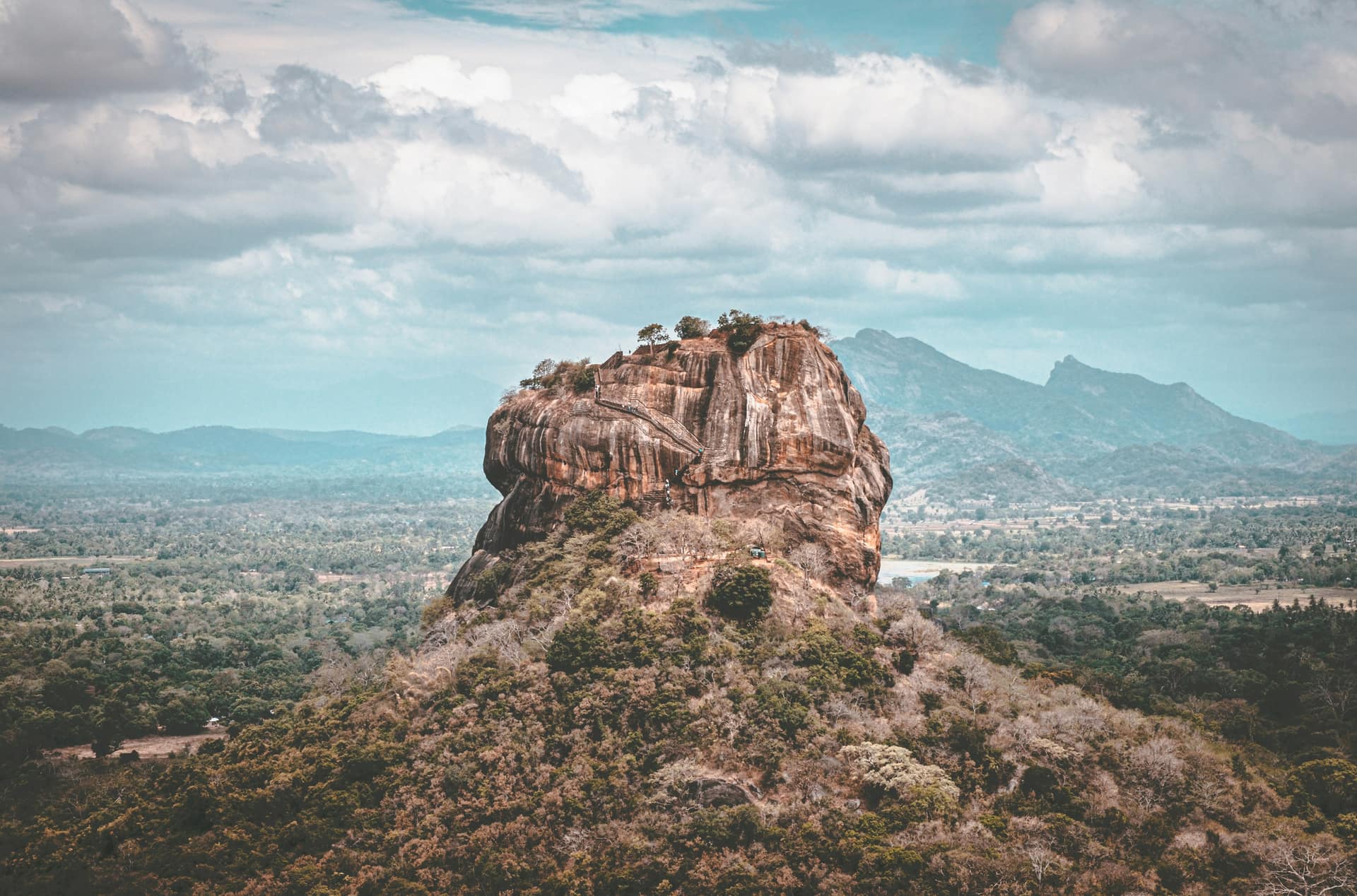
Sigiriya's roughly 1,200 steps and 2 to 3 hour return climb includes narrow, open metal stairways on the upper sections, which get genuinely slippery when wet from rain or morning dew. Closed, grippy trainers or light hiking shoes are the safer and more comfortable option here, since sandals offer neither the grip nor the toe protection the ascent benefits from.
Starting early, generally recommended on this route to beat both heat and crowds, also means cooler morning air on the exposed metal stairways, another reason closed shoes are worth the extra minute to put on before setting off.
The descent deserves as much attention to footwear as the climb itself, since tired legs and worn tread combine on the way down more often than on the way up, and the same narrow metal stairways that felt manageable on the ascent can feel noticeably less secure an hour or two later.
- →Closed, grippy trainers or light hiking shoes for the ascent and descent.
- →Broken-in shoes, not new ones, to avoid blisters on a 2-3 hour climb.
- →Socks that wick moisture, since the climb in Cultural Triangle heat and humidity means sweaty feet even in cooler morning air.
Hill-country walks: Nine Arch Bridge and Horton Plains
Ella's walk to the Nine Arch Bridge and Little Adam's Peak on day 7, and the optional dawn excursion to Horton Plains for World's End on day 6, both involve uneven paths that can be muddy after rain, particularly outside the driest months. The same closed, grippy shoes used on Sigiriya generally suit these walks well, without needing a dedicated hiking boot.
Horton Plains in particular sits higher again, roughly 2,100-2,300 metres, and paths there can be genuinely wet underfoot even in relatively dry periods, so shoes with reasonable water resistance are worth prioritising over pure breathability for that specific excursion.
Little Adam's Peak, a shorter and gentler climb than its name might suggest, is comfortable in the same shoes but rewards a slightly earlier start too, both to avoid the midday sun on its exposed upper section and to catch the softer light that makes the walk worthwhile in the first place.
- →Closed, grippy shoes for both the Nine Arch Bridge walk and any Horton Plains excursion.
- →Reasonable water resistance is more useful than breathability for the Horton Plains path specifically.
- →A spare pair of socks in the day bag, useful if paths are wet underfoot.
The south-coast finish: sandals, and reef shoes for snorkelling
Days 8 to 12 on the south coast are the one stretch of this route where flip-flops or simple sandals are genuinely all that is needed for most of the day, walking between beach, restaurant and hotel. The closed shoes packed for Sigiriya and the hill country can stay largely unused from this point.
For anyone snorkelling off Unawatuna's reef or joining a whale-watching trip from Mirissa (season permitting, roughly November to April), reef shoes are worth having, since the shallow reef sections can be sharp underfoot and are not comfortable barefoot.
This is also a reasonable point in the trip to retire the closed shoes worn since Sigiriya, at least for daytime use, and let a lighter, simpler pair of sandals do the work for the remaining four to five nights, both for comfort in the heat and to give the closed shoes a chance to properly dry out before the flight home.
What we generally recommend to clients
We at Lankan Stays & Trails suggest Swiss clients on this route pack exactly two pairs of shoes for the feet-related demands above, one closed pair for Sigiriya and hill-country walks, one slip-on pair for temples and the coast, rather than a wider rotation that adds bag weight without adding much comfort.
Breaking in any new closed shoes before departure is worth the reminder, since blisters on day 2's Sigiriya climb set a poor tone for the walking still ahead on days 6 and 7.
For travellers with existing foot or joint concerns, a supportive insole packed into whichever closed shoe is chosen is a small addition that makes a genuine difference across a route with this much cumulative walking, the Sigiriya steps, the Nine Arch Bridge path and Little Adam's Peak between them adding up to several hours of uneven ground over the 12 days.
A quick daily check that both pairs are drying properly, particularly during the hill-country stretch where humidity lingers even when temperatures are cooler, avoids the unpleasant surprise of putting on still-damp shoes for an early departure, a small habit that makes a noticeable difference across 12 days of repeated use.
Frequently asked questions
What shoes should I wear to climb Sigiriya?
Closed, grippy trainers or light hiking shoes, broken in rather than new. The upper sections of the roughly 1,200-step climb use narrow metal stairways that get slippery when wet, so sandals are not a safe choice for the ascent.
Do I need to take my shoes off at Sri Lankan temples on this route?
Yes, at both Dambulla's cave temples and the Temple of the Tooth in Kandy, shoes come off before entering. Slip-on sandals or shoes without laces make this quicker and more comfortable than lace-up trainers.
Are flip-flops enough for the whole 12-day trip?
No, flip-flops work well for temples and the south-coast finish but are not suitable for the Sigiriya climb or hill-country walks to the Nine Arch Bridge and Horton Plains, where grip and uneven ground call for closed shoes.
What footwear is best for the Nine Arch Bridge walk in Ella?
Closed, grippy shoes rather than sandals, since the path is uneven and can be muddy, particularly outside the driest months. The same shoes used for the Sigiriya climb generally suit this walk well.
How many pairs of shoes should I actually pack for this route?
Two pairs generally cover the whole route: one closed, grippy pair for the Sigiriya climb and hill-country walks, and one easy slip-on pair for temples and the south-coast finish.
Do I need special shoes for Horton Plains?
The same closed, grippy shoes used elsewhere on the route work for Horton Plains, though reasonable water resistance is worth prioritising, since the path can be genuinely wet underfoot at roughly 2,100-2,300 metres elevation.
Is it worth bringing reef shoes for the south coast?
Yes, if snorkelling off Unawatuna's reef is planned. The shallow reef sections can be sharp underfoot and are not comfortable barefoot, and rental options for reef shoes specifically are less consistent than for masks and snorkels.