
Quick answer
On the 12-day Alps-to-beach itinerary, wear lightweight breathable clothing for the Sigiriya climb and Cultural Triangle heat (days 1-2), a shoulders-and-knees-covered outfit for Dambulla's cave temples and Kandy's Temple of the Tooth (days 2 and 4), closed shoes and a light layer for the Nine Arch Bridge and Little Adam's Peak walks in Ella (day 7), a warmer layer for Nuwara Eliya evenings (days 5-6, roughly 10-20°C), and swimwear and cotton or linen clothing for the south-coast finish (days 8-12).
Key takeaways
- Dambulla's cave temples (day 2) and the Temple of the Tooth in Kandy (day 4) both require shoulders and knees covered and shoes removed, so plan the same modest outfit for both.
- The Sigiriya climb (day 2, roughly 1,200 steps) is best done in breathable clothing and closed grippy shoes, started early before the mid-morning heat builds.
- Nuwara Eliya evenings (days 5-6) typically call for a light jumper or jacket, a genuine change of register from the linen and cotton worn through the Cultural Triangle.
- The Nine Arch Bridge and Little Adam's Peak walks in Ella (day 7) suit closed shoes and light layers rather than beachwear, even though the coast is only a day away.
- The south-coast finish (days 8-12) is the only stretch of the route where swimwear and beach cover-ups are the default daytime outfit.
Why this is about outfits, not just what is in the bag
Knowing what to pack and knowing what to actually wear on a given day are different questions on this route, because the 12 days move through genuinely different dress codes and climates in quick succession. A traveller who packs correctly can still turn up at the Temple of the Tooth in shorts, or attempt the Sigiriya climb in sandals, simply from not matching the outfit to the day.
This guide runs through the route stage by stage, focused on what to actually put on each morning rather than the full contents of the suitcase, which is covered separately in the route's master packing list.
Think of it as a daily decision rather than a one-off packing job: each morning on this trip effectively asks the same two questions, what is on the schedule today, and what will the temperature and terrain actually demand, and the answer changes more often on this itinerary than on a single-climate holiday.
A useful habit is laying out the next day's outfit the evening before, particularly on the two mornings this route starts before dawn, the Sigiriya climb on day 2 and the optional Horton Plains excursion on day 6. Deciding what to wear in a dim hotel room at 5am is where mismatched outfits and forgotten temple-appropriate layers most often happen.
- →Check the next day's schedule the evening before, since this route rarely repeats the same dress code two days running.
- →Lay out early-start outfits (Sigiriya, Horton Plains) the night before rather than deciding at 5am.
- →Keep one modest, temple-appropriate outfit easy to find in the bag, since it recurs on both day 2 and day 4.
Days 1-2: Cultural Triangle heat and the Sigiriya climb
Day 1 is arrival and transfer, so comfort for a multi-hour drive matters more than anything else: loose, breathable trousers or a skirt, and a top that will not feel clammy in the heat and humidity of the Habarana or Sigiriya area. Day 2's early-morning Sigiriya climb, roughly 1,200 steps and 2 to 3 hours return, is best tackled in closed, grippy shoes rather than sandals, since the upper sections involve narrow metal stairways that get slippery when wet.
The same afternoon typically includes Dambulla's cave temples, which require shoulders and knees covered, so packing that outfit into the day bag alongside climbing gear means one change of clothes covers both halves of day 2 without a return trip to the hotel.
Heat management matters as much as the outfit itself on these two days. Loose-fitting, lighter-coloured clothing genuinely feels cooler under direct Cultural Triangle sun than dark, fitted fabric, and a wide-brimmed hat worn from the base of the Sigiriya climb, rather than added partway up, makes a noticeable difference by the time the upper platform is reached.
- →Lightweight, breathable clothing and a hat for the Sigiriya climb.
- →Closed, grippy shoes for the ascent, not sandals or flip-flops.
- →A temple-appropriate outfit carried in the day bag for the Dambulla visit later that day.
Day 4: Kandy and the Temple of the Tooth
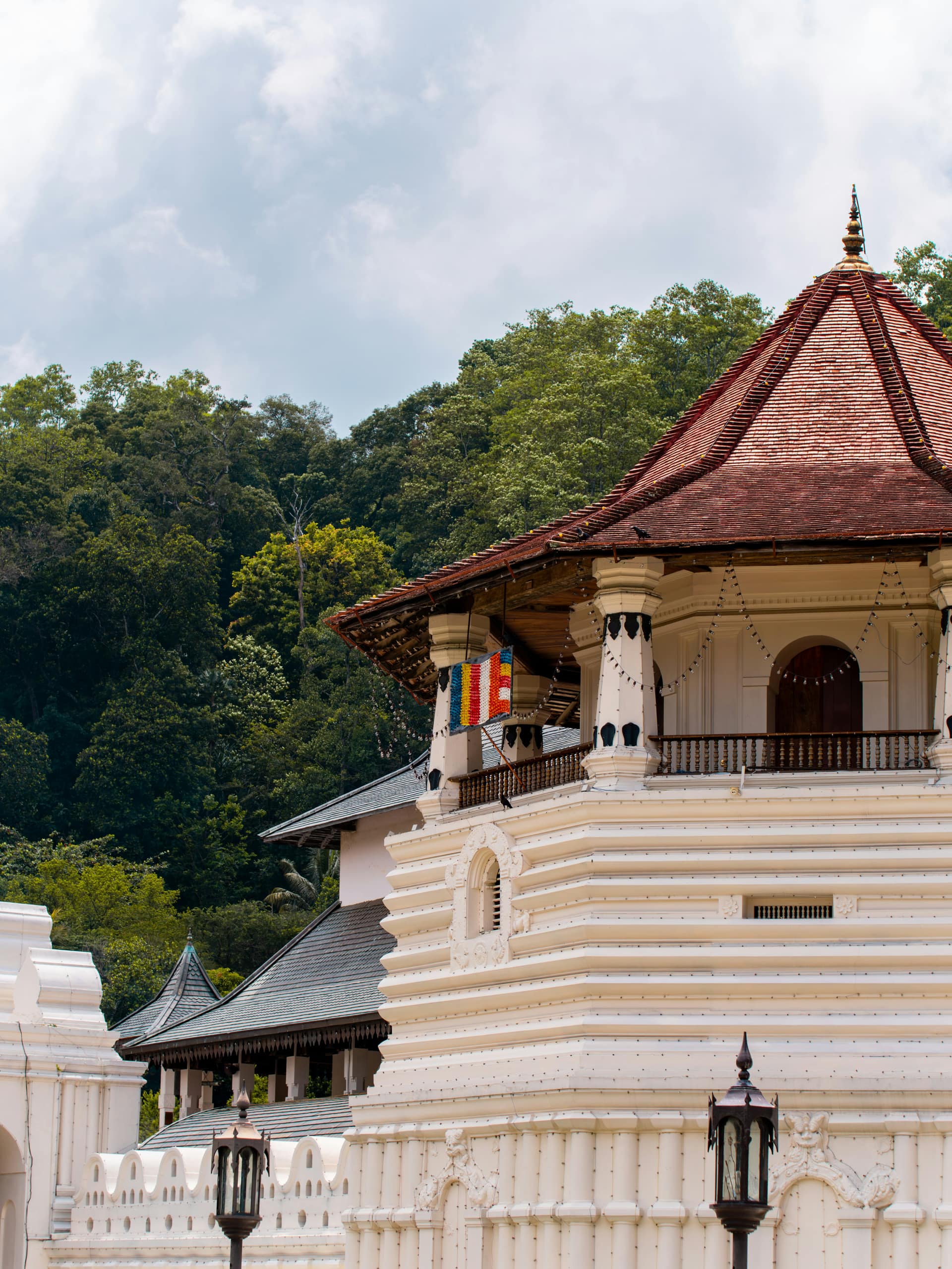
Kandy's day 4 schedule includes a lake walk and the Temple of the Tooth, and both call for slightly more considered dress than the Cultural Triangle days that precede them. Shoulders and knees covered is the standard for the temple, shoes come off before entering, and socks are worth carrying since some sections of temple floor can be uncomfortably hot underfoot in direct sun.
The evening Kandyan dance performance has no particular dress code beyond general smart-casual comfort, so the same daytime outfit generally carries through into the evening without a change.
Kandy also sits at a slightly higher elevation than the Cultural Triangle, so afternoons and evenings here feel a touch milder, a small preview of the more noticeable cooling still to come once the route climbs further into the hills from day 5 onward. A light cardigan or shawl is worth having on hand for the lake walk after sunset, useful less for genuine cold than for the breeze that picks up around Kandy Lake once the day's heat starts to fade, and equally practical as a modest cover-up if the evening includes any further temple grounds.
Footwear for day 4 deserves a specific mention alongside the outfit itself: whatever is worn to the Temple of the Tooth should slip on and off with minimal fuss, since shoes come off before entering and the lake walk afterwards benefits from something comfortable rather than the closed, grippy shoes packed for the Sigiriya climb two days earlier.
Days 5-7: hill country, from train to trail
Day 5's scenic railway to Nuwara Eliya is comfortable in the same lightweight clothing worn through the Cultural Triangle, though a light layer is worth having in the day bag since carriage windows are often open and the air cools noticeably as the train climbs. Once settled in Nuwara Eliya, evenings genuinely call for a jumper or light jacket, a real shift from the first four days of the trip.
Day 7's transfer to Ella typically includes an afternoon walk to the Nine Arch Bridge or Little Adam's Peak, both suited to closed shoes and a light layer rather than beach sandals, since the paths are uneven, partly shaded, and can be cooler than the Cultural Triangle by several degrees.
A separate article on packing for the Nuwara Eliya cold snap covers exactly how much warm clothing this stretch needs in more detail, but as a daily outfit matter, layering rather than switching wardrobes entirely is the more practical approach, a base layer worn under the daytime clothing already packed, topped with a jumper once the sun starts to drop.
- →A light layer in the day bag for the train leg on day 5, even if not needed at departure.
- →A jumper or light jacket for Nuwara Eliya evenings on days 5-6.
- →Closed shoes for the Nine Arch Bridge and Little Adam's Peak walks on day 7.
Days 8-12: the south-coast finish
The roughly 4 to 5 hour drive down to Mirissa or Unawatuna on day 8 is the point where the wardrobe flips fully to coastal mode: swimwear, light cotton or linen daywear, and a cover-up for moving between beach and hotel. This is the one stretch of the route where beachwear is the norm rather than the exception.
For anyone joining a whale-watching trip out of Mirissa or snorkelling off Unawatuna's reef (season permitting, roughly November to April for whale watching), quick-dry swimwear and reef shoes are more practical than anything packed for the earlier legs of the trip.
Evenings on the south coast stay warm enough that the Nuwara Eliya jumper can generally stay packed away for good from this point, replaced by a light cotton shirt or dress for dinner, the one part of the daily wardrobe rotation that does not need to change again before departure on day 12. This is also, deliberately, the least structured stretch of the whole itinerary, so the daily outfit decision becomes genuinely simple for the first time on the trip: beach in the morning, something light for dinner, and nothing more technical than that until the return flight.
Day 12's departure is worth a brief mention on its own, since a transfer back towards Colombo for a flight typically means several hours in air-conditioned transport and an airport terminal after four or five days of beachwear. Packing one slightly more travel-ready outfit at the top of the bag, rather than digging through beach clothes at the last hotel, makes the final transfer noticeably more comfortable.
- →Swimwear and light cotton or linen clothing as the default daytime outfit.
- →A cover-up or sarong for walking between beach, restaurant and hotel.
- →Reef shoes for snorkelling and quick-dry layers for any boat excursion.
Frequently asked questions
What should I wear to the Temple of the Tooth in Kandy?
Clothing covering shoulders and knees, with shoes that come off easily since footwear is removed before entering. Carrying a pair of socks is worth doing, since temple floors can get uncomfortably hot underfoot in direct sun.
Can I wear the same outfit for Sigiriya and Dambulla on the same day?
Not quite the same outfit, though the transition is easy. The Sigiriya climb suits lightweight, breathable clothing and closed shoes, while Dambulla's cave temples afterwards need shoulders and knees covered, so carrying a light cover-up in the day bag bridges the two.
How cold does it get in Nuwara Eliya in the evening?
Evenings in Nuwara Eliya typically sit in the roughly 10-20°C range and can drop near or below 10°C overnight, especially December to February. A jumper or light jacket is generally enough, rather than heavy winter clothing.
Do I need hiking clothes for the Nine Arch Bridge walk in Ella?
Not technical hiking gear, but closed shoes and a light layer suit the walk better than beach sandals, since the path to the Nine Arch Bridge and Little Adam's Peak is uneven and can be cooler than the coast by several degrees.
When do I switch to beachwear on this itinerary?
From day 8, once the roughly 4 to 5 hour drive down to Mirissa or Unawatuna is complete. Before that point, the route's Cultural Triangle, Kandy and hill-country stages generally call for clothing that is not beachwear.
Do women need to cover their heads at Sri Lankan temples on this route?
Generally no, head covering is not required at the Temple of the Tooth or Dambulla's cave temples, though shoulders and knees covered and shoes removed apply to all visitors regardless of gender.
Is it worth packing a separate outfit just for the train journey?
Not a separate outfit, but a light layer carried in the day bag is worth having, since the Kandy-to-Ella railway climbs into cooler air as it approaches Nanu Oya, a noticeable change from the temperature at departure in Kandy.