
Quick answer
The Nuwara Eliya and Ella cold snap on the 12-day Alps-to-beach route covers roughly two to three nights (days 5-7), with temperatures typically running 10-20°C and occasionally dropping near or below 10°C overnight, especially December to February. One fleece or wool-blend mid-layer, a light rain jacket, and long trousers are generally enough, rather than genuine winter kit, since the rest of the 12-day route runs warm to hot and that gear then has to be carried, unused, to the coast.
Key takeaways
- The cold snap on this route covers roughly two to three nights only, days 5 to 7 in Nuwara Eliya and Ella, out of a 12-day trip that is otherwise warm to hot.
- Nuwara Eliya sits at roughly 1,868 metres elevation, with Horton Plains higher still at roughly 2,100-2,300 metres, which explains the temperature drop relative to the rest of the route.
- One mid-layer (fleece or wool-blend) plus a light rain jacket generally covers the daytime and evening cold in Nuwara Eliya and Ella without needing a proper winter coat.
- December to February tends to bring the coolest hill-country nights on this route, so travellers on that exact window can reasonably pack slightly warmer than those travelling in other months.
- Everything packed for the cold snap has to be carried in the same bag down to the south coast on day 8, so minimising warm-layer bulk pays off for the rest of the trip, not just the hill country.
How cold, and for how long, exactly
On this 12-day route, the cool stretch is genuinely short: two nights in Nuwara Eliya (days 5-6) and one in Ella (day 7), with the transfer down to the south coast on day 8 ending it for good. Daytime temperatures in the hills typically run roughly 16-20°C, pleasant rather than cold, while overnight it can drop into the 10-20°C range and occasionally near or below 10°C, most often in the December-February window, and mornings before the sun properly clears the ridgelines can feel colder still than the overnight figure alone suggests.
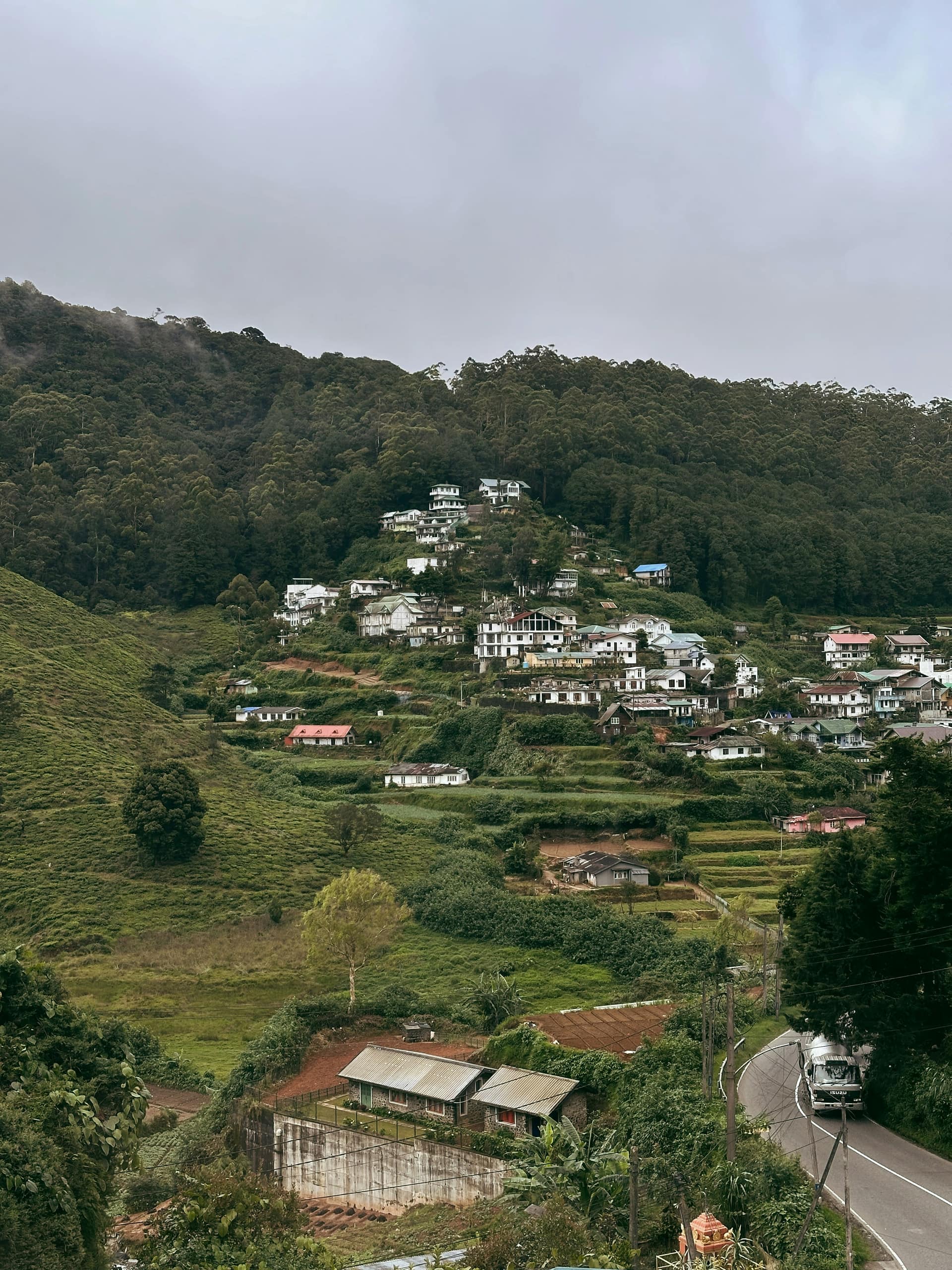
This is worth stating plainly because it is easy to over-imagine the cold from the word 'Alps' attached to this route. There is no snow and no genuine Alpine equivalence here, this is a cool, misty, tea-covered hill country evening, closer to a fresh Swiss autumn night at moderate altitude than a winter one.
The transition itself is also fairly abrupt rather than gradual: day 5's train ride climbs from Kandy's warmth into Nuwara Eliya's cool air within a matter of hours, so the cold snap arrives suddenly rather than easing in gently over several days, which is part of why it catches some travellers packing on the back foot if they have not planned for it specifically.
Rainfall is a second, separate factor worth planning around alongside temperature. Hill-country weather can shift from bright sunshine to a fine, persistent drizzle within an hour, particularly outside the driest months, so packable wet-weather protection matters as much for staying comfortable as the mid-layer does for staying warm.
What actually covers two to three cool nights
A single mid-layer, either a fleece or a wool-blend jumper, worn over a t-shirt or long-sleeve base layer, handles the bulk of the Nuwara Eliya and Ella evenings on this route. Add a light, packable rain jacket, useful for both wind and the hill country's occasional drizzle, and long trousers for the evenings rather than shorts.
Travellers doing the optional dawn excursion to Horton Plains on day 6 should note it sits higher again, roughly 2,100-2,300 metres, and pre-dawn departures there run colder than Nuwara Eliya itself, so the same mid-layer plus rain jacket, worn together rather than swapped for something heavier, is generally the right call rather than packing a separate, warmer set purely for that excursion.
Footwear matters here too, closed shoes rather than sandals both for warmth and for the uneven ground on any hill-country walk, and a pair already broken in from earlier in the trip, since the Sigiriya climb on day 2 will have done that job if the same shoes are reused for Nuwara Eliya and Ella. A dedicated footwear guide for this route covers exactly which shoes suit each stage in more detail.
Sleepwear is worth a specific mention too, since hotel rooms in Nuwara Eliya do not always run central heating the way a Swiss hotel would, relying instead on extra blankets provided on request. A pair of light pyjamas suited to roughly 15-18°C indoor temperatures, rather than the thin cotton set that suits the rest of the route, makes the two nights noticeably more comfortable.
- →One fleece or wool-blend mid-layer, worn over a base layer.
- →One light, packable rain jacket or windbreaker, doubling as wind protection.
- →Long trousers for hill-country evenings and the dawn Horton Plains excursion.
- →A light scarf or buff, useful for warmth and for shielding against dust on open transport.
What to leave at home
Genuine winter kit, a down jacket, thermal base layers, gloves and a hat beyond a thin beanie, is generally unnecessary for this route's cold snap, since the temperatures involved sit closer to a cool Swiss autumn evening than a true winter one. Anything packed for that level of cold ends up as dead weight for the other nine or so days of the trip.
Travellers arriving in the December-February window, when hill-country nights run coolest, can reasonably add thin gloves and a beanie, but this remains an optional add rather than a default, and even then a single set is enough rather than a full cold-weather wardrobe.
It also helps to remember what this cold snap is not: it is not the kind of cold that demands specialist mountaineering fabric, insulated boots or layered thermal systems. A jumper that would see light use on a mild Swiss spring evening is a closer reference point than anything packed for a genuine winter trip at home, and thinking in those terms tends to stop travellers from over-preparing for a stretch of the route that, however atmospheric, is simply not that cold.
Umbrellas are a small item worth including in this same category of easily over-packed gear. A compact travel umbrella covers hill-country drizzle perfectly well, and most hotels on this route keep a few available for guests to borrow, so packing more than one per travelling party is rarely necessary.
- →Down jackets and thermal base layers: not necessary for roughly 10-20°C nights.
- →Multiple warm layers 'just in case': one mid-layer and one rain jacket generally suffice.
- →Heavy winter boots: closed, comfortable walking shoes cover the hill-country walks and the train leg.
Carrying warm layers to a hot coast, and not needing them
The practical reason to pack light for the cold snap is what happens next: day 8's roughly 4 to 5 hour transfer down to Mirissa or Unawatuna, where temperatures typically run roughly 28-32°C for the remaining four to five nights of the trip. Every extra warm item packed for Nuwara Eliya has to ride along in the same bag through that transfer and then sit unused on the coast.
A single mid-layer and rain jacket pack down small enough to sit at the bottom of a bag for the rest of the route without taking up meaningful space, which is the more realistic goal than trying to avoid packing warm items altogether.
A compression bag or packing cube dedicated to the cold-snap layer also helps here, since it keeps the fleece and rain jacket separated from beachwear once they are no longer needed, easy to find again only on the return journey home rather than resurfacing awkwardly mid-trip while unpacking for a south-coast hotel.
It is worth planning one exception to packing everything away for good: if the return flight home involves an overnight layover somewhere cooler than Sri Lanka, or an early-hours arrival back into a Swiss winter, keeping the mid-layer accessible near the top of the bag rather than compressed at the bottom saves a last-minute repack at the airport on day 12.
How this gets briefed in practice
We at Lankan Stays & Trails flag the Nuwara Eliya and Ella cold snap specifically to Swiss clients booking this route, since the instinct to either overpack warm gear out of familiarity with real Alpine cold, or underpack it by assuming Sri Lanka is uniformly tropical, are both common and both avoidable with the specific stage-by-stage detail above.
Checking the exact travel month against current hill-country forecasts closer to departure is worth doing, since the December-February window runs cooler than the shoulder months, and packing decisions can be adjusted accordingly rather than defaulting to the coldest-case scenario every time.
This same logic applies in reverse for travellers visiting outside the coolest window, roughly April to November, when Nuwara Eliya's nights are milder still and a single light layer, rather than even the full fleece and rain jacket combination, is often enough to stay comfortable through the two to three hill-country evenings.
Frequently asked questions
How cold does it actually get in Nuwara Eliya at night?
Typically roughly 10-20°C overnight, occasionally dropping near or below 10°C, most often December to February. Daytime temperatures are milder, roughly 16-20°C, so the cold is mainly an evening and early-morning phenomenon on this route.
Do I need a winter coat for the hill-country section of this route?
No, a fleece or wool-blend mid-layer plus a light rain jacket generally covers the roughly two to three cool nights in Nuwara Eliya and Ella. Genuine winter kit is unnecessary weight given how mild the rest of the 12-day route runs.
How many warm layers should I actually pack for this trip?
One mid-layer and one light rain jacket is generally enough for the cold snap on days 5 to 7. Packing multiple warm items for a stretch this short means carrying unused weight through the rest of the hot 12-day route.
Is Horton Plains colder than Nuwara Eliya itself?
Yes, Horton Plains sits higher, roughly 2,100-2,300 metres against Nuwara Eliya's roughly 1,868 metres, and the optional dawn excursion there on day 6 runs colder, particularly before sunrise, so the same mid-layer and rain jacket are worth wearing together on that morning.
Should I pack differently if travelling in December to February?
Slightly. That window tends to bring the coolest hill-country nights on this route, so adding thin gloves and a beanie is reasonable, though a single set remains enough rather than a full cold-weather wardrobe.
What happens to my warm clothing once I reach the south coast?
It packs away largely unused, since days 8 to 12 on the south coast typically run roughly 28-32°C. Keeping the hill-country layer selection minimal in the first place avoids carrying excess bulk through that transfer.
Is Nuwara Eliya as cold as the Swiss Alps?
No, there is no snow and no genuine Alpine equivalence on this route. The comparison is about the cool, misty, terraced-green atmosphere, not literal temperature or altitude, and Nuwara Eliya's actual historical nickname is Little England, not Little Switzerland.