
Quick answer
The 12-day Alps-to-beach Sri Lanka packing list splits into four blocks matching the route's stages: lightweight, breathable clothing and sun protection for the Cultural Triangle (days 1-4), one modest, shoulders-and-knees-covered outfit for temple visits at Kandy and Dambulla, warm layers for two to three cool nights in Nuwara Eliya and Ella (days 5-7), and swimwear plus reef shoes for the south-coast finish (days 8-12). Roughly 10-20°C nights in the hills and 28-32°C days on the coast are the two extremes to pack for.
Key takeaways
- The route crosses four distinct climate stages in 12 days: Cultural Triangle heat, Kandy's temple etiquette, hill-country cool (roughly 10-20°C, days 5-7), and south-coast heat (roughly 28-32°C, days 8-12).
- A single lightweight fleece or wool-blend layer, packed for days 5-7 only, generally covers the Nuwara Eliya and Ella cold snap without needing genuine winter kit.
- One set of temple-appropriate clothing, covering shoulders and knees, is needed for the Temple of the Tooth in Kandy on day 4 and Dambulla's cave temples on day 2.
- The Sigiriya climb on day 2 (roughly 1,200 steps) is best done in closed, grippy shoes rather than sandals, even though sandals suit most of the rest of the trip.
- Reef-safe sunscreen and a basic first-aid kit cover both the Sigiriya heat early in the trip and the snorkelling days on the south coast at the end of it.
Why this list is organised by stage, not by category
A generic Sri Lanka packing list tends to lump everything together: clothing, footwear, electronics, toiletries. That works reasonably well for a beach-only trip, but this route runs through four genuinely different climates in 12 days, so the more useful question is what you need for each leg, and when you can hand off warm-weather gear you are not yet using.
The structure below follows the route as published in the 12-day Alps-to-beach itinerary: Cultural Triangle (days 1-4, including Kandy), hill country (days 5-7, Nuwara Eliya and Ella), and the south-coast finish (days 8-12). Pack in that order and the bag stays sensible at every stage rather than overloaded from day one.
It also helps to think of the bag itself in two halves: a base layer of items useful across the whole 12 days (sun protection, a basic first-aid kit, a day pack), and a rotating layer that changes as the route moves from stage to stage. Packing this way makes it obvious what to dig out at each hotel change rather than unpacking the whole bag every time, and it avoids the Swiss-traveller instinct, common on a European multi-country rail trip, of packing one bag for one climate and unpacking it only once.
A rough weight guideline is worth setting before packing rather than after, since this route's five hotel changes mean the bag is lifted in and out of a car boot repeatedly, and a genuinely heavy case becomes its own daily inconvenience. Packing one outfit fewer than instinct suggests, and relying on the mid-trip laundry option most hotels on this route offer, generally keeps the bag more manageable than trying to pack fresh clothing for all 12 days.
Days 1-4: Cultural Triangle and Kandy
Days 1 to 4 cover arrival, the Sigiriya climb, Dambulla's cave temples, and Kandy, all of which sit at low elevation and run hot and humid for most of the year. Lightweight, breathable clothing in natural fibres works better here than synthetic quick-dry fabric, which can feel clammy in the humidity.
Kandy's Temple of the Tooth and Dambulla's cave temples both require shoulders and knees covered, and shoes come off before entering, so one modest outfit and shoes that slip on and off easily earn their place in the bag from day one rather than being an afterthought packed for Kandy alone.
The roughly 3 to 4 hour transfer from arrival on day 1 into this heat is also worth dressing for on its own terms: loose, comfortable clothing for a multi-hour drive matters as much as anything packed for the sightseeing days that follow, since day 1 sets the tone before any temple or climb is even on the schedule.
- →Lightweight, breathable shirts and trousers or skirts, natural fibres where possible.
- →One temple-appropriate outfit covering shoulders and knees, worn for both Dambulla and the Temple of the Tooth.
- →A wide-brimmed hat and high-factor sunscreen for the exposed sections of the Sigiriya climb.
- →A refillable water bottle, since the Sigiriya climb and Cultural Triangle heat both call for steady hydration.
Days 5-7: the hill-country cold snap
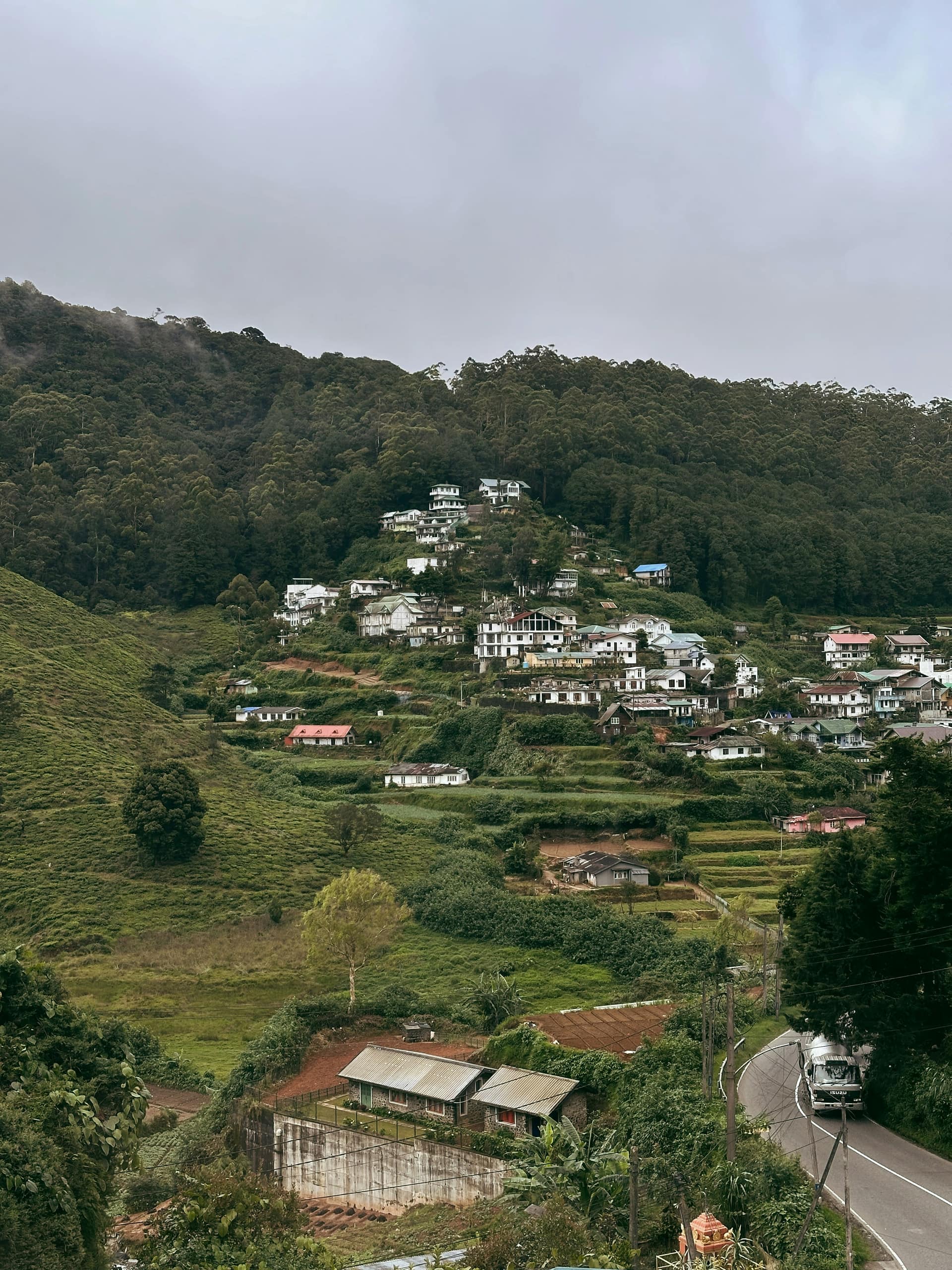
Day 5's scenic railway climbs into Nuwara Eliya, roughly 1,868 metres, and the route stays in cool hill country through Ella on day 7. Nights here typically sit in the roughly 10-20°C range, occasionally dropping near or below 10°C, a genuine shift from the heat of the first four days.
This is the one stretch of the trip where a proper layer earns its place: a fleece or wool-blend jumper, a light rain jacket for hill-country drizzle, and closed shoes for both the train carriage and any dawn excursion to Horton Plains. None of this needs to be heavy winter kit, since the cold is a cool-evening chill rather than anything close to genuine Alpine winter.
A separate article on packing for the Nuwara Eliya cold snap covers this stretch in more detail, since it is the one part of the route where travellers most often either overpack, bringing genuine winter kit that then rides unused to the coast, or underpack, assuming Sri Lanka is uniformly tropical and arriving without so much as a light jumper.
- →One fleece or wool-blend mid-layer, plus a light rain jacket or windbreaker.
- →Long trousers and closed shoes for the train leg and any early Horton Plains excursion.
- →A light scarf or buff, useful for both warmth on cool evenings and modesty at rural stops.
- →Thin gloves and a beanie only if travelling in the December-February window, when hill-country nights run coolest.
Days 8-12: the south-coast finish
The roughly 4 to 5 hour drive down to Mirissa or Unawatuna on day 8 is a genuine climate reset, from hill-country cool back to coastal heat of roughly 28-32°C. From here the packing list flips to swimwear, light cotton or linen clothing, and sun protection, with the fleece and rain jacket from the hills packed away and largely unused for the rest of the trip.
Reef shoes are worth including for anyone planning to snorkel off Unawatuna's reef, since the shallow sections can be sharp underfoot, and a dry bag protects phones and cameras on any whale-watching trip out of Mirissa.
A light long-sleeve top or sarong is also worth keeping in the day bag for these final nights, useful both as sun cover during the hottest part of the afternoon and as a modest layer if an evening walk passes near a temple or village away from the beachfront.
This is also the stage of the trip with the most unstructured time, four to five nights with no fixed daily schedule, so a couple of extra outfits worth of light clothing pay off here more than at any earlier stop, simply because they get worn and rewashed less urgently than on a busier sightseeing day.
- →Swimwear, light cotton or linen clothing, and a cover-up for walking between beach and hotel.
- →Reef-safe sunscreen, sunglasses and a hat for extended beach and boat time.
- →Reef shoes for snorkelling, and a dry bag for boat trips such as whale watching.
Essentials that travel the whole route
A handful of items are useful on every stage rather than any single one: a basic first-aid kit with rehydration salts, insect repellent, a universal power adapter, and a lightweight day pack for the Sigiriya climb, hill-country walks and beach-day bits and pieces alike.
We at Lankan Stays & Trails give clients a stage-by-stage packing note alongside the day-by-day itinerary, since the biggest single mistake we see is travellers packing for a single Sri Lankan climate rather than the four this route actually passes through.
A small dry bag or packing cube dedicated to electronics and documents also earns its keep across all 12 days, keeping passports, chargers and camera gear separate from clothing at every one of the route's five hotel changes, and quick to locate on the morning of the day 5 train departure when a day bag needs packing fast. Laundry is also worth planning for rather than packing to avoid entirely, since most hotels on this route offer it and a single mid-trip wash, timed for the hill country or the start of the south-coast stretch, keeps the overall bag lighter than trying to pack fresh clothing for all 12 days.
- →Basic first-aid kit, including rehydration salts and any personal medication.
- →Insect repellent, particularly for hill-country walks and coastal evenings.
- →Universal power adapter and a portable charger for the longer travel days.
- →A lightweight day pack, used for the Sigiriya climb, hill-country walks and beach-day essentials alike.
- →A few packing cubes or a compression bag, useful for keeping the cold-snap layer separate once it is no longer needed.
Frequently asked questions
What is the most important thing to pack for this 12-day Sri Lanka route?
Layering flexibility matters more than any single item, since the route runs from Cultural Triangle heat to hill-country cool and back to coastal heat within 12 days. One warm layer for days 5-7 and swimwear for days 8-12 cover the two extremes.
Do I need warm clothing for a Sri Lanka trip that ends on the beach?
Yes, but only for roughly two to three nights. Nuwara Eliya and Ella on days 5-7 can drop near or below 10°C at night, so one fleece or wool-blend layer is worth packing even though the rest of the route runs hot.
Can I do this whole route with one carry-on bag?
It is possible for light packers, though most travellers find a slightly larger checked bag more comfortable given the climate range. A related article on carry-on versus checked-bag strategy for this exact route covers the trade-offs in more depth.
What clothing do I need for the temples on this route?
One modest outfit covering shoulders and knees, plus shoes that come off easily, covers both Dambulla's cave temples on day 2 and the Temple of the Tooth in Kandy on day 4, the two temple stops on this itinerary.
Should I pack hiking boots for this itinerary?
Sturdy, closed, grippy shoes are more useful than heavy hiking boots, since the Sigiriya climb, Nine Arch Bridge walk and any Horton Plains excursion all involve uneven ground but not technical terrain.
Do I need snorkelling gear for the south-coast section?
Basic mask and snorkel sets are widely available to rent at Mirissa and Unawatuna, so packing your own is optional. Reef shoes are worth bringing regardless, since rental options for those are less consistent.
How do I avoid overpacking warm layers I only need for a few days?
Pack one versatile layer rather than several warm items, since Nuwara Eliya and Ella only cover roughly two to three nights of this 12-day route. A dedicated article on the hill-country cold snap covers exactly how much warm gear is genuinely needed.