
Quick answer
Galle Fort's heritage hotels are restored Dutch-colonial townhouses and merchant villas set inside the 17th-century ramparts, typically boutique in scale with roughly 6 to 20 rooms, a short walk from the lighthouse and the sea walls. They suit couples who want a historic, walkable base rather than a beach-resort sprawl, and because room counts are so small, booking several months ahead matters more here than almost anywhere else on the south coast.
Key takeaways
- Galle Fort is a UNESCO World Heritage Site enclosed by Dutch ramparts covering roughly 90 acres, still lived in as a working town.
- Heritage hotels inside the fort typically hold between about 6 and 20 rooms, so December to March dates can sell out four to six months ahead.
- Most heritage properties sit within a 10 to 15 minute walk of the Galle Lighthouse and the fort's southern ramparts.
- Many heritage conversions borrow courtyard and verandah ideas from Geoffrey Bawa, the Sri Lankan architect whose tropical-modern style shaped the island's boutique-hotel look.
- Unawatuna and Mirissa's beach stretches lie roughly 10 to 30 minutes' drive from the fort, so a fort stay pairs easily with beach nights either side.
Galle Fort as a base for couples
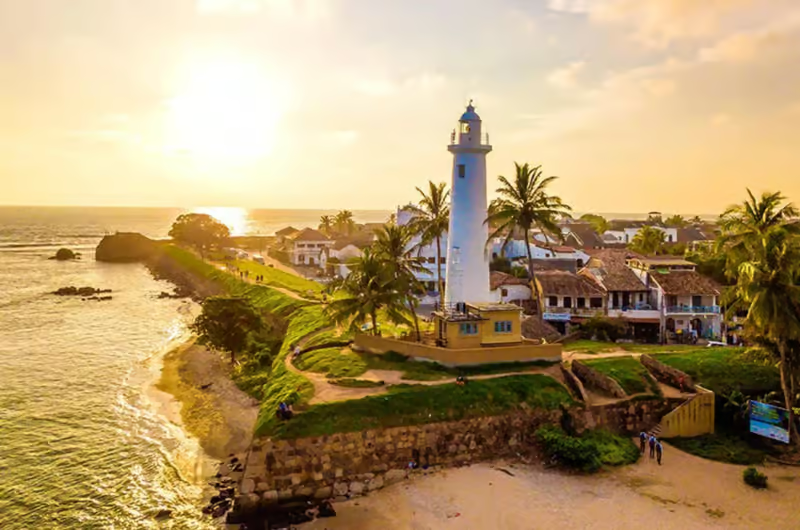
Galle Fort is the walled old town at the south-western tip of Sri Lanka, built by the Portuguese and expanded by the Dutch in the 17th century, and it is still a functioning neighbourhood rather than a museum piece. Ramparts, a lighthouse, a Dutch Reformed church and narrow lanes of shophouses sit within easy walking distance of one another, which changes what a stay here actually feels like.
For a couple, that compactness is the appeal. Instead of driving to a landmark or a dinner spot, you step out of the hotel's front door onto a street, and the ramparts at sunset are a stroll rather than an excursion.
This is a genuinely different holiday register to a beach resort further down the coast, and worth choosing deliberately rather than as an afterthought between beach nights.
What makes a heritage hotel different from a beach resort
A heritage hotel inside Galle Fort is usually a converted merchant house or colonial-era residence, not a purpose-built resort. Rooms open onto internal courtyards rather than a beachfront, pools tend to be small plunge pools rather than resort lagoons, and the whole building sits flush against a street rather than behind gates and gardens.
That means the experience is about the town itself: the walk to a rampart bastion for the evening light, a coffee shop two doors down, art and antique galleries you pass on the way to dinner. Couples who want uninterrupted beach and pool time are usually happier a short drive away in Unawatuna or Mirissa; couples who want streets to wander together are better served inside the walls.
- →Heritage hotel: converted colonial townhouse, courtyard rooms, walkable streets
- →Beach resort: purpose-built, beachfront pool, typically outside the fort walls
- →Fort stays suit couples prioritising atmosphere and history over lounger time
- →Beach resorts suit couples prioritising swimming and sunbathing over sightseeing
The Dutch-colonial and Bawa-influenced style
Most heritage hotels inside Galle Fort keep the bones of their original building: thick coral-stone or brick walls, timber-shuttered windows, deep verandahs and a central courtyard that draws air through the house. Rooms are typically furnished with dark wood, antique-style furniture and period tiling rather than a contemporary resort palette.
A good number of these conversions also lean on the design language of Geoffrey Bawa, Sri Lanka's most influential 20th-century architect, whose tropical-modern style of open courtyards, framed views and indoor-outdoor living shaped how the island's boutique hotels look today. Expect a rooftop terrace, a shaded courtyard for breakfast, and rooms that stay cool without heavy air conditioning use.
This is a quieter, more textured kind of romance than a resort suite, built around the building's own history rather than added-on amenities.
Booking lead time and room counts
Because Galle Fort is a protected historic town, there is no room to add large new hotels inside the walls, and most heritage properties hold only a handful of rooms, roughly 6 to 20 in many cases. That scarcity is the single biggest planning fact for a couple choosing a fort stay.
For the December to March peak season, when the south and west coasts see their best weather, the better-regarded heritage hotels can fill four to six months ahead, particularly for a specific room type such as a courtyard suite. Shoulder months still deserve a few weeks' notice given how few rooms exist to begin with.
- →Peak season (December to March): book roughly 4 to 6 months ahead where possible
- →Shoulder months: book at least 4 to 8 weeks ahead
- →A specific room type (courtyard-facing, top floor) sells out first
- →Confirm exact room counts and availability directly when booking
Pairing Galle Fort with the south coast
Galle Fort rarely needs to be a couple's only stop on the south coast. Unawatuna's curved beach sits roughly 10 to 15 minutes away by tuk-tuk or car, and Mirissa, known for its whale-watching season, is roughly 25 to 30 minutes further. Many couples split a south-coast leg into two or three nights inside the fort followed by beach nights nearby.
That combination gives you both registers: old-town evenings on foot, then open beach and pool time a short drive away, without a long transfer breaking up the trip.
Practical tips for a fort stay
Galle Fort's streets are narrow, mostly flat and easy walking, but pack comfortable shoes rather than beach sandals for exploring the ramparts, which have uneven stone sections. The fort gets warm through the middle of the day, so many couples time rampart walks for early morning or the hour before sunset.
Vehicles can access most of the fort but parking is limited, so a heritage hotel usually arranges luggage transfer even if your driver-guide waits outside the walls. Confirm this detail with the hotel directly, since it varies by property.
Planning a Galle Fort stay as a couple
A Galle Fort heritage stay works best as a deliberate two-to-three-night stop within a wider south-coast or full-island route, rather than a single overnight squeezed between transfers. Lankan Stays & Trails builds this pairing into private itineraries regularly, matching a fort stay with the right beach nights either side and booking the smaller heritage properties early enough to secure the room you actually want.
If a walkable old town matters more to you than an infinity pool, start your south-coast planning with the fort rather than the beach strip.
Frequently asked questions
What is Galle Fort known for?
Galle Fort is a UNESCO World Heritage Site built by the Portuguese and expanded by the Dutch in the 17th century, enclosed by ramparts covering roughly 90 acres. It is known for its lighthouse, colonial architecture, galleries and boutique heritage hotels, and remains a lived-in town rather than a museum.
Are there boutique hotels inside Galle Fort?
Yes, Galle Fort holds a number of small boutique and heritage hotels converted from colonial-era townhouses, typically with roughly 6 to 20 rooms each. They are distinct from the larger beach resorts found in nearby Unawatuna and Mirissa.
How far in advance should we book a heritage hotel in Galle Fort?
For December to March travel, aim to book roughly 4 to 6 months ahead given how few rooms most heritage hotels hold. Shoulder-season dates are more flexible but still deserve several weeks' notice, especially for a specific room type.
Is Galle Fort walkable for couples without a car?
Yes, Galle Fort's streets are narrow, largely flat and easily walkable, with the lighthouse, ramparts and main shopping streets all within about 10 to 15 minutes on foot of most hotels. A private driver-guide is still useful for trips beyond the fort walls.
What is the best time of year to stay in Galle Fort?
Roughly December to March brings the driest, calmest weather to Sri Lanka's south and west coasts, including Galle. The south-west monsoon (roughly May to September) brings more rain and rougher seas, though the fort's covered streets and cafes still work well for a shorter visit.
How far is Galle Fort from Unawatuna and Mirissa beaches?
Unawatuna is roughly a 10 to 15 minute drive from Galle Fort, and Mirissa is roughly 25 to 30 minutes further along the coast. Many couples combine a fort stay with beach nights in one or both locations.
Does Lankan Stays & Trails arrange stays inside Galle Fort?
Yes, Lankan Stays & Trails regularly books heritage hotels inside Galle Fort as part of private south-coast itineraries for couples, timing the booking around each property's limited room count. Share your travel dates and preferred style for tailored options.