
Quick answer
February is one of the best months for Horton Plains. The weather is dry, trails are firm and early mornings are usually clear, giving the best odds of a full view from World's End before mist rises, often by about 10am. Dawns are cold, close to freezing, with ground frost on some mornings. Arrive at opening time, around 6am, bring a warm layer, water and snacks, and allow three to four hours for the 9 km loop past World's End and Baker's Falls.
Key takeaways
- February gives the best odds of a clear view from World's End.
- Mist often rises from about 10am, so arrive at opening time.
- Dawns are near freezing, with ground frost on some mornings.
- The 9 km loop takes three to four hours at a steady pace.
- Nuwara Eliya and Haputale are the usual bases, about an hour away.
Horton Plains weather in February
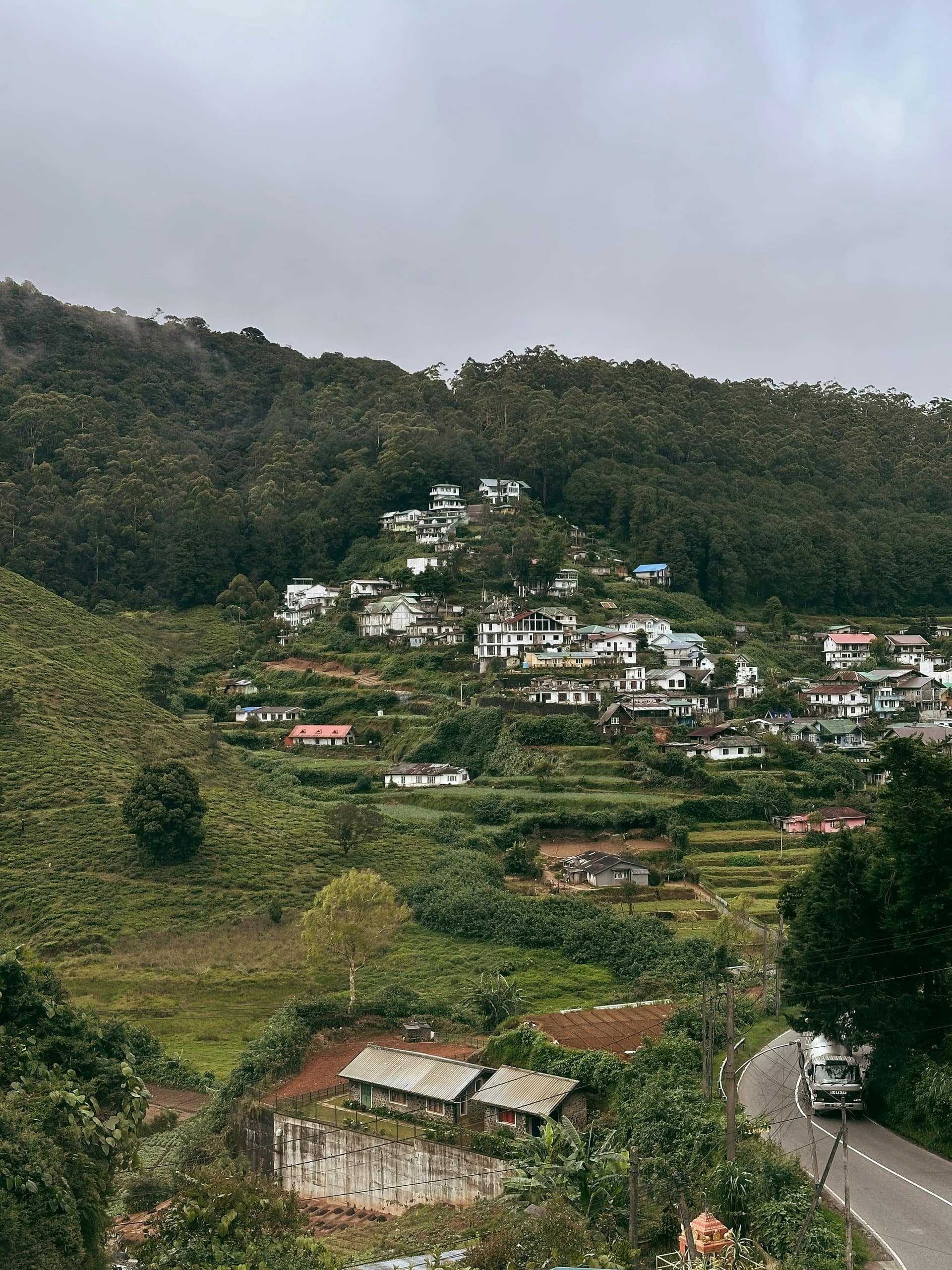
Horton Plains sits at between 2,100 and 2,300 metres, the highest plateau in Sri Lanka. February is one of its driest months, after the north-east monsoon fades and well before the south-west monsoon brings heavy rain and mist from May. Skies are often completely clear at dawn.
Clear nights mean cold mornings. Temperatures at dawn can fall close to freezing, and ground frost is seen on the grasslands on some February mornings, an unusual sight in a tropical country. By late morning the sun warms the plains to the high teens.
Mist is the main factor to plan around. Even in February, cloud often rises up the escarpment from mid-morning, filling the view at World's End. The earlier you reach the edge, the better your chance of seeing all the way to the lowlands.
- →Dry and clear dawns most days.
- →Near freezing at dawn, ground frost possible.
- →Mist often rising from about 10am.
Timing the view from World's End
World's End is about 4 km from the park entrance on the loop trail. Walking at a steady pace, it takes around an hour to reach. Starting at opening time, around 6am, puts you at the edge by about 7am, when the view is usually at its clearest in February.
On a good morning you can see across the hills and tea estates to the lowlands, and sometimes as far as the coast. Little World's End, a smaller viewpoint on the way, offers a preview. Both are unfenced cliffs, so stay well back from the edge.
If mist arrives early, waiting for 15 to 30 minutes sometimes brings a clearing. Many walkers sit at the edge for a while before continuing the loop, especially on mornings when the cloud is moving rather than settled.
- →Arrive at opening time, around 6am.
- →Reach World's End by about 7am.
- →Wait a little if mist rolls in.
Walking the loop
The main trail is a loop of about 9 km, passing Little World's End, World's End and Baker's Falls before returning across the grasslands to the entrance. Most people take three to four hours, including stops. The path is rocky in places and has some steep sections near Baker's Falls.
In February the trails are dry and firm, which makes the walk easier than in the wet months, when sections turn to mud. Trainers or light walking shoes with good grip are enough. The plains are exposed, so the sun is strong by late morning.
Walking the loop clockwise, the direction most people follow, reaches World's End first, which is the best order for catching the view before mist. Allow time on the way back for the grassland, which is beautiful in morning light.
Wildlife and plants
Sambar deer are common on the plains, especially near the entrance and the grasslands in the early morning. Endemic birds include the Sri Lanka whistling thrush, the yellow-eared bulbul and the dull-blue flycatcher, which birders seek out in the cloud forest.
Purple-faced langurs, giant squirrels and occasional leopards live in the park, though leopards are rarely seen. The cloud forest is draped in moss and lichen, and rhododendrons flower in some seasons.
Plastic is restricted in the park, and bags are checked at the entrance. Bring water in reusable bottles and take all rubbish with you.
- →Sambar deer near the entrance.
- →Endemic birds in the cloud forest.
- →Plastic restricted: bags are checked.
What to wear and bring
Wear layers. A warm fleece or light down jacket, a hat and gloves are useful for the first hour, when the plains can be near freezing. By the end of the walk you will want a T-shirt, sunscreen and a hat.
Bring water, snacks and a light breakfast if your hotel provides a breakfast box. There are limited facilities in the park. A small torch helps for the early drive and the first minutes on the trail.
Comfortable trainers or walking shoes with good grip are enough. Binoculars are useful for birds and deer.
- →Warm layer, hat and gloves.
- →Sunscreen and sun hat for later.
- →Water, snacks and breakfast box.
- →Trainers with good grip.
Planning your visit
Nuwara Eliya and Haputale are the usual bases, each about an hour's drive away. Leave around 5am to arrive at opening time. Some travellers stay at Ohiya or Pattipola, closer to the park, for a shorter early start.
February is peak season, and many visitors arrive at opening time, so the entrance can be busy. The trails spread people out once walking begins. Weekends and holidays are busier than weekdays.
The planners at Lankan Stays & Trails usually schedule Horton Plains on the first full morning in the hills in February, keeping a second morning free as a backup in case the first is misty.
Frequently asked questions
Is February a good time to visit Horton Plains?
Yes, it is one of the best months. February is dry, trails are firm and early mornings are usually clear, giving the best odds of a full view from World's End. Dawns are cold, close to freezing, so bring a warm layer for the first hour of the walk.
What time should I arrive at Horton Plains in February?
At opening time, around 6am. This puts you at World's End by about 7am, when the view is usually clearest. Mist often rises up the escarpment from about 10am, even in February, so a late start risks missing the view entirely.
Is there frost at Horton Plains in February?
Sometimes. Clear February nights can bring temperatures close to freezing at dawn, and ground frost is seen on the grasslands on some mornings. It melts quickly once the sun rises. Bring a warm layer, hat and gloves for the first hour.
How long is the Horton Plains walk?
The main loop is about 9 km and takes three to four hours, including stops at Little World's End, World's End and Baker's Falls. The path is rocky in places, with some steep sections near the falls. Trainers with good grip are enough in February.
Will I see the view from World's End in February?
February gives the best odds of the year, but there is no guarantee. Mist can arrive early on some mornings. Arriving at opening time and waiting a little at the edge if cloud is moving gives the best chance of seeing all the way to the lowlands.
Can I see wildlife at Horton Plains?
Sambar deer are common, especially in the early morning near the entrance. Endemic birds such as the Sri Lanka whistling thrush and yellow-eared bulbul live in the cloud forest. Purple-faced langurs are often seen. Leopards live in the park but are rarely seen.
Where should I stay for Horton Plains?
Nuwara Eliya and Haputale are the usual bases, about an hour's drive from the park. Ohiya and Pattipola are closer and allow a shorter early start, though accommodation there is limited. Leave around 5am from Nuwara Eliya or Haputale to arrive at opening time.