
Quick answer
Sri Lanka is not cold in January on the coast, where days reach about 30 to 31°C and nights stay around 22 to 24°C. The hill country is different: Nuwara Eliya and Horton Plains often fall to 5 to 10°C at night, and ground frost can form on clear mornings. Kandy is mild, with nights of about 17 to 18°C. The Adam's Peak summit can be near freezing before sunrise.
Key takeaways
- The coast stays warm day and night in January.
- Nuwara Eliya and Horton Plains have the year's coldest nights.
- Ground frost can form on clear January mornings in the high hills.
- Kandy and Ella are mild, with cool nights.
- The Adam's Peak summit before dawn is the coldest place most visitors go.
Why the hills get cold in January
January brings the north-east monsoon, which leaves the western hills under clear, dry skies for much of the month. With no cloud cover at night, heat escapes quickly, and temperatures at altitude fall sharply after sunset. This is why the brightest days in the hill country are followed by the coldest nights.
Altitude does the rest. Nuwara Eliya sits at about 1,900 metres and Horton Plains at over 2,100 metres. At those heights, the air is thinner and holds less heat, so the drop from afternoon to dawn can be 12 to 15 degrees.
Cold air also sinks into valleys. On still, clear nights, frost forms on the grass in the valleys around Nuwara Eliya and on the open grassland of Horton Plains, often gone within an hour of sunrise.
- →Clear skies let heat escape overnight.
- →Altitude above 1,800 metres brings cold nights.
- →Frost forms in valleys on still nights.
Temperatures by place
On the coast, from Negombo to Tangalle, January days reach about 30 to 31°C and nights stay around 22 to 24°C. The sea is about 27 to 28°C. Evenings are warm enough for dinner outside in light clothes.
In the Cultural Triangle, days reach about 29 to 30°C, with fresh early mornings that suit climbing Sigiriya at opening time. Kandy, at about 500 metres, has days of about 27 to 28°C and nights of about 17 to 18°C.
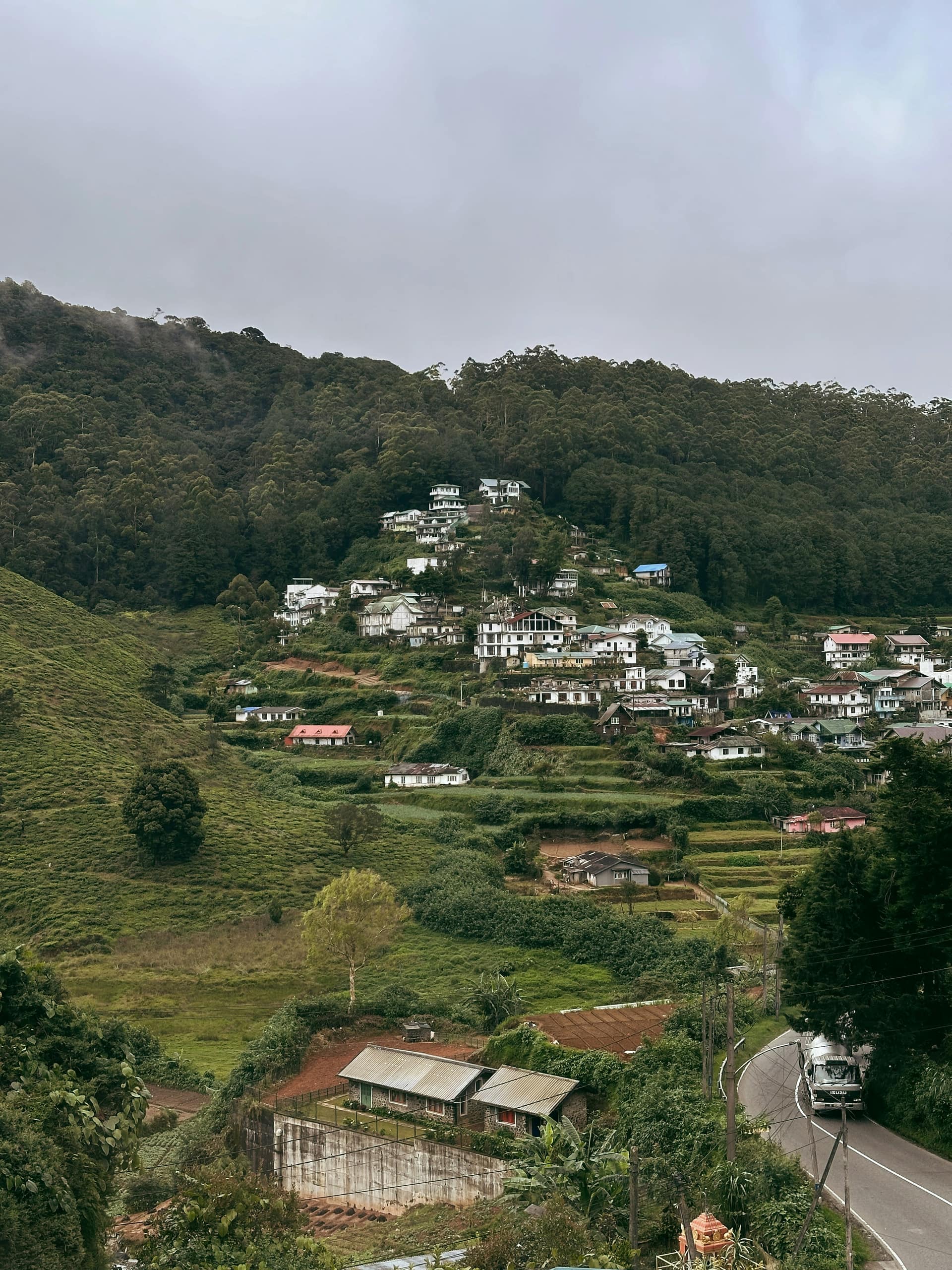
Ella and Haputale have cool nights of roughly 13 to 16°C. Nuwara Eliya and Horton Plains often fall to 5 to 10°C at night, occasionally lower, with daytime highs of about 18 to 20°C in sunshine.
- →Coast: about 30 to 31°C by day, 22 to 24°C at night.
- →Kandy: about 27 to 28°C by day, 17 to 18°C at night.
- →Nuwara Eliya: about 18 to 20°C by day, 5 to 10°C at night.
The coldest moments of a January trip
For most travellers, the coldest moment is the wait for sunrise on Adam's Peak. The summit, at about 2,240 metres, can be near freezing with wind chill, and climbers who arrive sweaty after a three-hour climb feel the cold quickly.
The second coldest is the dawn start at Horton Plains, where jeeps and walkers arrive before seven to reach World's End before mist rises. The open grassland offers no shelter from the wind.
The early hill train between Nanu Oya and Ella, with open doors and windows, can also feel chilly in the first hour. Evenings in unheated hill-country guesthouses round out the list.
How the cold feels
Visitors from northern Europe or Canada often find the hill-country cold refreshing rather than harsh. The difference is that buildings are designed for heat, not cold, so rooms and dining areas can feel colder than the temperature suggests.
Many guesthouses and older bungalows have no heating, though thick blankets are standard. Some hotels light fires in lounges in the evening, which is part of Nuwara Eliya's colonial charm.
Coming straight from the hot coast, the body notices the change more. A drive from Mirissa to Nuwara Eliya climbs from about 31°C to about 15°C in a single afternoon.
- →Rooms are built for heat, not cold.
- →Blankets are standard; heating is not.
- →The drive from coast to hills is a big change.
What to pack for the cold
One proper warm layer is enough for most travellers: a thin fleece or packable down jacket. Add a beanie, thin gloves and warm socks if you plan Adam's Peak or Horton Plains at dawn.
Layers work better than one heavy coat, since days in the hills are bright and warm. A T-shirt, a long-sleeved top and a fleece or down jacket handle everything from noon sun to midnight frost.
Lankan Stays & Trails guests usually keep their warm layer in the car or a daypack throughout the hill-country part of a January trip, because the temperature changes so quickly with altitude and time of day.
- →Fleece or packable down jacket.
- →Beanie, gloves and warm socks.
- →Layers rather than one heavy coat.
Is the coast ever cold?
Not really. January evenings on the south and west coasts are warm, and the sea is comfortable for swimming. A light layer can help in strongly air-conditioned restaurants, on night buses or on an early whale-watching boat.
The Cultural Triangle can feel fresh before sunrise, especially if you climb Pidurangala or start a safari at Minneriya or Kaudulla early. A light jumper is enough.
For lowland-only trips, there is no need to pack warm clothing beyond one light layer.
Frequently asked questions
Is Sri Lanka cold in January?
Only in the hills. The coast is warm, with days of about 30 to 31°C and nights of about 22 to 24°C. Nuwara Eliya and Horton Plains often fall to 5 to 10°C at night, and ground frost can form on clear mornings. Kandy and Ella are mild.
What is the coldest place in Sri Lanka in January?
Horton Plains and the valleys around Nuwara Eliya are usually the coldest places, with nights that can fall below 5°C and occasional ground frost. The Adam's Peak summit before dawn is the coldest place most visitors go, often near freezing with wind.
Does it snow in Sri Lanka?
No. Sri Lanka does not get snow. Ground frost forms on clear January and February nights in the highest parts of the hill country, especially on Horton Plains and in valleys near Nuwara Eliya, but it melts quickly after sunrise.
Do I need a jacket for Sri Lanka in January?
If your route includes the hill country, yes. A thin fleece or packable down jacket is enough for Nuwara Eliya and Horton Plains. For Adam's Peak, add a windproof, beanie and gloves. Lowland-only trips need just a light layer for air conditioning.
How cold is Kandy in January?
Kandy is mild in January, with days of about 27 to 28°C and nights of about 17 to 18°C. A light jumper or long sleeves are enough for evenings. It is much warmer than Nuwara Eliya, which is about 1,400 metres higher.
Is the sea cold in Sri Lanka in January?
No. The sea on the south and west coasts is about 27 to 28°C in January, warm enough for long swims and snorkelling without a wetsuit. Surfers usually wear just board shorts or a rash vest. The east coast sea is warm but rough this month.