
Quick answer
In the hill country in January, wear layers: a T-shirt or light shirt for sunny days of about 18 to 24°C, and a fleece or light down jacket for nights that often drop to 5 to 10°C in Nuwara Eliya and Horton Plains. Add a beanie and gloves for dawn walks and Adam's Peak. Trail shoes with grip, a windproof shell and sunscreen complete the kit.
Key takeaways
- January nights in Nuwara Eliya often fall to 5 to 10°C, with frost possible.
- Days are bright and mild, so layers beat one heavy coat.
- A beanie and gloves make dawn at Horton Plains comfortable.
- Many guesthouses are unheated, so warm sleepwear helps.
- The sun is strong at altitude even when the air feels cool.
How cold the hills get in January
January is one of the coldest months in the hill country. Clear skies let heat escape overnight, and Nuwara Eliya can drop to about 5 to 10°C, occasionally lower. Ground frost forms on the grassland of Horton Plains and in the valleys near Nuwara Eliya on some clear nights.
Kandy, at about 500 metres, is much milder, with nights of about 17 to 18°C. Ella and Haputale sit in between, cool at night and pleasant by day, though the eastern slopes catch more mist and the odd shower under the north-east monsoon.
Days are often beautiful. In bright sun, Nuwara Eliya can feel warm by late morning, with highs of about 18 to 20°C, so many visitors strip down to a T-shirt by noon and reach for a jacket again at sunset.
- →Kandy: mild, nights about 17 to 18°C.
- →Ella and Haputale: cool nights, misty spells.
- →Nuwara Eliya and Horton Plains: cold nights, frost possible.
A simple layering system
Start with a breathable T-shirt or light long-sleeved shirt. Add a thin fleece or merino jumper for mornings and evenings. Top with a packable down jacket or windproof shell for the coldest times, such as dawn at World's End or the Adam's Peak summit.
Layers let you adapt through the day. On the hill train from Kandy to Ella, the carriage is cool at the start and warm by midday. On a tea-estate walk, you can shed a layer as the sun climbs.
Long trousers are better than shorts in the hills, both for warmth and for leech protection on forest trails, which is less of a concern in dry January than in the wet months.
- →Base: T-shirt or light long sleeves.
- →Mid: fleece or merino jumper.
- →Outer: packable down or windproof shell.
Dawn walks and summits
Horton Plains opens at dawn, and the walk to World's End is best done early before mist rises from the valley. Expect cold air, wet grass and wind on the open plain. A hat, gloves and a warm layer make the first hour much more pleasant.
Adam's Peak is climbed overnight to reach the summit for sunrise. Sweat on the way up and then cold wind at the top is a common combination, so carry a dry base layer to change into on the summit.
Little Adam's Peak and Ella Rock at sunrise are milder but still cool. A light fleece is enough, and you will want to remove it once the sun is up.
Nights indoors
Many hill-country guesthouses and older colonial bungalows have no heating. Thick blankets are usually provided, but a warm layer for sleeping and socks make a real difference on a frosty night in Nuwara Eliya.
Some upmarket hotels have fireplaces or heaters in rooms and lounges. Ask about heating when booking if you feel the cold. Hot showers are standard in hotels but can be weak in small guesthouses.
Evenings in Nuwara Eliya feel almost European, with diners in jumpers and jackets. Smart-casual clothing with a warm layer suits colonial-style dining rooms, some of which still prefer long trousers for men.
- →Warm sleepwear and socks.
- →Ask about heating when booking.
- →Long trousers for colonial dining rooms.
Shoes for the hills
Trail shoes or light hiking boots with good grip suit Horton Plains, Ella Rock and the tea-estate paths. Paths are drier in January than for much of the year, but dew makes rock and grass slippery at dawn.
For Adam's Peak, the route is thousands of concrete and stone steps rather than a rough trail, so comfortable trainers with grip are enough. Bring warm socks for the summit wait.
Slip-on shoes help at hill temples such as those around Kandy, where shoes come off at the entrance. Keep a pair of sandals for evenings and for the warmer lowlands.
- →Trail shoes for Horton Plains and Ella Rock.
- →Trainers with grip for Adam's Peak.
- →Sandals for temples and evenings.
Sun at altitude
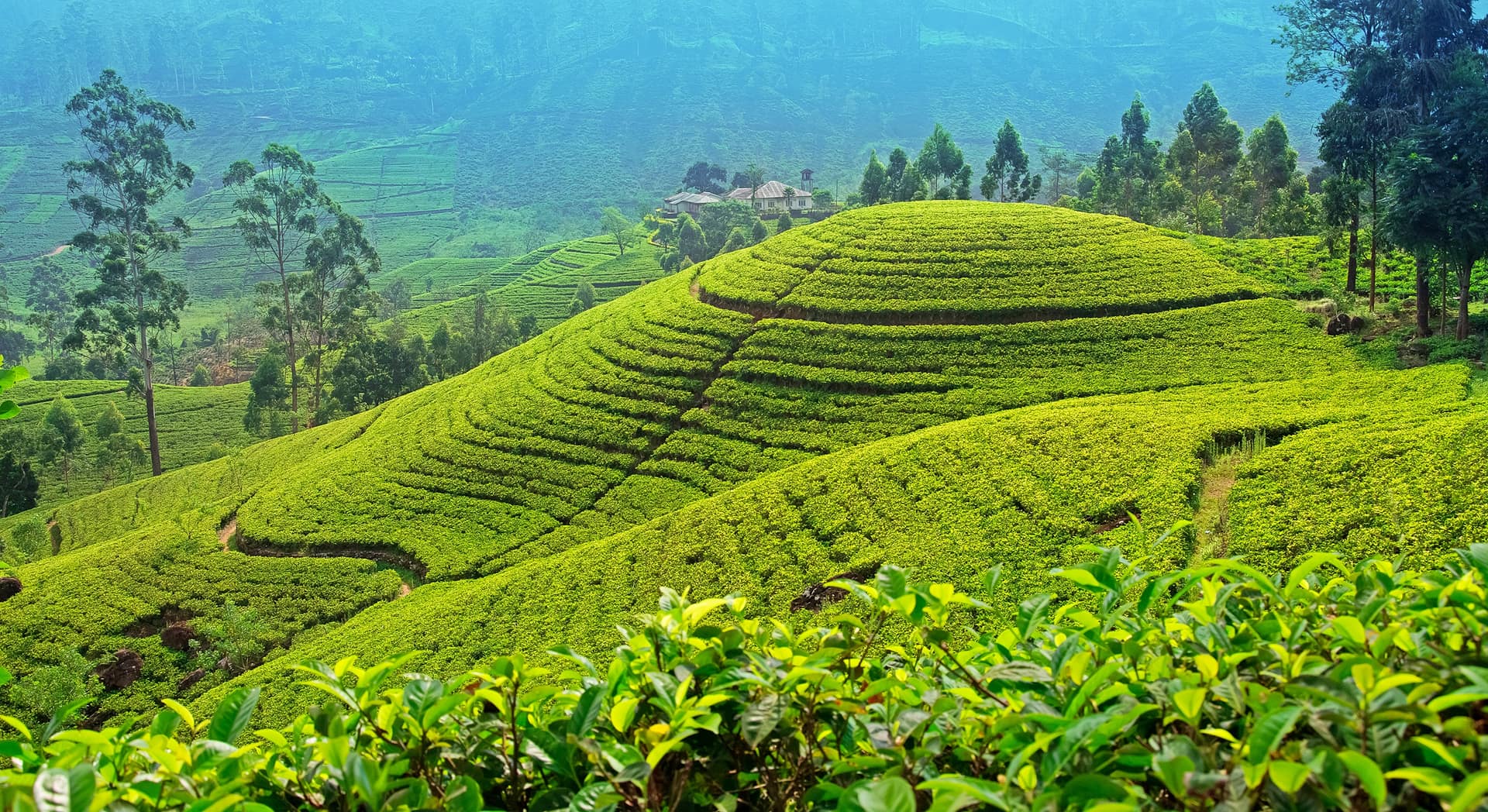
Cool air hides strong sun. UV is high at altitude, and January's clear skies make sunburn on tea-estate walks very common. Use sunscreen, a hat and sunglasses even when you are wearing a jacket.
Lips and ears burn quickly on Horton Plains, where there is little shade. A buff or scarf protects the neck and doubles as warmth at dawn.
Lankan Stays & Trails drivers often remind guests to keep a warm layer in the car, since the drive from the coast to Nuwara Eliya climbs from heat to chill in a few hours. For the year-round hill guide, see what to wear in Sri Lanka.
Frequently asked questions
How cold is Nuwara Eliya in January?
Nights often fall to about 5 to 10°C, and ground frost appears on some clear mornings, especially in valleys and on Horton Plains. Daytime highs reach about 18 to 20°C in sunshine. A fleece or light down jacket, beanie and gloves are sensible for evenings and early starts.
Do I need a winter coat for Sri Lanka's hills?
No. A heavy winter coat is unnecessary. A packable down jacket or thick fleece, combined with a base layer and a windproof shell, handles the coldest January nights and dawn summits. Layers are more useful than one bulky coat because days warm up quickly.
What should I wear on the hill train in January?
Wear layers. The train is cool in the early morning, especially on the climb past Nanu Oya, and warm by midday. A T-shirt with a fleece over it works well. Bring sunglasses and sunscreen if you plan to stand at the open doors.
Is it cold at Ella in January?
Ella is milder than Nuwara Eliya, with cool nights of roughly 13 to 16°C and warm, often bright days. The eastern slopes can be misty, with an occasional shower under the north-east monsoon. A light fleece and a shell are usually enough for evenings and sunrise walks.
What should I wear to Horton Plains in January?
Wear long trousers, trail shoes, a base layer, a fleece and a windproof, with a hat and gloves for the early start. The plain is cold and windy at dawn and sunny by mid-morning, so layers you can remove and carry are ideal. Sunscreen is essential.
Are hill-country hotels heated?
Some are, many are not. Upmarket hotels and colonial bungalows may have fireplaces or heaters, while guesthouses rely on thick blankets. Warm sleepwear and socks make a frosty January night comfortable, and asking about heating when you book avoids surprises.