
Quick answer
Sri Lankans do tip, but modestly and personally. In restaurants with a service charge, many leave the change or a small note for good service. They rarely tip tuk-tuk drivers or barbers beyond rounding up. They often tip people they know well, such as a regular driver or household helpers, at festivals like Sinhala and Tamil New Year and Christmas. Giving to temples and those in need, called dana, is a separate and important tradition.
Key takeaways
- Sri Lankans tip modestly and personally rather than by percentage.
- Restaurants: leave the change or a small note for good service.
- Tuk-tuks, barbers and small shops: rarely more than rounding up.
- Festival gifts and bonuses to regular helpers are common.
- Dana, giving to temples and those in need, is a separate tradition.
In restaurants
Sri Lankans who eat out in places with a service charge often leave the small change or a modest note for good service. They rarely calculate a percentage. At local eateries without a service charge, they usually pay the bill exactly, or leave small change.
In smart Colombo restaurants and hotel dining rooms, regular diners may tip a favourite waiter more generously, and some know the staff by name. Tipping there is about the relationship as much as the meal.
Visitors are generally expected to tip a little more than locals, but the local habit shows that modest tips are perfectly appropriate.
Office workers at lunch in Colombo, for example, usually pay at the counter and leave without tipping, while the same people at a family dinner in a hotel restaurant on a birthday will leave a note for the waiter. The occasion shapes the gesture as much as the service does.
Drivers and tuk-tuks
Locals almost never tip tuk-tuk drivers on ordinary rides. The fare is agreed or metered, and that is that. Rounding up happens, but less often than among visitors.
Families who hire a regular driver for a trip to a wedding or a pilgrimage usually give a tip at the end, and often provide meals during the journey. A driver who takes a family on a pilgrimage to Kataragama or Anuradhapura may be treated almost as part of the party.
Long-distance bus conductors and train staff are not tipped at all by locals. Porters at railway stations, where they still work, are paid a small agreed amount per bag, and that amount is all they expect from local passengers.
Relationships, not transactions
Much Sri Lankan tipping happens within ongoing relationships. A household with a regular helper, a family with a trusted three-wheeler driver, or an office with a messenger will give gifts or cash at festivals rather than after every service.
Sinhala and Tamil New Year in April is the main occasion, when bonuses, new clothes or gifts are given to helpers and workers. Christmas plays a similar role for Christian families, and Ramadan and Eid for Muslim families. Hindu families give at Deepavali and Thai Pongal.
That pattern explains why the end-of-trip tip to a driver-guide feels natural in Sri Lanka: it fits the same idea of thanking someone after a relationship, rather than paying per service.
- →Sinhala and Tamil New Year.
- →Christmas.
- →Eid.
- →Deepavali and Thai Pongal.
Dana and giving
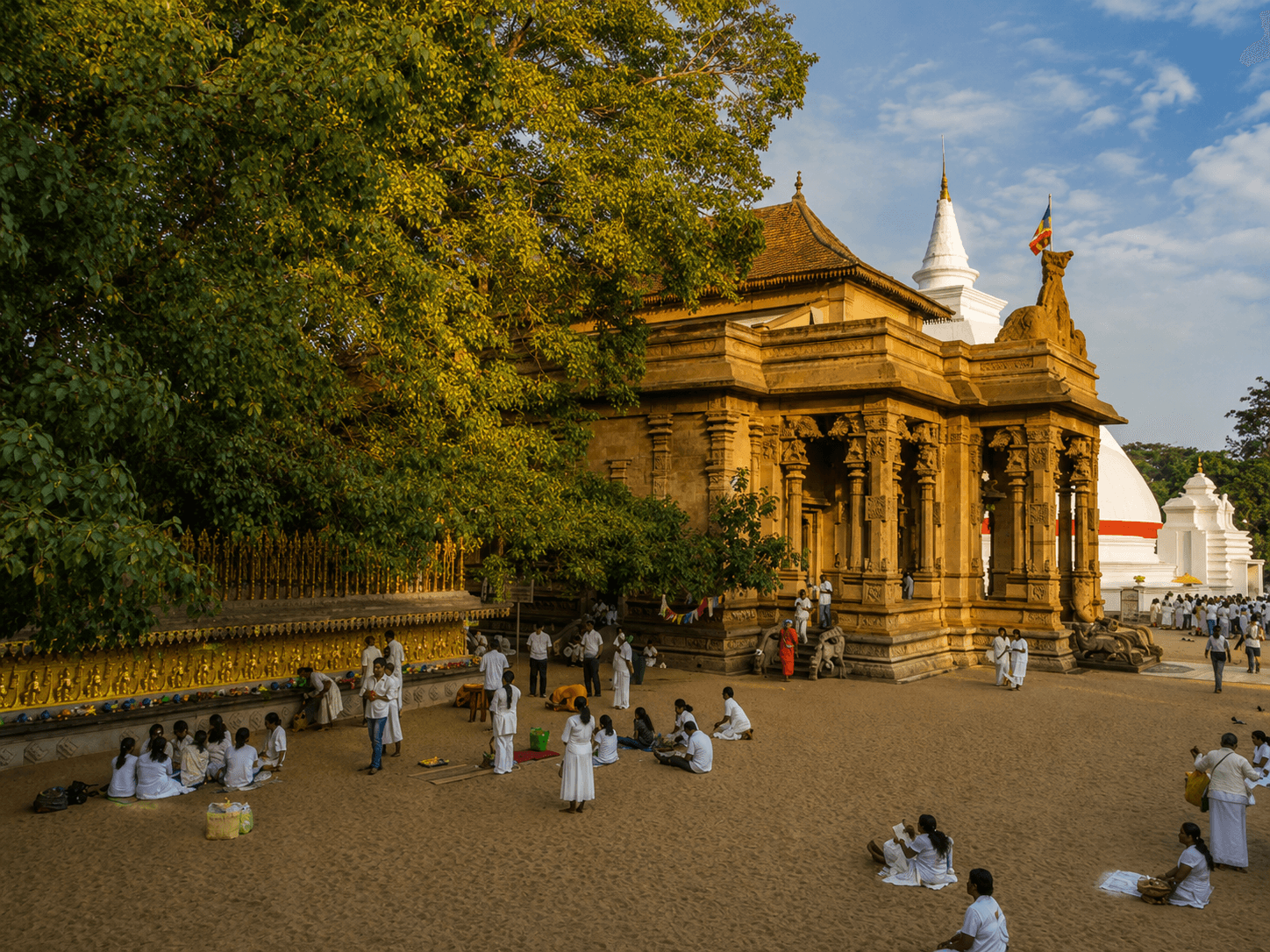
Dana, the practice of generous giving, is central to Sri Lankan Buddhism, and similar traditions exist in Hindu, Muslim and Christian communities. It includes offering food to monks, donating to temples and helping those in need.
Dana is not tipping. It is giving with no expectation of service in return, and it is seen as merit-making. Visitors encounter it at temples, in donation boxes and sometimes in alms-giving ceremonies.
Understanding dana helps explain why tipping monks is inappropriate, and why temple donations go in a box rather than to individuals.
- →Dana: giving with no service in return.
- →Offering food to monks, donating to temples.
- →Not the same as tipping.
Weddings and life events
At weddings, Sri Lankan families often give envelopes to the drummers, dancers, photographers and hotel staff at the end of the day, organised by the family rather than by guests. Guests themselves give gifts or cash envelopes to the couple.
At funerals and almsgivings, families feed monks and visitors, and helpers are thanked with food and small gifts. Visitors attending these events should follow their hosts' lead.
Hotel staff at a big Sri Lankan wedding often receive an envelope from the bride's or groom's family at the end of the night, handed to the banquet manager to share. Guests at the wedding are not expected to tip the staff themselves.
What this means for visitors
Visitors are generally expected to tip a little more than locals, because they are guests in a tourism economy and often receive more personal service. But the local habit shows that modest, personal tips, given warmly, are perfectly appropriate.
Lankan Stays & Trails driver-guides can explain local habits in each place you visit, from what a family pays at a village temple festival to what residents leave at a Galle Fort cafe.
- →Visitors tip a little more than locals.
- →Modest, personal tips are appropriate.
- →Ask your driver-guide about local habits.
Frequently asked questions
Do Sri Lankans tip?
Yes, but modestly and personally. In restaurants with a service charge, many leave the change or a small note for good service. They rarely tip tuk-tuk drivers or barbers beyond rounding up, and they often thank regular helpers with gifts or cash at festivals.
Do locals tip in Sri Lankan restaurants?
Many leave the small change or a modest note for good service at places with a service charge, rather than calculating a percentage. At local eateries without a service charge, they usually pay the bill exactly. Regular diners may tip a favourite waiter more.
Do Sri Lankans tip tuk-tuk drivers?
Rarely, on ordinary rides. The fare is agreed or metered, and that is the full price. Families who hire a driver for a long trip, such as a pilgrimage, usually tip at the end and often provide meals during the journey.
What is dana in Sri Lanka?
Dana is the practice of generous giving, central to Sri Lankan Buddhism, with similar traditions in other faiths. It includes offering food to monks, donating to temples and helping those in need. It is given with no expectation of service and is not the same as tipping.
When do Sri Lankans give festival bonuses?
Sinhala and Tamil New Year in April is the main occasion, when bonuses, gifts or new clothes are given to household helpers and regular workers. Christmas, Eid, Deepavali and Thai Pongal play similar roles in different communities.
Should visitors tip more than locals?
Usually a little more, because visitors are guests in a tourism economy and often receive more personal service. But modest, personal tips given warmly are perfectly appropriate. There is no need to match tipping levels from home.