
Quick answer
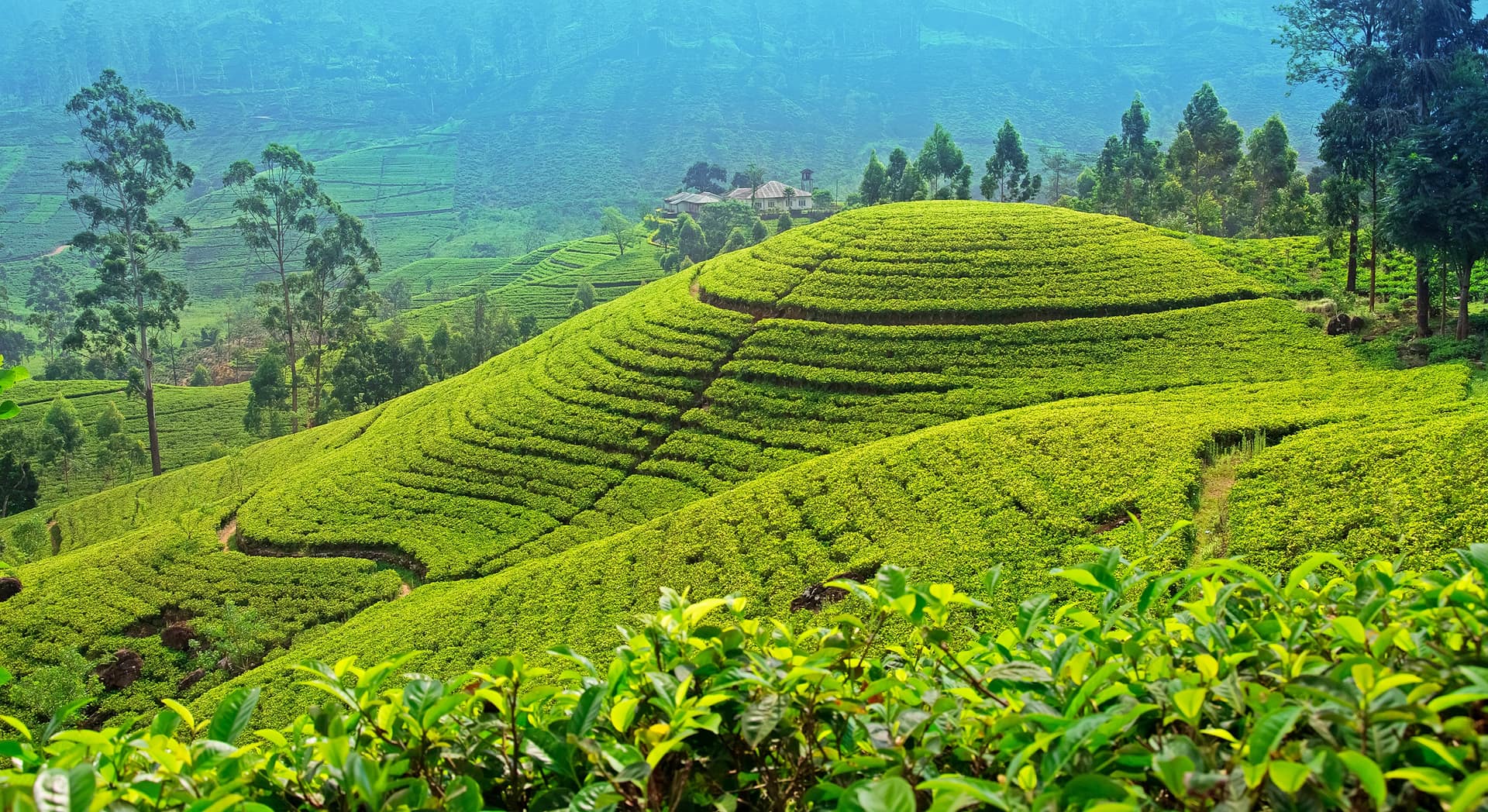
Hunnas Falls is a waterfall of roughly 50 metres at Elkaduwa, about 25 kilometres north of Kandy, reached in an hour to an hour and a quarter via Wattegama. It lies on a tea estate at around 1,000 metres, beside a long-established hotel, and is viewed from a short path and a bridge. Sembuwatta Lake, a small man-made lake ringed by tea and pine, is about five kilometres further up a rough road. Together they make a cool half-day from Kandy, best from January to April.
Key takeaways
- Hunnas Falls drops roughly 50 metres over a rock face on the Hunnasgiriya tea estate at Elkaduwa.
- Elkaduwa lies about 25 kilometres north of Kandy, on the western edge of the Knuckles Range.
- Sembuwatta Lake sits at roughly 1,100 metres and was created from a natural spring on a tea estate.
- The final kilometres to Sembuwatta Lake are narrow and rough, and are usually covered by local tuk-tuk.
- Temperatures at Elkaduwa are typically five or six degrees cooler than in Kandy.
Where Hunnas Falls is
Hunnas Falls lies in the hills above the small town of Wattegama, north-east of Kandy. The road climbs from the Mahaweli valley through villages and spice gardens into tea, gaining about 500 metres in 12 kilometres. The area belongs to the wet, western flank of the Knuckles massif.
The waterfall at Hunnas is fed by streams from the Hunnasgiriya ridge and flows all year, though its volume changes sharply with the seasons. It is tall and slender more than broad, falling in two main steps over dark rock into a pool among boulders.
Seeing the waterfall
Seeing Hunnas Falls takes little effort. A path of a few minutes leads from the estate road to a viewpoint and a footbridge across the stream. The falls stand directly above, with tea bushes on either side and forest at the top.
The land around Hunnas Falls belongs to the estate and to the hotel beside it, whose gardens and small lake are open to guests and, usually, to visitors who stop for a meal or tea. Swimming in the pool below the falls is not advised, since rocks are slippery and flows rise quickly after rain.
- →Walk from the road: five to ten minutes.
- →Best flow: November to January, after the north-east monsoon rains.
- →Best light: mid-morning, when the sun reaches the rock face.
- →Footwear: shoes with grip; the path is often wet.
Sembuwatta Lake
Sembuwatta Lake lies higher up the same valley, on the Elkaduwa plantation. It is a small sheet of green water formed from a spring, with a border of tea, a pine wood on one side and the ridges of the Knuckles behind. A spring-fed swimming pool sits beside it.
Sembuwatta Lake is popular with Sri Lankan families at weekends and nearly empty on weekdays. There is an entrance fee, paddle boats in some seasons and a few snack stalls. Mist often rolls across the water by late morning, which adds atmosphere and removes the view.
- →Entry: a modest fee for foreign visitors, usually a few US dollars.
- →Time: 45 minutes to an hour.
- →Road: the last five kilometres are steep, narrow and potholed.
- →Transport: leave larger vehicles in Elkaduwa and take a local tuk-tuk.
The drive and road conditions
The drive from Kandy to Hunnas Falls leaves the city northwards through Katugastota, then turns east to Wattegama and climbs to Elkaduwa. The 25 kilometres take an hour to an hour and a quarter. The road is surfaced as far as the falls and narrow throughout.
Road conditions beyond Hunnas Falls are the main thing to plan for. Cars with low clearance struggle on the track to Sembuwatta Lake, and after heavy rain it can be closed by small landslips. Lankan Stays & Trails uses a van for the main road and a pre-arranged tuk-tuk for the last stretch.
When to go
The best months for Hunnas Falls and Sembuwatta Lake are January to April, when mornings are clear and the roads are dry. The falls are most powerful in November and December, although cloud and rain are likely then.
An early start matters on this trip. Leave Kandy by 7.30, see the lake first while the air is clear, and stop at the falls on the way down. By early afternoon the hills are usually in cloud. Leeches appear on grassy paths in wet weather.
- →January to April: the clearest weather.
- →May to September: windy, with passing showers.
- →October to December: wettest, with the strongest waterfall.
Who will enjoy it
Hunnas Falls and Sembuwatta Lake suit travellers who want a taste of the tea hills without the long journey to Nuwara Eliya. Photographers and couples enjoy the cool air and quiet roads. The outing also works as a gentle prelude to trekking in the Knuckles Range.
This trip is less suitable for anyone prone to car sickness or travelling with very young children, because of the bends and the rough final road. Travellers going on to Nuwara Eliya or Ella will see grander tea scenery there and can leave Elkaduwa out.
- →Go if Kandy is your only hill-country stop.
- →Go if you want cool air and an easy half-day.
- →Skip if your route already includes Nuwara Eliya, Haputale or Ella.
Frequently asked questions
How far is Hunnas Falls from Kandy?
Hunnas Falls is about 25 kilometres north of Kandy at Elkaduwa. The drive takes an hour to an hour and a quarter via Katugastota and Wattegama, on a narrow road that climbs roughly 500 metres through villages and tea.
How high is Hunnas Falls?
Hunnas Falls is roughly 50 metres high, although published figures vary between about 48 and 60 metres depending on how the upper cascade is measured. It falls in two main steps on a tea estate at around 1,000 metres above sea level.
Can you swim at Hunnas Falls or Sembuwatta Lake?
Swimming below Hunnas Falls is not recommended because of slippery rocks and sudden rises in flow. Swimming in Sembuwatta Lake itself is not allowed, as it is deep. A spring-fed pool beside the lake is open to bathers in most seasons.
Is Sembuwatta Lake worth visiting?
Sembuwatta Lake is worth visiting on a clear weekday morning if you enjoy quiet scenery of tea, pine and water. It is small, and facilities are simple. In cloud or on a crowded holiday weekend it can be a disappointment.
Do you need a four-wheel drive for Sembuwatta Lake?
A four-wheel drive is not essential for Sembuwatta Lake in dry weather, but an ordinary car will find the last five kilometres slow and uncomfortable. Most visitors park in Elkaduwa and hire a local tuk-tuk, whose drivers know the road well.
What other waterfalls are near Kandy?
Besides Hunnas Falls, the nearest sizeable waterfalls to Kandy are Ramboda Falls on the Nuwara Eliya road, about 55 kilometres south, and several falls in the Knuckles Range. Small cascades also line the road through Hantana after rain.