
Quick answer
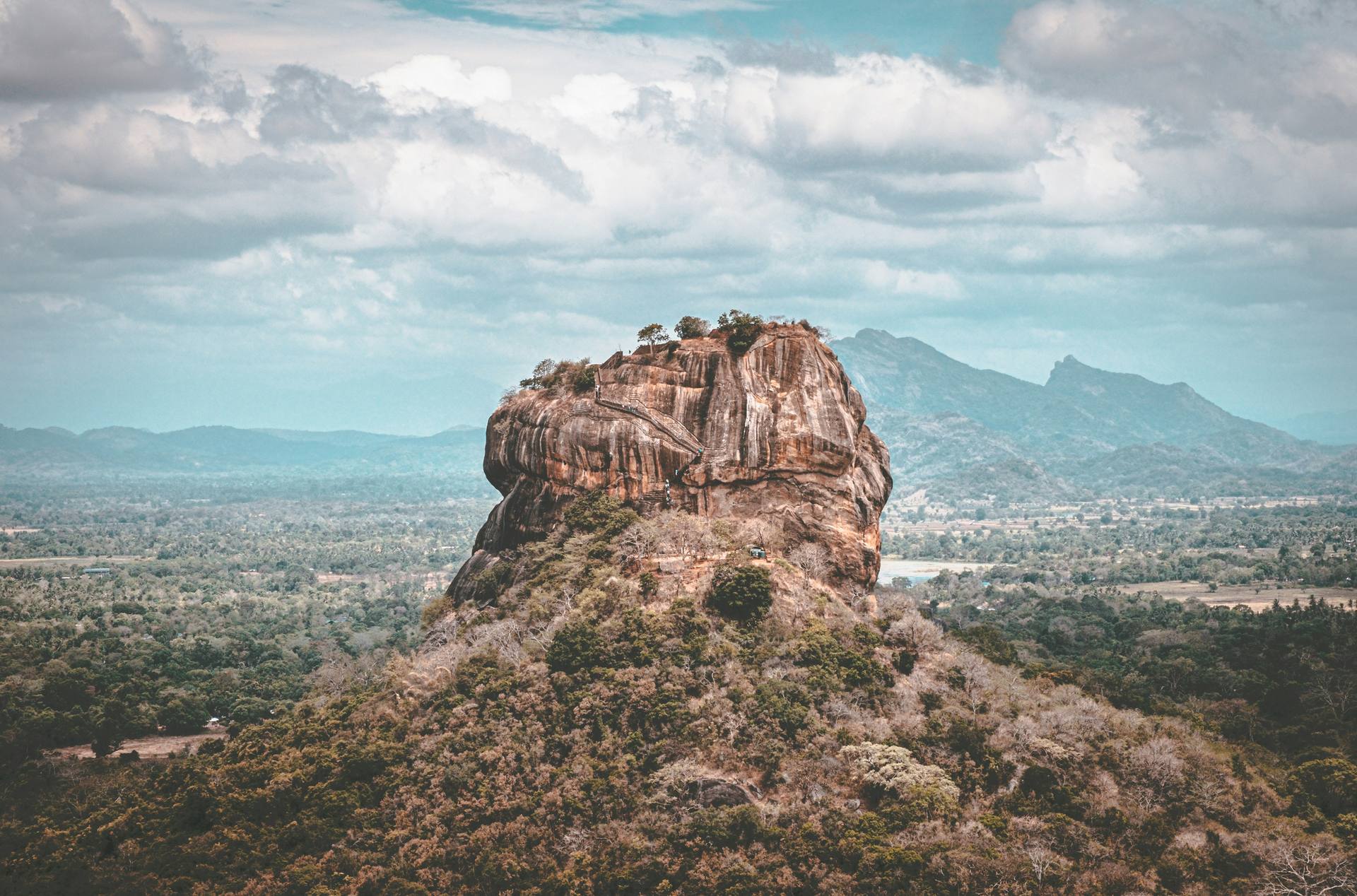
Sigiriya is not regarded by historians or archaeologists as Ravana's palace. Sri Lanka's chronicles and excavations show it was built as a royal fortress by King Kashyapa in the fifth century CE, then used as a Buddhist monastery. The Ravana theory is a modern popular idea without archaeological support. Ramayana pilgrims can still enjoy Sigiriya as a wonder of ancient engineering, and honour Ravana at sites such as Ravana Cave and Koneswaram.
Key takeaways
- Historians and archaeologists date Sigiriya's palace to King Kashyapa in the fifth century CE.
- The idea of Sigiriya as Ravana's palace is a modern popular theory, not an ancient tradition of the site.
- Sigiriya is a UNESCO World Heritage Site, famous for its frescoes, mirror wall and water gardens.
- The climb has roughly 1,200 steps, so plan carefully for elders and children.
- Pilgrims seeking Ravana usually find more meaning at Ravana Cave, Koneswaram and Ussangoda.
What the Ravana theory says
The theory usually claims that Sigiriya's sheer rock, summit palace and mysterious frescoes match descriptions of Ravana's Lanka, and that the site is far older than history records. Some versions link Sigiriya to Alakamanda, the city of Kubera, Ravana's half-brother, from whom Ravana took the Pushpaka Vimana.
These ideas have spread widely through books, television and online videos in both India and Sri Lanka since the early 2000s. They often appear alongside claims about Ravana's tunnels, flying machines and advanced kingdom, part of a broader modern enthusiasm for Ravana as a great ancient king.
The theory is not part of the traditional Ramayana map of Sri Lanka, which centres on places like Sita Eliya, Ravana Cave, Munneswaram and Divurumpola. Priests and pilgrimage guides generally do not include Sigiriya as a sacred Ramayana site.
- →Rock and summit palace said to match Ravana's Lanka.
- →Some link Sigiriya to Kubera's city, Alakamanda.
- →A modern popular theory, not a temple tradition.
What history and archaeology show
Sri Lanka's chronicle the Culavamsa records that King Kashyapa built his palace on Sigiriya in the fifth century CE, after seizing the throne from his father. He fortified the rock, built the lion gateway, terraces and gardens, and ruled from the summit for around eighteen years before his defeat.
Excavations support this account. Archaeologists have found evidence of Kashyapa's palace, gardens and fortifications, as well as much earlier traces of human settlement in the caves around the rock, some dating back thousands of years. After Kashyapa, Sigiriya became a Buddhist monastery and remained so for several centuries.
The famous frescoes of women, the polished mirror wall with its ancient graffiti and the hydraulic water gardens all fit this period. None of the evidence points to a Ramayana-era palace, which is why serious historians do not support the Ravana theory.
- →Built by King Kashyapa in the fifth century CE.
- →Later a Buddhist monastery for several centuries.
- →Earlier cave settlement traces around the rock.
How pilgrims can approach Sigiriya
Indian Hindu families do not need to choose between faith and history to enjoy Sigiriya. The rock is one of the great sights of Asia, and the story of Kashyapa, a king haunted by guilt who built a palace in the sky, has its own dramatic power, with themes that echo the epics.
Guides are used to questions about Ravana, and good guides answer respectfully, explaining the theory and the history. Many families enjoy discussing both on the climb. Children in particular are fascinated by the lion's paws and the water gardens, whatever story they hear.
Families who want to honour Ravana on the same trip can visit places where Sri Lankan tradition genuinely remembers him: Ravana Cave and Ravana Falls near Ella, Koneswaram in Trincomalee, Ussangoda on the south coast and Kanniya near Trincomalee. These sites carry the devotional weight that Sigiriya lacks.
Climbing Sigiriya with family
The climb to the summit involves roughly 1,200 steps, including steep metal stairways near the top. Most fit visitors take 1.5 to 2.5 hours for the round trip. Elderly relatives and young children may prefer to visit the water gardens and the lower terraces, or view the rock from nearby Pidurangala.
Start early, ideally when the gates open around 7.00, to avoid heat and crowds. Carry water and wear comfortable shoes and light clothing. Shoulders and knees need not be covered as strictly as at temples, but modest clothing is appreciated, especially near the Buddhist shrines at the base.
Foreign visitors pay a substantial entrance fee, and SAARC nationals, including Indian citizens, have usually been offered a reduced rate. Confirm current fees before you go, and bring your passport to claim any discount.
- →Roughly 1,200 steps; 1.5 to 2.5 hours round trip.
- →Start early, around opening time.
- →Indian passport holders have usually paid a reduced rate.
Fitting Sigiriya into a Ramayana trip
Sigiriya lies in the Cultural Triangle, roughly 2.5 to 3 hours from Kandy and about 4 to 5 hours from Colombo. It fits a Ramayana route that includes Trincomalee, since the drive from Sigiriya to Koneswaram takes roughly 2 to 2.5 hours. Families often spend two nights near Sigiriya to see Dambulla's cave temples as well.
The best months are roughly January to April and June to September. Heavy rain from about October to December can make the climb slippery. Pure vegetarian food is easy to find in hotels and small restaurants around Sigiriya and Dambulla.
Lankan Stays & Trails often adds Sigiriya to Ramayana routes for families who want a fuller first trip to Sri Lanka. We arrange guides who answer questions about Ravana honestly and respectfully, and plan the climb around the needs of elders and children.
Frequently asked questions
Is Sigiriya Ravana's palace?
Historians and archaeologists do not regard Sigiriya as Ravana's palace. Sri Lanka's chronicles and excavations show King Kashyapa built it in the fifth century CE. The Ravana theory is a modern popular idea, not an ancient tradition of the site.
Who built Sigiriya?
King Kashyapa built the palace and fortress on Sigiriya in the fifth century CE, according to the Culavamsa chronicle, supported by archaeological evidence. After his reign, the rock became a Buddhist monastery. Earlier caves around the rock show much older human settlement.
Why do people link Sigiriya to Ravana?
The dramatic rock and summit palace seem to match images of Ravana's Lanka, and some writers link Sigiriya to Kubera's city, Alakamanda. These ideas spread through books, television and social media from the early 2000s, but lack archaeological support.
Should Ramayana pilgrims visit Sigiriya?
Yes, if they have time and interest. Sigiriya is a UNESCO World Heritage Site and a remarkable experience. Pilgrims seeking Ravana's sacred places will find more devotional meaning at Ravana Cave, Koneswaram, Kanniya and Ussangoda.
Can elderly parents climb Sigiriya?
The climb has roughly 1,200 steps, including steep stairways near the top, so it is demanding. Many elders visit the water gardens and lower terraces only, or view the rock from a distance. Start early and allow plenty of rest stops.
Do Indian citizens get a discount at Sigiriya?
SAARC nationals, including Indian citizens, have usually been offered a reduced entrance fee compared with other foreign visitors. Fees change, so confirm the current rate before you go and carry your passport to claim it.
Where can we honour Ravana in Sri Lanka?
Sri Lankan tradition remembers Ravana at Ravana Cave and Ravana Falls near Ella, at Koneswaram and Kanniya in Trincomalee, and at Ussangoda on the south coast. These places carry the devotional weight that pilgrims seek.