
Quick answer
July is mid-monsoon on the west and south coasts, but the rain is lighter than in May and June, with Colombo averaging roughly 120 to 150 mm, mostly in showers between sunny spells. The sea there stays rough. The east coast and the north are dry, hot and calm, with Trincomalee averaging only about 50 mm, and the Cultural Triangle is dry and windy, with highs around 33 to 34 °C.
Key takeaways
- July rain on the west and south coasts is lighter than in May and June, usually in showers with sunny spells.
- The sea on the southwest coast remains rough, so beach swimming belongs on the east coast.
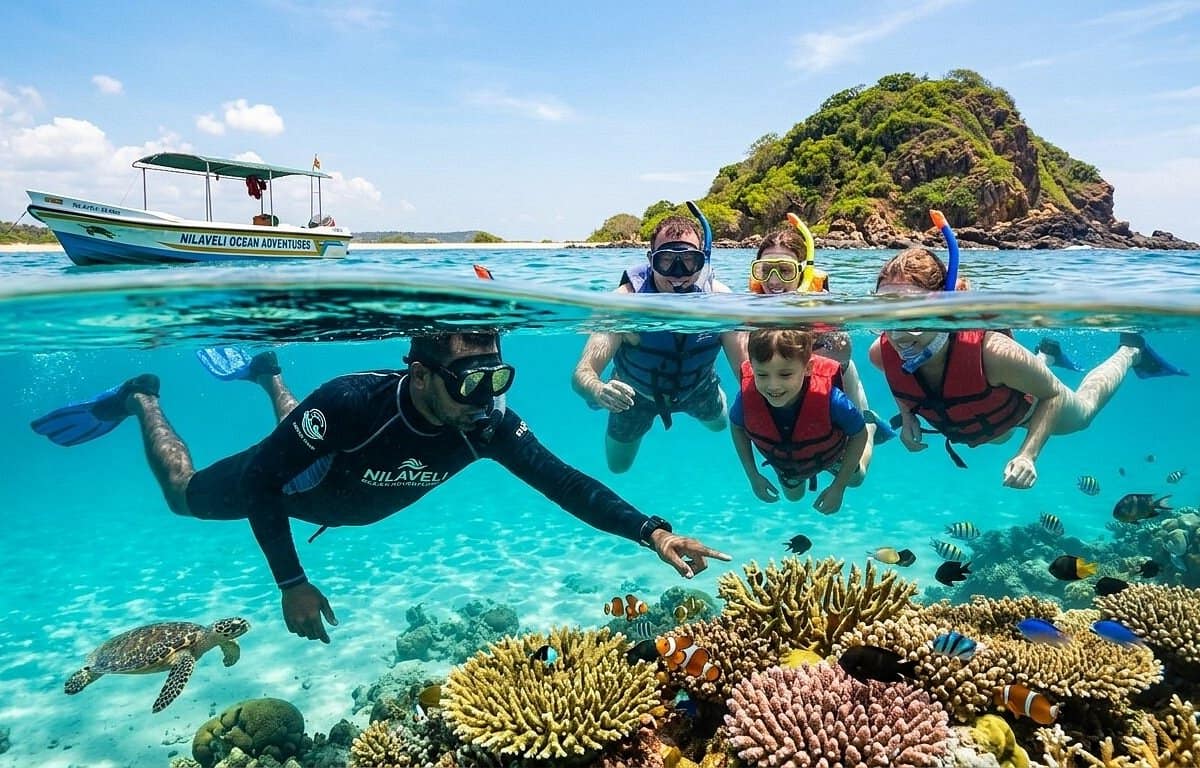
- The east coast is at its best, with calm, clear water at Trincomalee, Nilaveli and Pasikudah.
- The Cultural Triangle is dry and windy, and the Minneriya elephant gathering builds through the month.
- The western hills are still wet and misty, while Ella and Haputale are often dry.
July at a glance
July sits in the second half of the southwest monsoon. The wind still blows steadily from the southwest, and it still carries cloud and showers onto the west coast, the south coast and the western slopes of the hills. But the heavy onset rains of late May and June are over, and many July days on the southwest coast are bright for long periods.
Beyond the rain belt, July is dry, sunny and windy. The east coast, the north and the plains of the Cultural Triangle get little rain and steady breeze, and the sea on the east is flat in the mornings. For visitors, July has the most reliable east coast beach weather of the year.
Temperatures are steady: about 29 to 30 °C on the southwest coast, 33 to 34 °C in the dry zone and on the east coast, and 18 to 19 °C by day in Nuwara Eliya.
- →West and south coasts: showers and sunny spells, rough sea.
- →Hill country: wet and misty west, dry and breezy east.
- →Cultural Triangle: dry, hot, windy.
- →East coast and north: dry, calm, peak season.
The west and south coasts
Colombo averages roughly 120 to 150 mm of rain in July, about half of its May total. Galle, Bentota and Mirissa are similar. A typical day has a few showers, some short and heavy, between spells of sunshine. Whole days of rain still occur, but less often than in June.
The sea is rough on the west and south coasts throughout July, with swell, strong currents and red flags on many beaches. Whale-watching boats from Mirissa do not run. Some sheltered bays have calmer mornings, but swimming should be judged day by day, and only where lifeguards or local advice say it is safe.
The southwest in July suits walking in Galle Fort, river trips at Bentota, temples on the south coast and the rainforests inland. Hotels are quieter and lower priced than in the dry season.
The hill country
The western hills are still in the monsoon in July. Nuwara Eliya averages roughly 150 to 200 mm of rain, the wind is strong on the ridges, and mist often fills the valleys in the afternoon. Daytime highs are around 18 to 19 °C, with nights around 13 °C.
Ella, Haputale and Bandarawela are often dry and bright, with a breezy afternoon. Kandy has showers and highs around 29 °C. The Kandy Esala Perahera usually falls in late July or August, and the city's weather at that time is warm with occasional showers.
For views from the Kandy to Ella train, sit on the side that looks south and east after Haputale, where the sky is usually clearer than on the western section.
- →Nuwara Eliya: roughly 150 to 200 mm, windy, misty.
- →Ella and Haputale: often dry, breezy afternoons.
- →Kandy: showers, about 29 °C, Perahera season.
The Cultural Triangle
The Cultural Triangle is dry and hot in July, with highs of about 33 to 34 °C and very little rain. The steady southwest wind makes the heat easier to bear, though the summit of Sigiriya can be gusty in the afternoon. Dust rises on dry roads and the forest edges turn brown.
As the reservoirs shrink, elephants gather on the grasslands of Minneriya and Kaudulla. The Gathering builds through July and peaks in August and September, and afternoon jeep safaris in the area are at their best when the weather is dry.
- →Highs about 33 to 34 °C, very little rain.
- →Gusty wind on the summit of Sigiriya.
- →Minneriya Gathering building.
The east coast and the north
July is one of the best months on the east coast. Trincomalee averages roughly 40 to 60 mm of rain, the sea at Nilaveli, Uppuveli and Pasikudah is calm and clear, and Pigeon Island snorkelling is in its best season. Arugam Bay has consistent surf. Highs are around 33 to 34 °C, with a dry breeze.
Jaffna and the north are hot, about 34 °C, and windy. Kalpitiya on the northwest coast has strong kitesurfing wind. Kumana and Gal Oya, inland from the east coast, are dry and good for wildlife.
Planning around July weather
July works for a full first trip if the route is planned around the east coast. A typical July route runs through the Cultural Triangle, Kandy for the Perahera, Ella and then the east coast for beach time. The southwest can be added for Galle without beach plans.
July is high season for the east coast and for families, so book east coast hotels and Perahera nights early. Lankan Stays & Trails plans July trips with the beach in the east and keeps the south coast for sightseeing only.
Frequently asked questions
What is the weather like in Sri Lanka in July?
July is mid-monsoon on the west and south coasts, with lighter rain than in June, usually in showers between sunny spells, and a rough sea. The east coast, the north and the Cultural Triangle are dry, hot and windy, and the east coast sea is calm and clear for swimming.
How much does it rain in Colombo in July?
Colombo averages roughly 120 to 150 mm of rain in July, about half of its May total. Rain usually comes as showers between spells of sunshine. Some whole days of rain still occur, but less often than in June, and long dry periods are common.
Is July a good month for the east coast of Sri Lanka?
Yes. July is one of the east coast's best months. Trincomalee averages only roughly 40 to 60 mm of rain, the sea at Nilaveli, Uppuveli and Pasikudah is calm and clear, Pigeon Island snorkelling is in season, and Arugam Bay has consistent surf.
Can you swim on the south coast of Sri Lanka in July?
Swimming on the south and west coasts is generally not advised in July, because of swell and strong currents, and many beaches fly red flags. Some sheltered bays have calmer mornings, but conditions change quickly. The east coast is calm and is the better place to swim in July.
Is it rainy in Ella in July?
Ella is often dry in July because it sits on the eastern side of the hills, partly in the rain shadow of the southwest monsoon. Mornings are usually bright, with a breeze in the afternoon. Nuwara Eliya, on the western side, is wetter, windier and more often misty.
What is the sea temperature in Sri Lanka in July?
The sea is roughly 28 °C around the island in July. On the east coast it is calm and clear, especially in the mornings. On the west and south coasts it is just as warm but rough, with swell and strong currents, so warmth is not the limiting factor for swimming.
How does Lankan Stays & Trails plan July trips?
July trips usually run through the Cultural Triangle, Kandy and Ella before finishing on the east coast, where the sea is calm. If the dates fit, a night in Kandy for the Esala Perahera is added. Galle can be included for sightseeing, with no beach time planned there.