
Quick answer
Kalpitiya's main kitesurfing season runs roughly May to October, matching mid-year Australian tours, with strong, steady winds over a large flat-water lagoon ideal for learning. It is about three to three and a half hours north of Colombo. Schools offer lessons from beginner to advanced, with three to five days usually enough to start riding. A shorter season runs around December to March. Pair it with Wilpattu or the dolphins.
Key takeaways
- The main kitesurfing season runs roughly May to October.
- Kalpitiya is about three to three and a half hours from Colombo.
- A large flat-water lagoon makes it ideal for learning.
- Three to five days of lessons is usually enough to start riding.
- Wilpattu National Park is nearby.
Why Kalpitiya and why mid-year
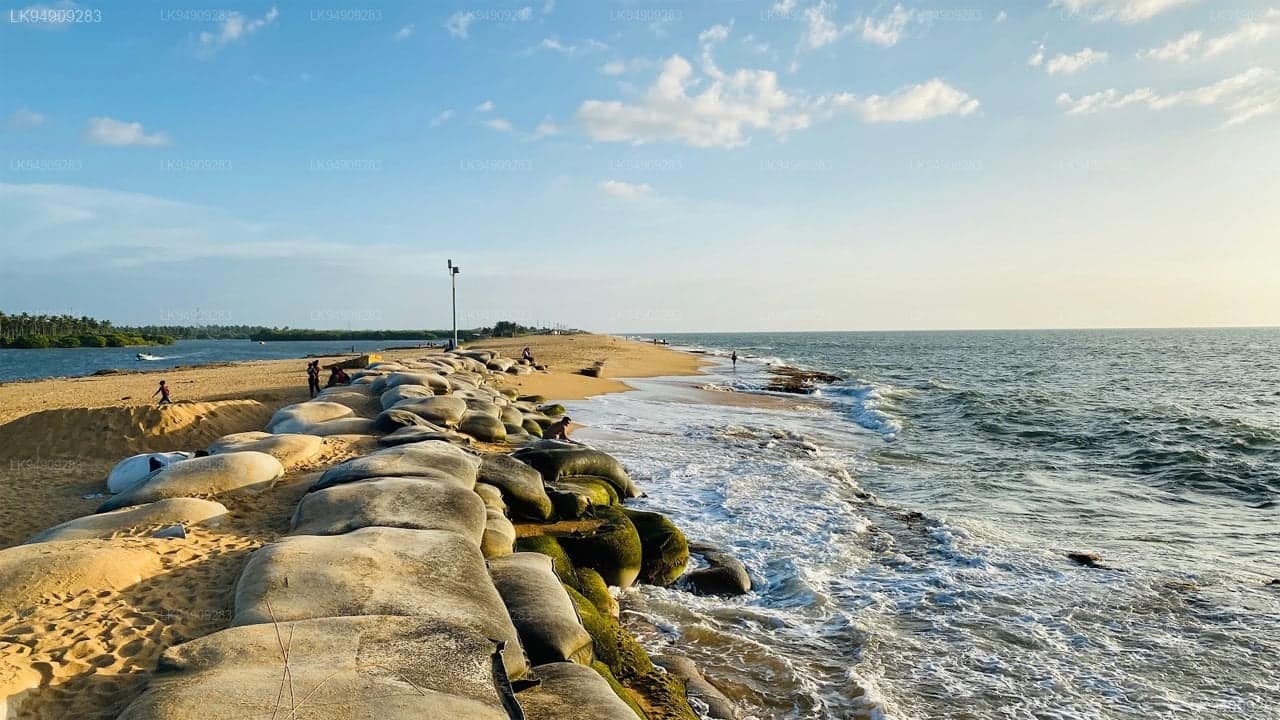
Kalpitiya is a long, narrow peninsula between the sea and the Puttalam lagoon, north of Colombo. During the southwest monsoon, roughly May to October, strong, steady winds blow across the lagoon, creating ideal conditions for kitesurfing, with flat water for beginners and waves on the ocean side for experienced riders.
Mid-year Australian tours fall in the same window. When Galle and Colombo see showers, Kalpitiya is windy, sunny and mostly dry, a different side of the same monsoon.
A shorter, lighter season runs around December to March.
Wind conditions are usually strongest from around June to September, with the steadiest days in the afternoon. Mornings can be calmer, which suits lessons on the lagoon and leaves time for a swim or a rest.
- →Main season: roughly May to October.
- →Flat lagoon and ocean waves.
- →A second, lighter season around December to March.
Getting there
Kalpitiya is about three to three and a half hours north of Colombo by road, via Puttalam. It fits a gap between a Colombo leg and a Dambulla leg, or a few days after a series.
From Kalpitiya, Wilpattu National Park is about one and a half to two hours away, and Anuradhapura about two and a half, making a loop through the northwest.
Lankan Stays & Trails often pairs Kalpitiya with Wilpattu on mid-year cricket trips, giving wind, wildlife and history in one detour.
The road north passes Negombo, Chilaw and the coconut country, with stops for king coconut and a look at Munneswaram, an old Hindu temple near Chilaw. A driver makes the long transfer easy, and the trip back can continue to Wilpattu or Dambulla.
- →Three to three and a half hours from Colombo.
- →Wilpattu one and a half to two hours away.
- →A loop through the northwest.
Lessons and riding
Kalpitiya has several kitesurfing schools offering lessons from complete beginner to advanced, many with internationally certified instructors. Beginners usually need three to five days of lessons to start riding independently, depending on wind and ability.
Experienced riders can hire gear or bring their own, and take boat trips to spots further along the lagoon and islands for downwinders and wave riding.
Lessons take place on shallow, flat water, which makes learning safer.
Experienced riders often book a downwinder trip along the lagoon or to the islands of the Kalpitiya archipelago, travelling with a boat for safety. It is one of the highlights of a visit in a good wind season.
- →Lessons from beginner to advanced.
- →Three to five days to start riding.
- →Downwinders for experienced riders.
Dolphins, reefs and the lagoon
Kalpitiya is also known for its spinner dolphins, often seen in large pods offshore, though the best dolphin season is roughly November to April, when the sea is calm. The Bar Reef, offshore, is a marine sanctuary for snorkelling in calm conditions.
In a mid-year visit, lagoon boat trips, mangrove kayaking and fishing villages fill non-kiting days.
- →Dolphins best roughly November to April.
- →The Bar Reef marine sanctuary.
- →Lagoon trips and kayaking.
Where to stay and how long
Kite camps and eco-lodges line the lagoon, many with cabanas, communal dining and a relaxed atmosphere. Allow at least three nights for a taste, and five or more to learn properly.
Keep the kitesurfing away from match days, as the sessions are tiring and the drive is long.
Non-kiting partners and friends have plenty to do too, from lagoon trips and kayaking to lazy days by the water. Kite camps are social places, with communal dinners where riders swap stories.
Frequently asked questions
When is the kitesurfing season in Kalpitiya?
The main season runs roughly May to October, during the southwest monsoon, with strong, steady winds over the lagoon. A shorter, lighter season runs around December to March. Mid-year Australian cricket tours fall in the main season.
How far is Kalpitiya from Colombo?
Kalpitiya is about three to three and a half hours north of Colombo by road, via Puttalam. It fits a gap between a Colombo leg and a Dambulla leg, or a few days after a series, and pairs well with Wilpattu nearby.
Can beginners learn kitesurfing in Kalpitiya?
Yes, Kalpitiya's large, shallow, flat-water lagoon is ideal for learning. Schools offer beginner courses, and three to five days of lessons is usually enough to start riding independently, depending on wind and ability.
Can you see dolphins in Kalpitiya on a mid-year tour?
The best dolphin season is roughly November to April, when the sea is calm. In a mid-year visit, the sea is often too rough for dolphin trips, but lagoon boat trips, mangrove kayaking and fishing villages fill non-kiting days.
How many days do you need in Kalpitiya?
Allow at least three nights for a taste of kitesurfing, and five or more to learn properly. Experienced riders can enjoy a few days of sessions and downwinders. Keep the visit away from match days, as the drive is long.
Can you combine Kalpitiya with Wilpattu?
Yes, Wilpattu National Park is about one and a half to two hours from Kalpitiya, so a loop with two nights in each works well. Add Anuradhapura's ancient city for a varied detour through the northwest on a mid-year tour.
Do you need to bring kitesurfing gear?
No, schools and camps in Kalpitiya hire out kites, boards and harnesses. Experienced riders sometimes bring their own, but check airline baggage rules first. Bring a rash vest, reef-safe sunscreen and a hat.
What can non-kitesurfers do in Kalpitiya?
Non-kitesurfers can take lagoon boat trips, kayak through the mangroves, visit fishing villages, relax at the kite camps and, in calm conditions, snorkel at the Bar Reef. Wilpattu National Park is close enough for a safari day.