
Quick answer
Koneswaram is a Shiva temple on Swami Rock, a headland above the sea in Trincomalee. Hindu tradition says Ravana worshipped Shiva here, and a deep fissure in the cliff is called Ravana's Cleft, said to have been cut by his sword. The temple was destroyed by the Portuguese in the seventeenth century and rebuilt in the twentieth. A visit takes one to two hours, and Trincomalee is roughly 4 to 5 hours by road from Kandy.
Key takeaways
- Koneswaram is one of the five Pancha Ishwarams and among Sri Lanka's most sacred Shiva temples.
- Ravana's Cleft is a narrow fissure in Swami Rock that tradition says Ravana cut with his sword.
- The Ravana legend here shows him as a devotee of Shiva rather than only a villain.
- The temple stands inside Fort Frederick, so allow time for the walk or drive up through the fort.
- Trincomalee adds at least two days to a hill country Ramayana trail.
Ravana the devotee
In Tamil Shaiva tradition, Ravana is remembered not only as the king who took Sita but as a scholar and a passionate worshipper of Shiva. Stories tell of him composing hymns, playing the veena and offering his own heads in devotion. Koneswaram is one of the places where that devotion is said to have unfolded.
One popular story says Ravana wished to carry the shrine away to his mother, who could not travel to worship. When Shiva stopped him, Ravana struck the rock with his sword in frustration, leaving the deep cut seen today. Another version says the cleft marks where he tried to lift the whole mountain. Both appear in local retellings.
For Indian pilgrims raised on the North Indian picture of Ravana, Koneswaram can be a surprise. Priests and guides here speak of him with respect, as a great bhakta whose pride led to his fall. Many families find that this fuller portrait enriches their understanding of the epic rather than contradicting it.
- →Ravana as Shiva bhakta: a strong theme in Tamil retellings.
- →Ravana's Cleft: the sword cut or lifting legend.
- →Ravana's mother: the reason given for wanting to move the shrine.
Seeing Ravana's Cleft
Ravana's Cleft, sometimes called Ravana Vettu, is a narrow vertical gap in the cliff of Swami Rock, close to the temple. From the clifftop you look down into a crack that drops sharply towards the sea. A small viewing area lets visitors see into it, though the edges are steep and unfenced in places.
The cleft is best seen in daylight, ideally in the morning when the sea below is calm and the light falls into the rock. Families with children should hold small hands firmly near the edge. Elderly visitors can see the cleft without climbing, since it is a short walk from where vehicles stop.
Beside the cleft, devotees often tie threads or small cloth offerings to trees and railings, asking for blessings or giving thanks. The custom is popular with local families, and pilgrims from India are welcome to join in. Keep offerings small and natural, as the site is narrow and easily cluttered.
- →Location: a short walk from the temple on Swami Rock.
- →Best light: morning, with calmer sea below.
- →Safety: steep, partly unfenced edges, so keep children close.
The temple today
The original Koneswaram, described in early sources as a temple of a thousand pillars, was destroyed by the Portuguese in the 1620s, and much of its stone went into the fort. Images were hidden by devotees and some were recovered centuries later. The present temple was rebuilt in the twentieth century and is now an active and well-tended shrine.
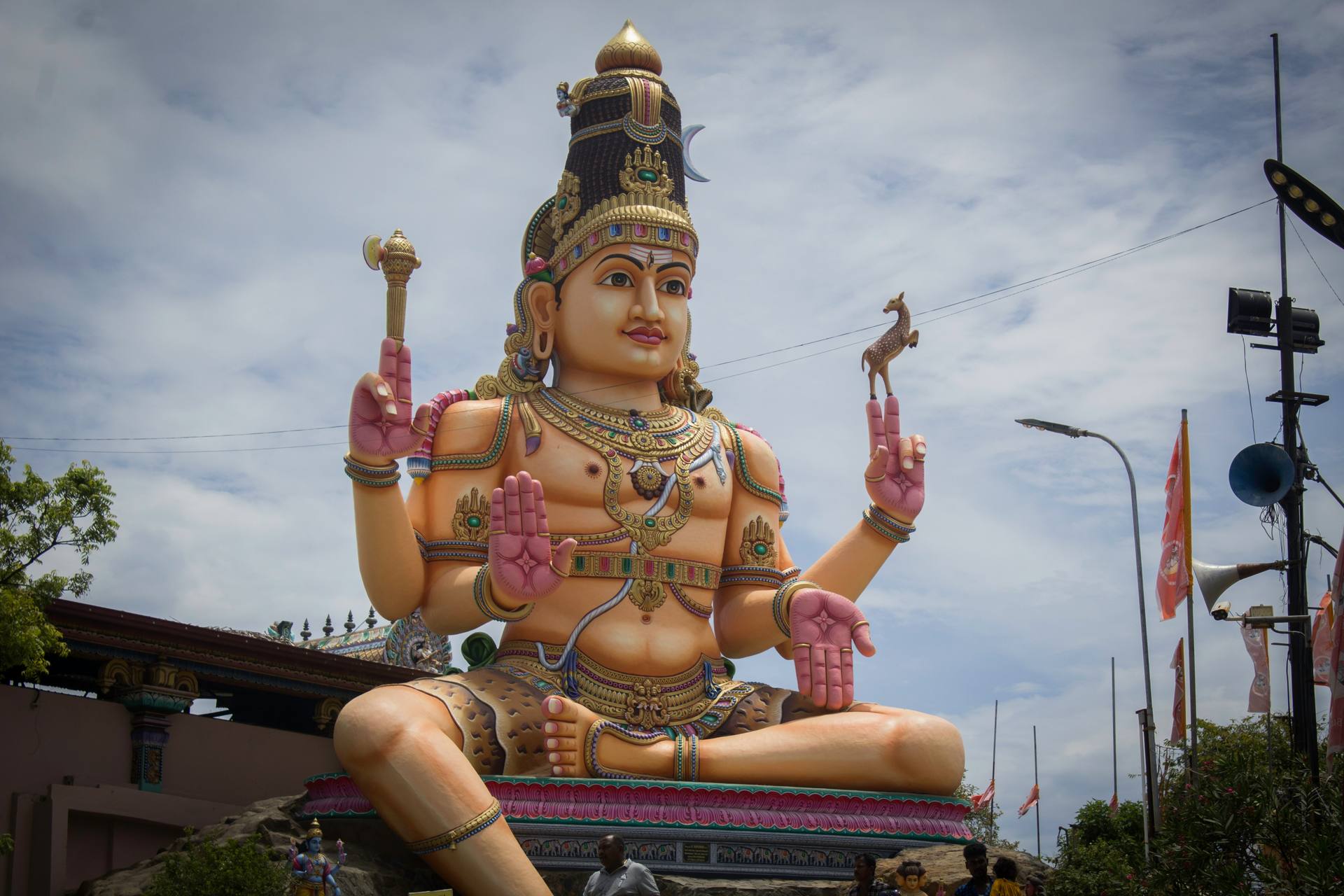
Daily pujas follow Shaiva Agamic rites, and the temple's annual festival draws large crowds from across the north and east. The temple courtyard looks out over the Indian Ocean, and on clear days dolphins and, in season, whales can be seen from the cliff. A large statue of Shiva stands on the headland nearby.
Inside the same sacred precinct is the Shankari Devi shrine, revered as a Shakti Peetha. Many pilgrims make darshan at both Koneswaram and Shankari Devi in one visit, completing Shiva and Shakti worship together on the same rock above the sea.
Getting to Swami Rock
Koneswaram stands at the end of the Fort Frederick peninsula in Trincomalee town. Vehicles can usually drive through the fort to a parking area near the temple, and the last stretch is a short walk past stalls selling flowers and offerings. The fort itself is still used by the military, so follow any signs and instructions.
Trincomalee is roughly 4 to 5 hours by road from Kandy and about 6 hours from Colombo. From Sigiriya or Habarana, in the Cultural Triangle, it is around 2 to 2.5 hours. Many Ramayana travellers fold Trincomalee into a route that also includes the ancient cities, then return south to the hill country.
The east coast is driest from roughly April to September, when the sea is calm and beaches at Nilaveli and Uppuveli are at their best. From about October to January the north-east monsoon brings heavy rain. Temple visits continue through the rains, but road travel is slower and sea views less reliable.
- →From Kandy: roughly 4 to 5 hours.
- →From Sigiriya or Habarana: roughly 2 to 2.5 hours.
- →Best season: roughly April to September.
Fitting Koneswaram into a Ramayana trail
Koneswaram works best as an extension to the core hill country trail rather than a day trip. A common plan spends two nights in Trincomalee: one afternoon and morning for Koneswaram, Shankari Devi and the Kanniya hot wells, and the rest for the beach. That turns a six-day trail into a relaxed nine or ten days.
Families who want a fuller Shaiva pilgrimage can link Koneswaram with Munneswaram near Chilaw and, on a longer northern trip, Thiruketheeswaram in Mannar and Naguleswaram in Jaffna. Together these form four of the five Pancha Ishwarams, the ancient Shiva temples that guarded the island's coasts.
Lankan Stays & Trails can arrange a guide in Trincomalee who knows both the Ramayana and the Tamil Shaiva traditions of Koneswaram. Tell us if you would like to time your visit for an evening puja, when the lamps are lit and the sea below turns silver.
Frequently asked questions
What is Ravana's Cleft in Trincomalee?
Ravana's Cleft is a deep, narrow fissure in Swami Rock, beside Koneswaram temple. Tradition says Ravana cut it with his sword when Shiva stopped him from moving the shrine. It can be viewed from a small area on the cliff, though edges are steep.
Is Koneswaram connected to the Ramayana?
Yes, through Ravana. Hindu tradition holds that Ravana, a great devotee of Shiva, worshipped at Koneswaram, and the cleft in the rock bears his name. The temple is also one of the five Pancha Ishwarams, which gives it a separate importance for Shaiva pilgrims.
How long should we spend at Koneswaram?
Allow one to two hours for darshan at Koneswaram and Shankari Devi, the walk to Ravana's Cleft and time to enjoy the views. Arriving for a puja, usually in the morning or evening, adds a little longer but gives the most memorable visit.
Can elderly pilgrims visit Koneswaram?
Yes. Vehicles can usually drive close to the temple, and the walk from parking is short and mostly level. The cleft itself is viewed from the top, so no climbing is needed. Steps inside the temple are few, but carry water as the headland is hot.
What should we wear at Koneswaram?
Dress as you would at a South Indian Shiva temple. Cover shoulders and knees, leave shoes at the entrance, and expect men to remove shirts in the inner sanctum. Sarees, salwar kameez, dhotis and kurtas are ideal, and light cotton helps in the heat.
When is the best time to visit Trincomalee for Koneswaram?
Roughly April to September is driest on the east coast, with calm seas and clear views from Swami Rock. The temple is open all year, but heavy rain from about October to January slows road travel and can cloud the sea views.
Is Koneswaram inside a military fort?
The temple stands at the end of the Fort Frederick peninsula, and part of the fort is still used by the military. Visitors pass through freely to reach the temple, but should follow signs, avoid photographing military areas and keep to the public road.