
Quick answer
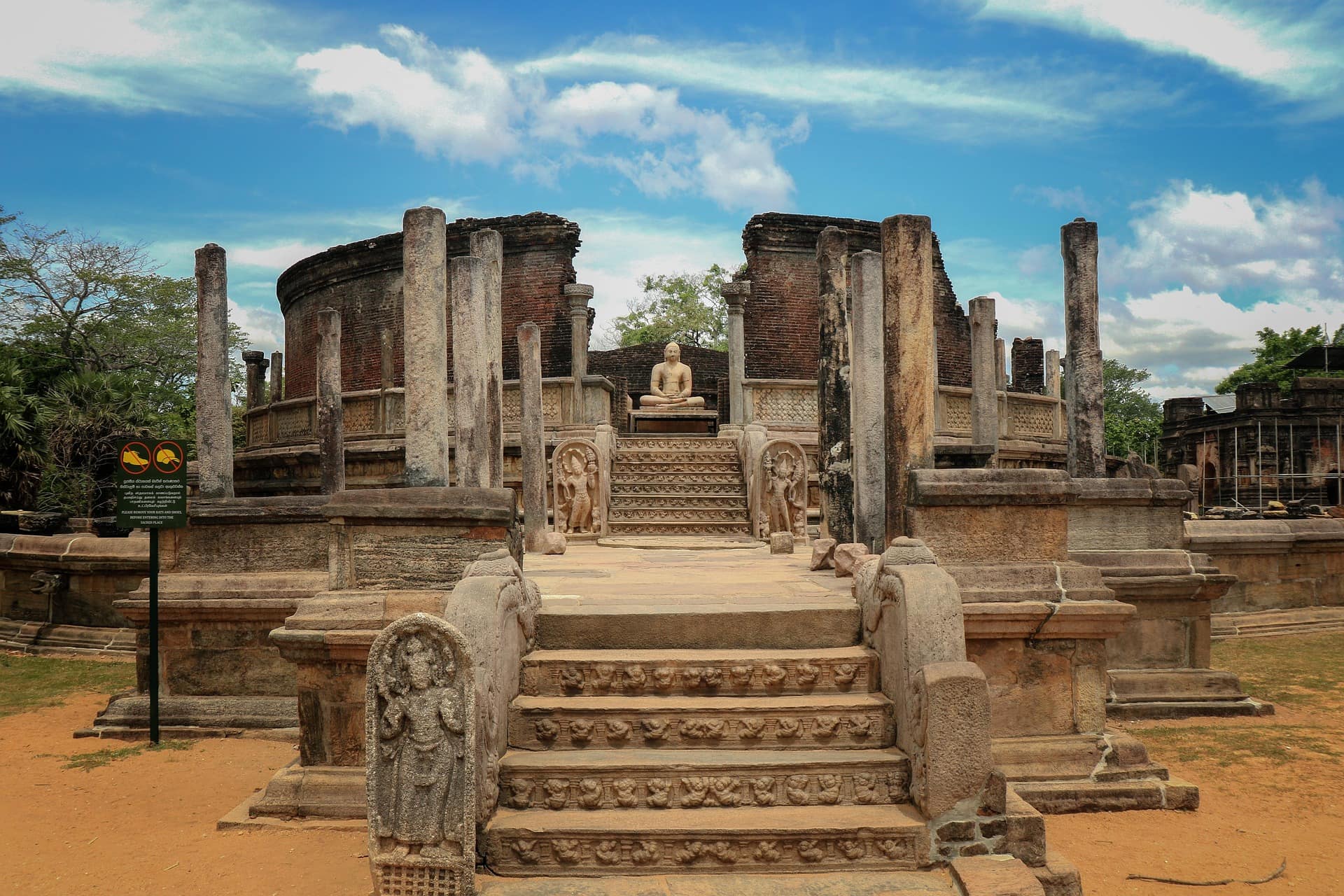
Lankatilaka and Kiri Vehera are two monuments of the Alahana Pirivena monastery in northern Polonnaruwa. Lankatilaka is a 12th-century brick image house built by Parakramabahu I, with walls about 17 metres high and a giant headless standing Buddha inside. Kiri Vehera, meaning milk stupa, was built by Queen Subhadra and is famous because its original white lime plaster survived for centuries in the jungle. Both are covered by the Polonnaruwa ticket. Allow 30 to 45 minutes, before late morning.
Key takeaways
- Lankatilaka is a 12th-century brick image house built by Parakramabahu I in Polonnaruwa.
- The walls of Lankatilaka still stand about 17 metres high, and the building was originally taller.
- Inside Lankatilaka stands a huge brick standing Buddha, now headless.
- Kiri Vehera was built by Queen Subhadra, a consort of Parakramabahu I.
- Kiri Vehera's original white lime plaster survived for centuries in the jungle, giving it its name, the milk stupa.
The Alahana Pirivena
The Alahana Pirivena was a royal monastery in northern Polonnaruwa, founded by Parakramabahu I. Pirivena means a monastic college, and the complex included image houses, stupas, a chapter house and residences on a gentle rise. Lankatilaka and Kiri Vehera are its two most visible monuments.
The Baddhasima Prasada, a chapter house where monks gathered, also stands in the complex. The area lies between Rankoth Vehera and Gal Vihara, on the main route north.
The Alahana Pirivena also served as a royal cremation ground, according to tradition, and its name may relate to that role. Archaeologists have uncovered a hospital and residences here, suggesting a large, well-organised monastic community supported by the court of Polonnaruwa.
- →Founded by Parakramabahu I.
- →Lankatilaka, Kiri Vehera and Baddhasima Prasada.
- →Between Rankoth Vehera and Gal Vihara.
Lankatilaka image house
Lankatilaka is one of the most impressive buildings in Polonnaruwa. Its brick walls rise about 17 metres, and the building was originally taller, with a vaulted roof. Inside, a giant brick standing Buddha, now headless, fills the end of the narrow shrine.
The outer walls are decorated with stucco reliefs of multi-storey buildings, showing what Polonnaruwa's palaces and temples may have looked like. The scale is overwhelming from inside, looking up between the walls.
Shoes come off at the entrance. The interior is shaded, a relief on a hot morning.
The name Lankatilaka means ornament of Lanka, and the same name was later used for a temple near Kandy. Polonnaruwa's Lankatilaka is far larger and older. Its narrow, tall plan was designed to frame the standing Buddha, drawing the eye upward as worshippers approached between the walls.
- →Walls about 17 metres high.
- →Giant headless standing Buddha.
- →Stucco reliefs of buildings.
- →Shaded interior.
Kiri Vehera
Kiri Vehera, meaning milk stupa, is a medium-sized stupa built by Queen Subhadra, a consort of Parakramabahu I. It is famous because its original white lime plaster survived for centuries under the jungle, protected when the city was abandoned.
When archaeologists cleared the site, they found much of the white surface still intact. Today Kiri Vehera is one of the best-preserved stupas from the Polonnaruwa period, and it shows how the city's stupas originally looked.
Kiri Vehera's terrace is usually calm, and pilgrims walk around it quietly with flowers. The stupa's smooth white surface contrasts with the bare brick of Rankoth Vehera nearby. Some patches of plaster have been repaired, but much of what you see is original, which is rare for a monument of the 12th century.
- →Built by Queen Subhadra.
- →Original lime plaster survived.
- →Shows how stupas once looked.
Visiting tips
Lankatilaka and Kiri Vehera are covered by the Polonnaruwa ticket, roughly US$25 to US$30 for foreign adults, bought at the museum. Allow 30 to 45 minutes for both. Visit before late morning, as the terraces around Kiri Vehera are exposed.
Remove shoes and hats at both. Lankan Stays & Trails guides usually reach Alahana Pirivena by bicycle mid-morning, after the Sacred Quadrangle and Rankoth Vehera, leaving time for Gal Vihara before the heat peaks.
Monkeys are common in the trees around Lankatilaka. Keep food and plastic bags out of sight.
- →Covered by the Polonnaruwa ticket.
- →Allow 30 to 45 minutes.
- →Shoes off at both.
- →Reach mid-morning by bicycle.
How they compare
Lankatilaka and Kiri Vehera show two sides of Polonnaruwa's architecture. Lankatilaka is a vertical statement of royal power in brick, while Kiri Vehera is a classic stupa, modest and restrained. Both differ from Anuradhapura's vast domes.
Compared with Anuradhapura's Thuparamaya and Jetavanaramaya, Polonnaruwa's buildings are smaller but more detailed and better preserved, reflecting a later, more compact capital.
Lankatilaka is also a good place to understand how Polonnaruwa's builders used brick. Unlike the granite of Gal Vihara, brick allowed tall, enclosed spaces, but it needed plaster to survive the weather. Where the plaster has gone, the brick has eroded, which explains why the Buddha lost its head and the roof fell.
Frequently asked questions
What is Lankatilaka in Polonnaruwa?
Lankatilaka is a 12th-century brick image house built by Parakramabahu I, with walls about 17 metres high and a giant headless standing Buddha inside. It is part of the Alahana Pirivena monastery in northern Polonnaruwa.
Why is Kiri Vehera white?
Kiri Vehera kept much of its original white lime plaster, which survived for centuries under the jungle after Polonnaruwa was abandoned. Its name means milk stupa. It shows how the city's stupas originally looked.
Who built Kiri Vehera?
Queen Subhadra, a consort of King Parakramabahu I, built Kiri Vehera in the 12th century. It stands in the Alahana Pirivena, near Lankatilaka. Its name means milk stupa. She was one of his queens.
Why is the Lankatilaka Buddha headless?
The head, made of brick and plaster like the body, collapsed over centuries of abandonment. The standing figure remains impressive, filling the end of the tall, narrow shrine. Pilgrims still offer flowers at its feet.
How long do you need at Lankatilaka and Kiri Vehera?
Thirty to 45 minutes for both. They are close together in the Alahana Pirivena, between Rankoth Vehera and Gal Vihara, on the main Polonnaruwa route. Gal Vihara is a short ride further north.
Are Lankatilaka and Kiri Vehera included in the ticket?
Yes. Both are covered by the Polonnaruwa ticket, roughly US$25 to US$30 for foreign adults, bought at the ticket office beside the museum. Confirm current prices locally. Keep your ticket for checks.
Do you remove shoes at Lankatilaka?
Yes, at the entrance to the image house and on the Kiri Vehera terrace. The image house interior is shaded, but the stupa terrace heats up, so visit before late morning.