
Quick answer
Luxury tented safari camps in Sri Lanka are semi-permanent canvas accommodations, usually with proper beds, en-suite bathrooms and private verandas, set at the edge of national parks such as Yala or Wilpattu. They typically operate on a full-board basis with two safari drives a day (dawn and late afternoon), suit a two or three-night stay, and run at their best during the dry season of roughly February to July when wildlife concentrates around remaining waterholes.
Key takeaways
- Luxury tented camps sit at the edge of national parks, mainly Yala in the south-east and Wilpattu in the north-west, rather than inside park boundaries.
- Most camps include proper beds, en-suite bathrooms with running water, and electricity, distinguishing them clearly from a basic camping trip despite the canvas construction.
- Yala's dry season runs roughly February to July, when waterholes concentrate wildlife and sightings, including of Yala's leopards, tend to improve.
- Wilpattu is Sri Lanka's largest national park by area and generally sees fewer visitors than Yala, appealing to travellers who want a quieter safari experience at the luxury tier.
- A full-board rate at a luxury tented camp typically includes two safari drives a day, usually at dawn and late afternoon when animal activity is highest.
What a luxury tented safari camp actually is
A luxury tented camp uses semi-permanent canvas structures rather than a fixed concrete building, but the comfort level is closer to a boutique hotel than to camping: proper beds, en-suite bathrooms with running water, electricity, and often a private veranda facing the surrounding bush. The tent format is deliberate rather than a cost-saving measure, since it keeps the footprint light and lets the camp be pitched close to the wildlife rather than behind a hard perimeter.
Meals are typically taken communally or at a shared dining area within the camp, full-board as standard, and most camps run on generator or solar power rather than a full grid connection, worth knowing if charging devices is a priority.
Because these camps sit right at the edge of a park boundary, the sound of the bush, alarm calls, birdsong, sometimes larger animals moving near the perimeter at night, is part of the experience rather than something to filter out.
Yala and Wilpattu: where the luxury camps sit
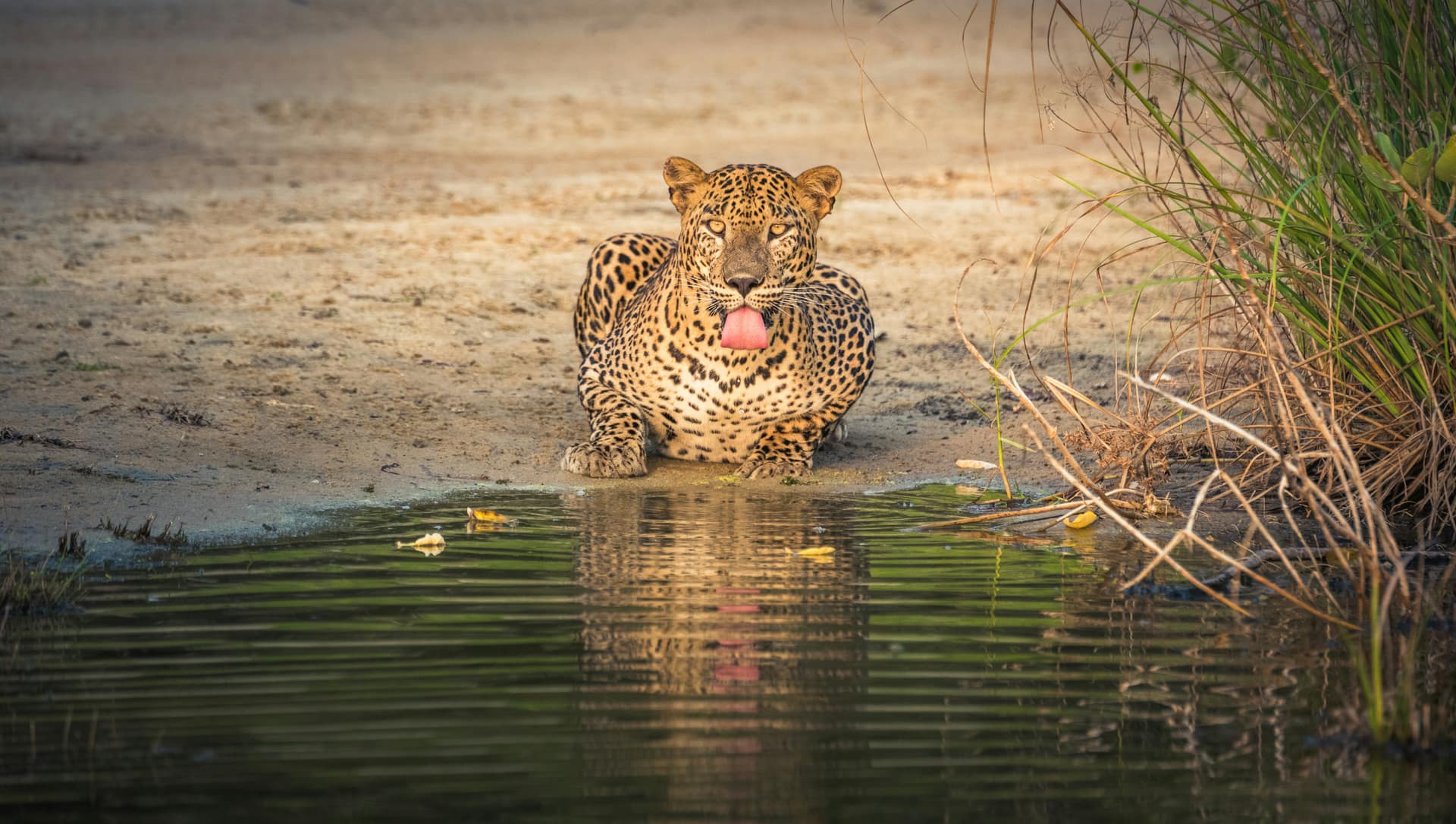
Yala National Park, in the south-east, is Sri Lanka's best-known park and holds one of the highest densities of leopards recorded anywhere, which makes it the more popular choice for a first safari and the location with the larger concentration of luxury camps. Its proximity to the south coast also makes it easy to combine with a beach stay on the same trip.
Wilpattu, in the north-west, is Sri Lanka's largest national park by area and generally receives fewer visitors than Yala, appealing to travellers who prioritise a quieter, less crowded safari experience over the highest possible odds of a leopard sighting. It suits combining with a Cultural Triangle itinerary given its location.
- →Yala: the higher-profile choice, strong leopard density, easy to pair with a south-coast beach stay.
- →Wilpattu: Sri Lanka's largest park, fewer visitors, pairs well with a Cultural Triangle itinerary.
- →Both: best visited on the dry season, roughly February to July, when wildlife concentrates around remaining water.
What a typical luxury camp stay includes
Most camps quote a full-board rate that includes accommodation, meals, and two safari drives a day, one at dawn and one in the late afternoon, since these are generally the periods of highest animal activity. A private, camp-arranged vehicle is standard rather than a shared jeep, which matters for pacing and photography.
Two or three nights is a typical stay, enough for several drives without exhausting the experience, since wildlife sightings vary day to day and a single drive rarely tells the full story of a park.
- →Full-board accommodation with two safari drives daily (dawn and late afternoon).
- →A private safari vehicle, rather than sharing a jeep with unrelated travellers.
- →Generator or solar power, worth confirming if reliable device charging matters.
Tented camp or fixed lodge: which suits your trip
A fixed lodge, built from permanent materials just outside a park boundary, generally offers a swimming pool and slightly more conventional hotel infrastructure, while a tented camp leans further into atmosphere and proximity to the bush at the cost of some amenities. Neither is objectively better; the choice comes down to what a traveller actually wants from the safari leg of the trip.
Families with younger children, or travellers prioritising reliable air conditioning and a pool, often lean toward a fixed lodge, while travellers wanting the most immersive possible wildlife experience, and comfortable with a simpler canvas structure, tend to choose the tented camp.
Planning the safari leg of a luxury trip
A luxury camp stay typically sits in the middle of a broader itinerary, following either the Cultural Triangle (for Wilpattu) or the hill country (for Yala), and preceding a coastal finish. Book well ahead for the February to July dry season, since the best camps have limited tents and fill quickly during the island's overall peak December to March period too, when demand across the whole south is highest.
For travellers who want the very best odds and the most private experience on a given drive, a dedicated private dawn safari, in a vehicle not shared with other camp guests, is worth arranging specifically rather than assumed as automatically included in every camp's standard rate.
Frequently asked questions
What is a luxury tented safari camp in Sri Lanka?
It is a semi-permanent canvas accommodation set at the edge of a national park such as Yala or Wilpattu, typically with a proper bed, en-suite bathroom and private veranda, offering full-board stays with two safari drives a day.
Is Yala or Wilpattu better for a luxury safari?
Yala has a stronger leopard density and more luxury camp options, and pairs easily with a south-coast beach stay. Wilpattu is Sri Lanka's largest park with fewer visitors, suiting travellers who prefer a quieter experience and a Cultural Triangle pairing.
When is the best time for a luxury safari in Sri Lanka?
Roughly February to July, the dry season, when waterholes concentrate wildlife and sightings tend to improve. This also overlaps with part of Sri Lanka's wider December to March peak season for the south, so book ahead.
Are luxury tented camps comfortable, or is it real camping?
They are considerably more comfortable than camping: proper beds, en-suite bathrooms with running water and electricity are standard, though power usually comes from a generator or solar system rather than a full grid connection.
How many nights should I spend at a luxury safari camp?
Two or three nights is typical, enough for several dawn and late-afternoon drives without exhausting the experience, since wildlife sightings vary day to day and a single drive rarely captures the full range of a park.
Does a safari camp stay include game drives?
Most full-board rates include two drives a day, at dawn and late afternoon, in a private camp vehicle. Confirm this is included, and whether it is a shared or fully private vehicle, when booking.
Should I choose a tented camp or a fixed safari lodge?
A tented camp offers more atmosphere and proximity to the bush; a fixed lodge usually offers a pool and more conventional hotel comfort. Families or travellers prioritising air conditioning often prefer a lodge, while immersion-focused travellers prefer the tent.