
Quick answer
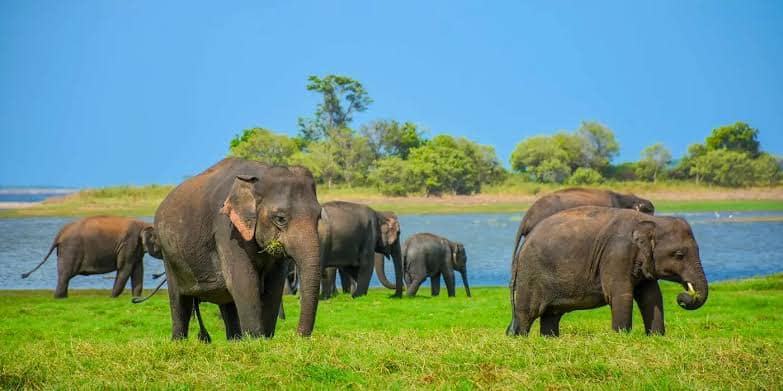
Maduru Oya National Park is a dry-zone park of roughly 58,800 hectares east of Mahiyangana, established in 1983 to protect the catchment of the Mahaweli irrigation scheme. It is known for elephants, which gather near the Maduru Oya reservoir in the dry season, and it sees very few visitors. The best time is roughly June to September, and it is roughly three hours from Kandy or two hours from Polonnaruwa, with the Vedda village of Dambana nearby.
Key takeaways
- Maduru Oya National Park covers roughly 58,800 hectares, making it one of the larger protected areas in Sri Lanka.
- The park was declared in 1983 under the Mahaweli development programme to protect reservoir catchments and elephant habitat.
- Elephants are seen most often near the Maduru Oya reservoir from roughly June to September.
- An ancient sluice, dated to the early centuries of the first millennium, was found during reservoir construction.
- The Vedda village of Dambana, home to Sri Lanka's indigenous people, lies close to the park's boundary.
What Maduru Oya National Park is
Maduru Oya National Park lies in the Ampara, Badulla and Polonnaruwa districts, east of Mahiyangana. It was declared in 1983 as part of the Mahaweli development programme, which created the large reservoirs that irrigate the eastern plains. The park protects their catchment and gives elephants displaced by farming a safe range.
The landscape is a mix of dry evergreen forest, scrub, grassland, rocky hills and the Maduru Oya reservoir itself. The reservoir's edges are where most wildlife is seen, especially in the dry months when the water level falls.
During reservoir construction engineers uncovered an ancient sluice, thought to date from the early centuries of the first millennium, which showed that the site had been used for irrigation long before. It is one of several archaeological sites inside the park.
Wildlife in Maduru Oya
Maduru Oya's main attraction is the Asian elephant, with herds often seen on the grasslands near the reservoir. The park also holds water buffalo, spotted deer, sambar, wild boar and both of Sri Lanka's common monkeys. Leopards and sloth bears live in the park but are rarely seen.
The reservoir attracts waterbirds such as cormorants, herons, storks and the occasional pelican, and the forest edges are good for hornbills, junglefowl and raptors. Mugger crocodiles are common in the water.
- →Elephants: best near the reservoir in the dry season.
- →Deer and buffalo: spotted deer, sambar and water buffalo on the grassland.
- →Birds: waterbirds, hornbills and raptors.
- →Reptiles: mugger crocodiles and land monitors.
When to visit Maduru Oya
The best time to visit Maduru Oya National Park is roughly June to September, the dry season in this part of the island, when the reservoir shrinks and elephants gather near the water. This is also when the eastern side of Sri Lanka has its best weather, which makes it easy to pair with the east coast.
From roughly October to January the north-east monsoon brings heavy rain. The park stays open, but tracks can be muddy and animals spread out into the forest. The months from February to May are a reasonable shoulder period.
- →June to September: dry season and the best elephant viewing.
- →October to January: north-east monsoon, wet and quiet.
- →February to May: a shoulder period with mixed viewing.
Getting to Maduru Oya and Dambana
Maduru Oya is reached by road, usually via Mahiyangana. The drive is roughly three hours from Kandy over the Hunnasgiriya hairpins, roughly two hours from Polonnaruwa, and roughly three to four hours from Arugam Bay or Batticaloa. Public transport to the park is limited, so most visitors travel with a driver.
Jeeps can be arranged locally or through hotels in Mahiyangana, and the park entry fee is paid at the gate. Facilities are basic, so bring water and food for the drive.
The village of Dambana, home to the Vedda people, lies close to the park. Visits there should be respectful and arranged through a local guide, with time to talk and listen rather than photograph.
- →Arrange a jeep the day before through a Mahiyangana hotel.
- →Carry water, food and sun protection.
- →Visit Dambana with a guide and ask before taking photographs.
Maduru Oya compared with other parks
Maduru Oya National Park suits travellers who want space and solitude more than a long list of sightings. Compared with Udawalawe, it has fewer elephants in plain view but almost no other vehicles. Compared with Wasgamuwa, it is larger and more remote, with a bigger reservoir and less forest along the tracks.
For most visitors it is a second or third park, chosen because it lies on the route between Kandy and the east coast, or because they want to combine wildlife with a visit to the Vedda community.
- →Choose Maduru Oya if you want a remote park on the way to the east coast.
- →Choose Udawalawe if elephants must be guaranteed.
- →Choose Wasgamuwa if you want a quiet park closer to Polonnaruwa.
Planning a visit
Maduru Oya fits best on a route between Kandy and the east coast, or as a day trip from Mahiyangana, where there are simple hotels. A half-day safari followed by a visit to Dambana makes a full day.
Lankan Stays & Trails includes Maduru Oya on east-bound routes for travellers who want a quieter park. Travel early, as the drive and the safari both benefit from a cool start.
Frequently asked questions
Is Maduru Oya National Park worth visiting?
Maduru Oya is worth visiting for travellers who want a remote, uncrowded park and are travelling between Kandy and the east coast. Elephants are the main attraction, especially near the reservoir in the dry season. It is less reliable than Udawalawe or Minneriya, so it works best as an additional park.
How do I get to Maduru Oya National Park?
Maduru Oya is reached by road via Mahiyangana. It is roughly three hours from Kandy, roughly two hours from Polonnaruwa and three to four hours from Arugam Bay or Batticaloa. Public transport is limited, so a private driver is the practical way to reach the park and the gate.
What animals live in Maduru Oya National Park?
Maduru Oya is home to elephants, water buffalo, spotted deer, sambar, wild boar, toque macaques and purple-faced langurs, with leopards and sloth bears present but rarely seen. Mugger crocodiles live in the reservoir, and waterbirds, hornbills and raptors are common along the forest edges.
When is the best time to visit Maduru Oya?
The best time is roughly June to September, the dry season in the east, when the reservoir level drops and elephants gather near the water. From roughly October to January the north-east monsoon brings heavy rain, which makes viewing harder and tracks muddier.
Can you visit the Vedda village of Dambana from Maduru Oya?
Yes. Dambana lies close to Maduru Oya National Park and is often visited on the same day. Arrange the visit through a local guide, allow time for conversation and ask before taking photographs. The community's way of life is changing, and a respectful visit matters more than a long one.
What is the ancient sluice at Maduru Oya?
During construction of the Maduru Oya reservoir, engineers found an ancient sluice, believed to date from the early centuries of the first millennium. It showed that the site had been used for irrigation long before the modern dam, and the new reservoir was designed partly around the ancient engineering.
How long should I spend at Maduru Oya?
A half-day safari of three to four hours is enough for most visitors. Staying one night in Mahiyangana allows an afternoon or dawn drive and a visit to Dambana without rushing. Travellers on a tight schedule can include it as a stop on the drive between Kandy and the east coast.