
Quick answer
Mirissa is driest and calmest roughly from December to April, its beach and whale-watching season, with January to March the most reliable months for flat water and boat trips. From about late May to September the southwest monsoon brings showers and rough seas, and whale-watching boats stop. October and November bring heavy afternoon storms, with the season restarting in November. Mirissa receives roughly 1,900 to 2,200 mm of rain a year, a little less than Galle.
Key takeaways
- Mirissa's season runs roughly from December to April, with January to March the most reliable.
- Whale-watching boats run roughly from November to April, when the sea is calm.
- The southwest monsoon brings rough seas from roughly late May to September.
- Mirissa is a little drier than Galle but still firmly in the wet zone.
- The bay is partly sheltered, but monsoon currents make swimming unsafe on most days.
Mirissa's climate in brief
Mirissa lies on the south coast between Weligama and Matara, about 35 km east of Galle. It receives roughly 1,900 to 2,200 mm of rain a year, a little less than Galle, because rainfall falls along the coast towards the east.
Its seasons follow the south coast: dry and calm from December to April, wet and rough from late May to September, and stormy in October and November. Daytime highs are about 29 to 31 °C all year, with nights around 24 to 26 °C, and the sea is roughly 27 to 29 °C.
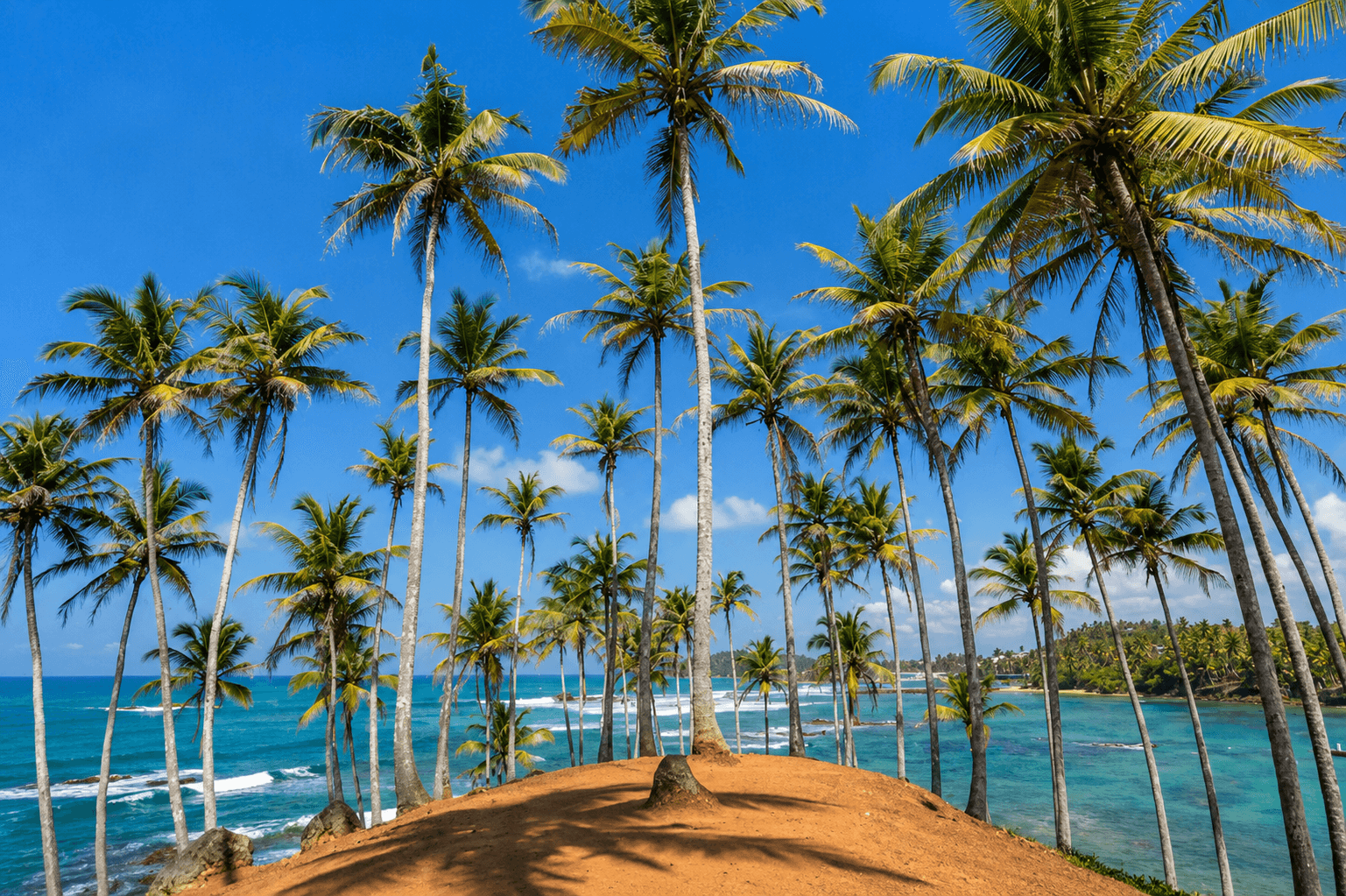
The bay at Mirissa curves between two headlands, which give some shelter on calmer days, and Parrot Rock at its western end is a favourite sunset spot. The harbour, home to the whale-watching fleet, sits just east of the beach. Both are busy in the dry season and quiet in the monsoon.
- →Annual rain: roughly 1,900 to 2,200 mm.
- →Days: about 29 to 31 °C.
- →Sea: about 27 to 29 °C.
December to April: whales and beaches
From December, Mirissa settles into dry, calm weather. January to March are the best months: the sea is flat in the mornings, the bay is good for swimming, and whale-watching boats go out almost every day. Blue whales, sperm whales and spinner dolphins are the main sightings.
The calm sea matters for whale-watching because trips run several hours offshore. On choppy days, trips are rougher and seasickness more common, so the flattest months, roughly January to March, are the most comfortable.
April is hot and humid, with afternoon storms, but trips still run in the mornings for most of the month.
- →Calmest: January to March.
- →Whale-watching: roughly November to April.
- →April: hot, storms in the afternoons.
Late May to September
The southwest monsoon reaches Mirissa in the second half of May. The sea becomes rough, with swell and strong currents in the bay and red flags on most days. Whale-watching boats stop, and the harbour is quiet.
Rain comes in showers between sunny spells, wettest in late May and June and lighter in July and August. Mirissa is quiet and cheaper, with a relaxed feel.
In the monsoon months, whale-watching moves to Trincomalee on the east coast in some years, roughly from May to October.
Some travellers prefer Mirissa in the monsoon: fewer people, cheaper rooms, dramatic seas and long sunny spells in July and August. Cafes and guesthouses stay open, and Galle, Weligama and Matara are short drives away. The trade-off is a beach that is for walking, not swimming.
- →Sea: rough, swimming unsafe.
- →Whale boats: stopped.
- →Rain: showers, lighter in July and August.
October and November
October is wet, with heavy afternoon and evening storms. November brings the transition, with storms early and drier days late, as the sea calms. Whale-watching usually restarts in November, though early trips can be rough.
The first half of December still has some storms, but by Christmas most days are dry and calm.
- →October: heavy storms.
- →November: whale season restarting.
- →Christmas: usually dry and calm.
Planning a Mirissa stay by season
Plan a Mirissa stay from December to April, and book whale-watching for the first morning of the stay, so there is time to retry if the sea is rough. In the monsoon months, choose the east coast for the beach and Trincomalee for whales.
Lankan Stays & Trails books Mirissa stays and whale-watching trips from December to April, with a spare morning for boat trips that are cancelled.
Frequently asked questions
When is the best time to visit Mirissa?
Roughly December to April, with January to March the most reliable. The sea is calm, the bay is swimmable and whale-watching boats go out almost every day. Late November and early December are good-value edges, with some risk of storms.
When is whale-watching season in Mirissa?
Whale-watching from Mirissa runs roughly from November to April, when the sea is calm enough for long trips offshore. January to March are usually the calmest months. From May to October the monsoon makes the sea too rough, and some trips move to Trincomalee.
Can you swim in Mirissa in the monsoon?
Generally not. From late May to September, the southwest monsoon brings swell and strong currents into Mirissa's bay, and red flags are common. Even the more sheltered parts of the bay can have currents. The east coast is the safer choice for swimming then.
When is the rainy season in Mirissa?
The main rainy season is the southwest monsoon, from roughly late May to September, wettest in late May and June. October and November bring heavy afternoon storms. The dry season runs roughly from December to April.
What is the weather like in Mirissa in July?
July is in the southwest monsoon, with showers between long sunny spells and a rough sea. Whale-watching does not run, and swimming is not advised on most days. Mirissa is quiet and cheaper, and Galle and the south coast sights are close by.
Is Mirissa drier than Galle?
Slightly. Rainfall decreases along the south coast from west to east, so Mirissa receives a little less than Galle, roughly 1,900 to 2,200 mm a year. Both follow the same seasons, and Tangalle, further east, is drier still.
How does Lankan Stays & Trails plan Mirissa stays?
Mirissa stays are planned from December to April, with whale-watching booked for the first morning so a cancelled trip can be retried. In the monsoon months, beach time moves to the east coast and whale-watching to Trincomalee where the season allows.
Is the sea rough on Mirissa whale-watching trips?
It depends on the month. From about January to March, the sea is usually flat and trips are comfortable. In November, December and April, swell is more likely and trips can be rough, so seasickness tablets help. Trips are cancelled when the sea is too rough to go out safely.