
Quick answer
The best times to photograph Sri Lanka's Ramayana places are early morning and late afternoon. Seetha Eliya is magical in morning mist, Ravana Falls is fullest after rain, Ussangoda glows at sunset and Rumassala's Peace Pagoda frames Galle harbour at golden hour. Always ask before photographing people or inner shrines, never pose with your back to a Buddha image, and check drone rules before flying.
Key takeaways
- Early morning and late afternoon give the best light.
- Seetha Eliya at dawn, Ussangoda at sunset and Ravana Falls after rain are highlights.
- Ask before photographing people and inner shrines.
- Never pose with your back to a Buddha image.
- Drones need permission; many sacred and protected sites restrict them.
The best photo spots
Seetha Eliya's stream, with mist rising around the colourful temple, is the most evocative image of the Ramayana in Sri Lanka. Arrive by 7.00 for soft light and few people.
Ravana Falls is best after rain, from about October to January, when it thunders over the rocks. Shoot from the viewing area for the full cascade.
Ussangoda's red earth and sea cliffs glow at sunset, and Rumassala's Peace Pagoda frames Galle harbour at golden hour. Koneswaram on Swami Rock is dramatic against the sea.
Ravana Cave offers a different kind of image: a dark cave mouth framing the bright valley beyond. Shoot from inside the cave looking out, exposing for the view, to capture the sense of a hidden kingdom above the hills.
- →Seetha Eliya: dawn mist.
- →Ravana Falls: after rain.
- →Ussangoda: sunset.
- →Rumassala: golden hour.
Light and weather
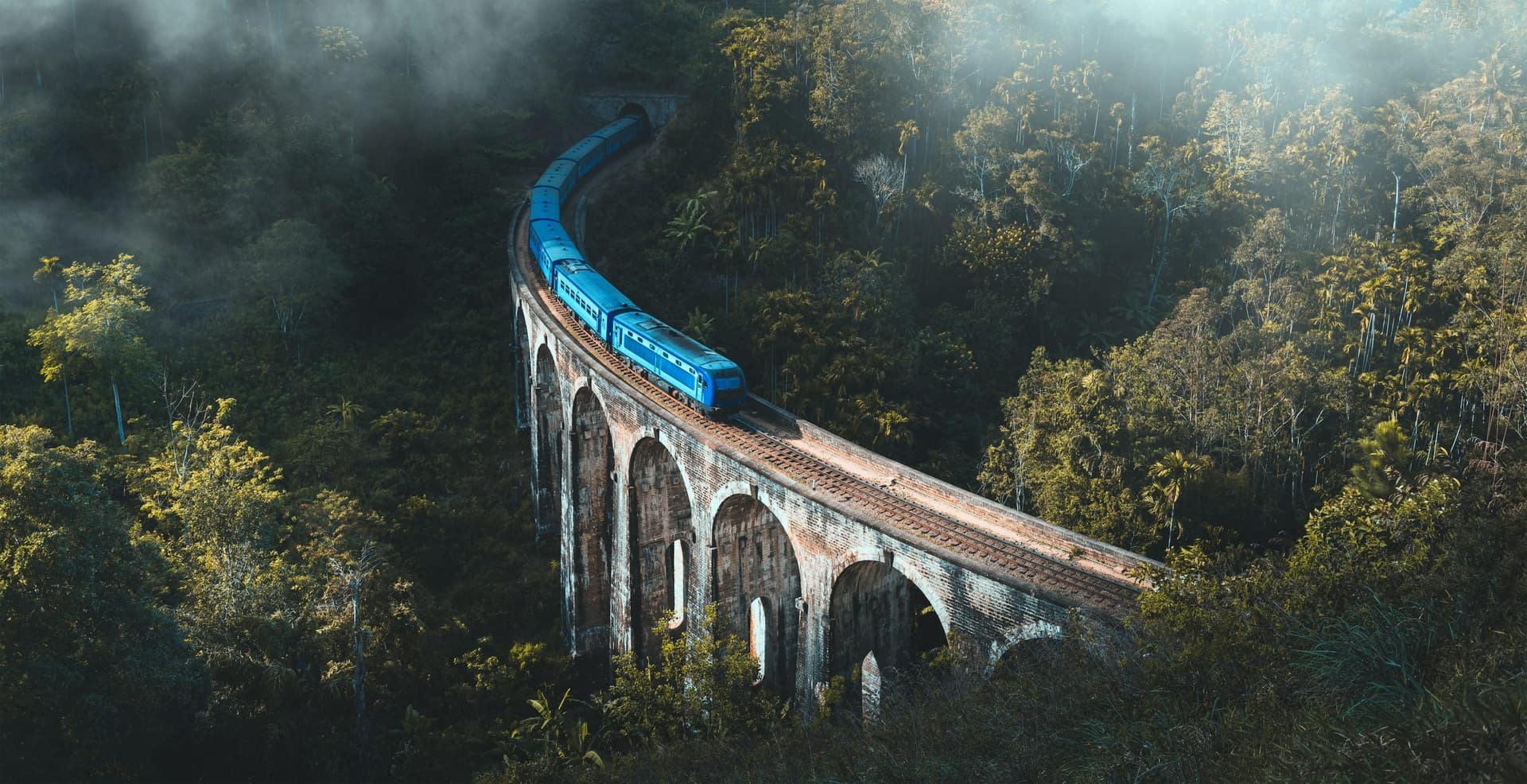
Sri Lanka's tropical sun is harsh at midday, so plan shoots for early morning and late afternoon. In the hill country, mist often lifts by mid-morning.
Clouds and rain can add drama, especially in the hills. Bring a rain cover for your camera and lens cloths for humidity.
Golden hour on the coast is short, so be in position early.
In the hill country, the best light often comes just after a shower, when the air clears and the tea slopes glow. Keep your camera ready on drives, and ask your driver to stop safely when the light is right.
- →Morning: soft light and mist.
- →Midday: harsh; rest or shoot interiors.
- →Late afternoon: warm light.
Temple etiquette
Always ask before photographing inside temples, especially murtis and inner shrines. Some temples forbid photography in certain areas.
Never photograph people at prayer without permission, and avoid flash during rituals. At Buddhist sites, never pose with your back to a Buddha image; this is considered deeply disrespectful.
Dress modestly even when shooting, and remove shoes as required. Respect is the foundation of good travel photography.
If a priest or worshipper declines a photograph, accept it with a smile. Often, after a few minutes of quiet observation and perhaps a small offering, people become more relaxed and may invite you to take a picture later.
- →Ask before photographing shrines.
- →No flash during rituals.
- →Never pose with your back to a Buddha.
Drone rules
Flying drones in Sri Lanka requires permission from the civil aviation authority and, in some areas, the defence ministry. Many sacred, archaeological and protected sites restrict or ban drones.
Check current rules well before your trip, and never fly over temples, crowds or wildlife without permission. Fines and confiscation are possible.
Lankan Stays & Trails can advise on permits and suitable locations for creators planning aerial shots.
Without a drone, high viewpoints still give aerial-style shots. Rumassala's pagoda terrace, the top of Ravana Cave's steps and Little Adam's Peak near Ella all look down over wide landscapes.
For content creators
Ramayana content is popular after the film, and many creators visit Sri Lanka to film the real places. Tell the story respectfully, credit local traditions and avoid sensational claims, such as presenting Sigiriya as Ravana's palace.
Interviews with priests, guides or pilgrims, with permission, add depth. Captions in multiple languages reach wider audiences.
Be honest that the film was not shot in Sri Lanka, as far as published reports show. Audiences value accuracy.
Consider giving something back. Sharing your images with the temples, crediting local guides by name and including practical information for viewers all help the places that welcomed you.
What to bring
A wide-angle lens for landscapes and temples, a short telephoto for details and a fast lens for low light in shrines. A small tripod helps at dawn.
Rain covers, lens cloths and spare batteries are essential in the hills. A polarising filter cuts glare on water and leaves.
Keep kit light for climbs like Ravana Cave, and carry it securely on the train.
Phones are perfectly capable at most sites. Use their night modes in dim shrines, panoramic modes at Ussangoda and the wide lens at Seetha Eliya, and keep a power bank charged for long days.
Frequently asked questions
What is the best time to photograph Seetha Eliya?
Early morning, by about 7.00, when mist rises from the stream and the temple is quiet. The soft light flatters the colourful temple, and you will have the place largely to yourself before tour groups arrive.
Can we photograph inside Ramayana temples?
Ask first. Some temples allow photography in outer areas but not of murtis or inner shrines. Never photograph people at prayer without permission, and avoid flash during rituals. Rules differ by temple.
Are drones allowed at Ramayana sites?
Drones need permission from the civil aviation authority and sometimes the defence ministry. Many sacred and protected sites restrict them. Check current rules well before your trip and never fly over crowds or temples.
Which site is most photogenic?
Seetha Eliya at dawn, Ussangoda at sunset and Ravana Falls after rain are favourites. Rumassala's Peace Pagoda over Galle harbour and Koneswaram on Swami Rock are also striking. Each rewards patience.
What should creators avoid?
Avoid sensational claims, such as presenting Sigiriya as Ravana's palace or saying the film was shot at the sites. Respect worshippers, ask permission for interviews and credit local traditions accurately.
What camera gear should we bring?
A wide-angle lens, a short telephoto, a fast lens for low light, a small tripod, rain covers and spare batteries. Keep kit light for climbs and secure on trains and tuk-tuks.
How do we handle harsh midday light?
Plan outdoor shoots for early morning and late afternoon. Use midday for rest, interiors or travel. In the hill country, mist and clouds often soften the light even later in the day.