
Quick answer
Poya days are monthly full-moon Buddhist holidays, and in the Cultural Triangle they bring large crowds of white-clad pilgrims to Anuradhapura, Mihintale, Dambulla and other temples. Sites stay open but are busier, alcohol sales are banned island-wide, and many shops close. Vesak in May and Poson in June are the biggest, with Poson centred on Mihintale. Dates follow the lunar calendar and shift each year, so check them when planning. Visitors are welcome if dressed modestly and quiet.
Key takeaways
- Every full moon is a poya day, a public holiday in Sri Lanka, so there are 12 or 13 each year.
- Anuradhapura's Sri Maha Bodhi and Ruwanwelisaya draw the largest poya crowds in the Cultural Triangle, along with Mihintale.
- Poson poya, usually in June, commemorates the arrival of Buddhism at Mihintale and draws huge numbers of pilgrims.
- Alcohol cannot be sold on poya days, and many hotels do not serve it publicly.
- Poya dates follow the lunar calendar, so they move each year and should be checked against a current calendar.
What poya means in the Cultural Triangle
Poya is the Buddhist observance of the full moon, held every month in Sri Lanka as a public holiday. In the Cultural Triangle, where the island's oldest and most sacred Buddhist sites stand, poya is felt more strongly than anywhere else. Families dressed in white arrive at temples with flowers and oil lamps, and many observe eight precepts for the day.
Each poya has a meaning tied to the Buddha's life or to Sri Lankan Buddhist history. Some are bigger than others. Vesak in May marks the Buddha's birth, enlightenment and passing. Poson in June celebrates Mahinda's arrival at Mihintale in the 3rd century BC, which brought Buddhism to the island.
- →Every full moon is a poya day and a public holiday.
- →Vesak, usually in May: lanterns, pandals and dansal food stalls.
- →Poson, usually in June: Mihintale and Anuradhapura fill with pilgrims.
- →Other months: quieter, but temples are always busier than usual.
Where poya is busiest
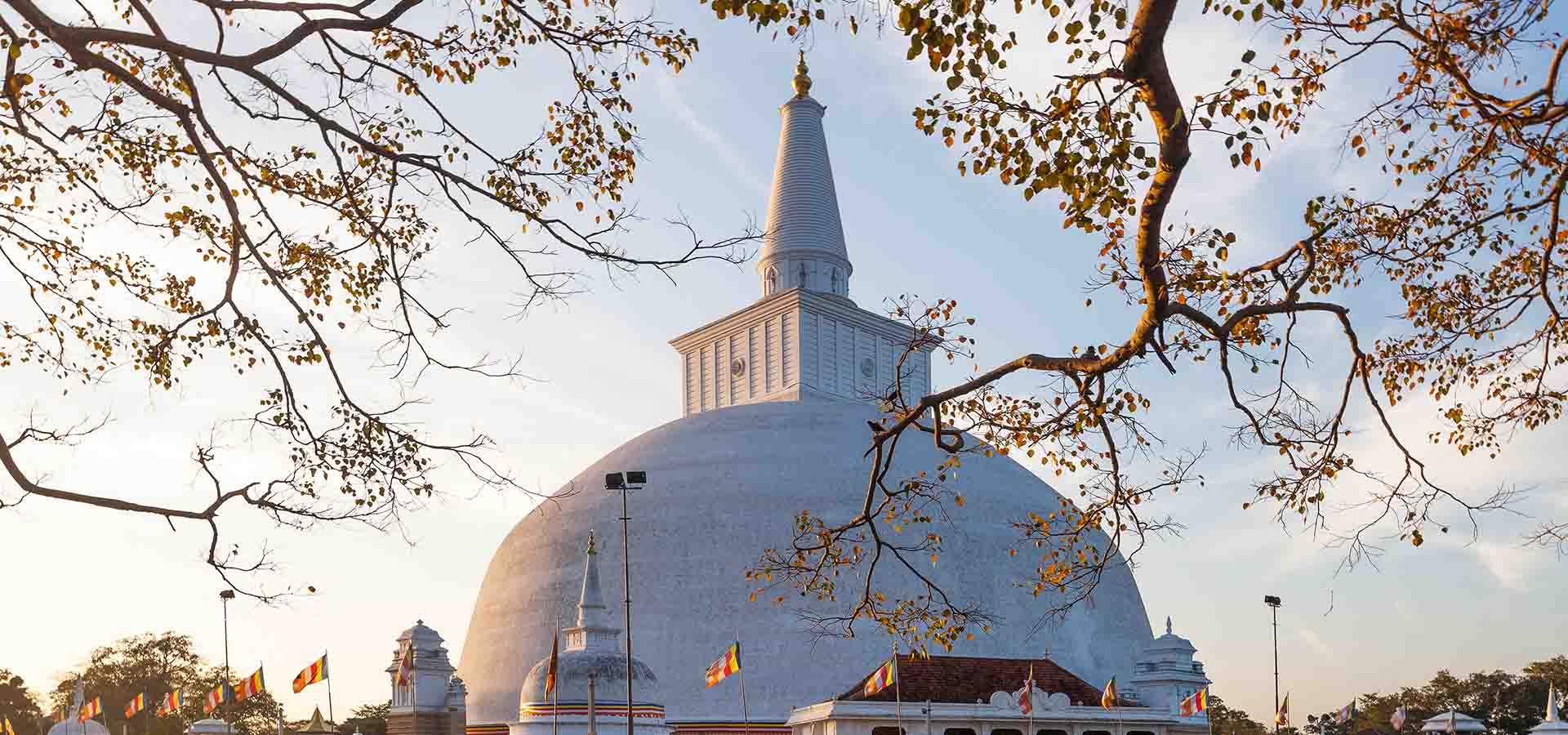
On poya the busiest Cultural Triangle sites are the working temples. Anuradhapura's Sri Maha Bodhi and Ruwanwelisaya fill from early morning with pilgrims chanting, offering flowers and walking clockwise around the stupa. Mihintale's steps and summit are busy all day, especially on Poson.
Dambulla's cave temple and the Polonnaruwa shrines also see more visitors. Sigiriya is less a pilgrimage site and is mainly busier because poya is a holiday, so local families visit. Expect more people at Sigiriya on poya and long weekends, and start early.
Some smaller temples hold all-night sermons and chanting, which visitors can quietly observe.
- →Sri Maha Bodhi and Ruwanwelisaya: the most atmospheric on poya.
- →Mihintale: very busy, especially on Poson.
- →Dambulla: busier with local pilgrims.
- →Sigiriya: busier with holiday visitors.
Practical rules on poya
Poya changes a few practical things in the Cultural Triangle. Alcohol sales are banned throughout Sri Lanka, and bars and liquor shops close. Many hotels do not serve alcohol publicly that day. Butchers often close, and some restaurants serve only vegetarian food.
Roads near the major temples can be congested, and parking fills quickly. Allow extra time to reach Anuradhapura and Mihintale. Sites remain open as usual, and ticketed archaeological parks still charge.
- →No alcohol sales anywhere in Sri Lanka.
- →Some shops and restaurants close.
- →Traffic near big temples, especially on Vesak and Poson.
- →Ticketed sites keep normal hours.
How visitors can join in
Visitors are welcome at Cultural Triangle temples on poya, and quietly joining in is often a highlight of a trip. Dress modestly, ideally in white or light colours, and buy a few lotus or jasmine flowers from the stalls to offer at a shrine. Walking clockwise around Ruwanwelisaya with pilgrims, at their pace, is moving.
On Vesak and Poson, dansal stalls hand out free food and drink to all comers as an act of generosity. Accepting is fine and polite. Lankan Stays & Trails guides often recommend an evening at the Sri Maha Bodhi on poya, when the oil lamps are lit and the chanting is at its fullest.
- →Wear white or light, modest clothing.
- →Offer flowers at the shrine and step back.
- →Walk clockwise around stupas.
- →Accept dansal food graciously on Vesak and Poson.
Planning around poya
Planning a Cultural Triangle trip around poya is a matter of choice. If you want quiet ruins and a drink at dinner, avoid scheduling Anuradhapura or Mihintale on a poya day. If you want atmosphere, aim for it. Either way, check the poya dates when you book, because they shift each year with the lunar calendar.
Long weekends, when poya falls next to a weekend, make Sigiriya and Dambulla particularly busy. Start at opening time on those days, or swap the order of your sites so you visit the quieter ones then.
Frequently asked questions
Are Cultural Triangle sites open on poya days?
Yes. Archaeological sites and temples stay open and keep their usual hours. Temples are busier with pilgrims, and Sigiriya and Dambulla can be busier with holiday visitors. Ticketed sites still charge their normal fees.
Can tourists drink alcohol on poya day?
Alcohol sales are banned throughout Sri Lanka on poya days, and many hotels do not serve it publicly. Some hotels serve guests privately, but do not count on it. Plan a dry day or buy beforehand and drink discreetly in your room.
Is Anuradhapura busy on poya day?
Very. The Sri Maha Bodhi and Ruwanwelisaya fill with white-clad pilgrims from early morning, and roads become congested. It is a moving time to visit if you go early, dress modestly and join the flow quietly.
When is Poson poya?
Poson usually falls in June, on the full moon, but the exact date shifts each year with the lunar calendar. It commemorates the arrival of Buddhism at Mihintale, which becomes very crowded. Check a current calendar when planning.
What should I wear on poya day at temples?
Modest clothing that covers shoulders and knees, ideally white or light colours as pilgrims wear. Slip-on shoes help because you remove them at each shrine. A scarf or sarong is useful for quick cover.
Should I avoid the Cultural Triangle on poya days?
Not necessarily. Poya brings crowds but also the most authentic atmosphere at the sacred sites. If you prefer quiet, schedule non-religious activities such as an elephant safari on poya and visit the temples the day before or after.