
Quick answer
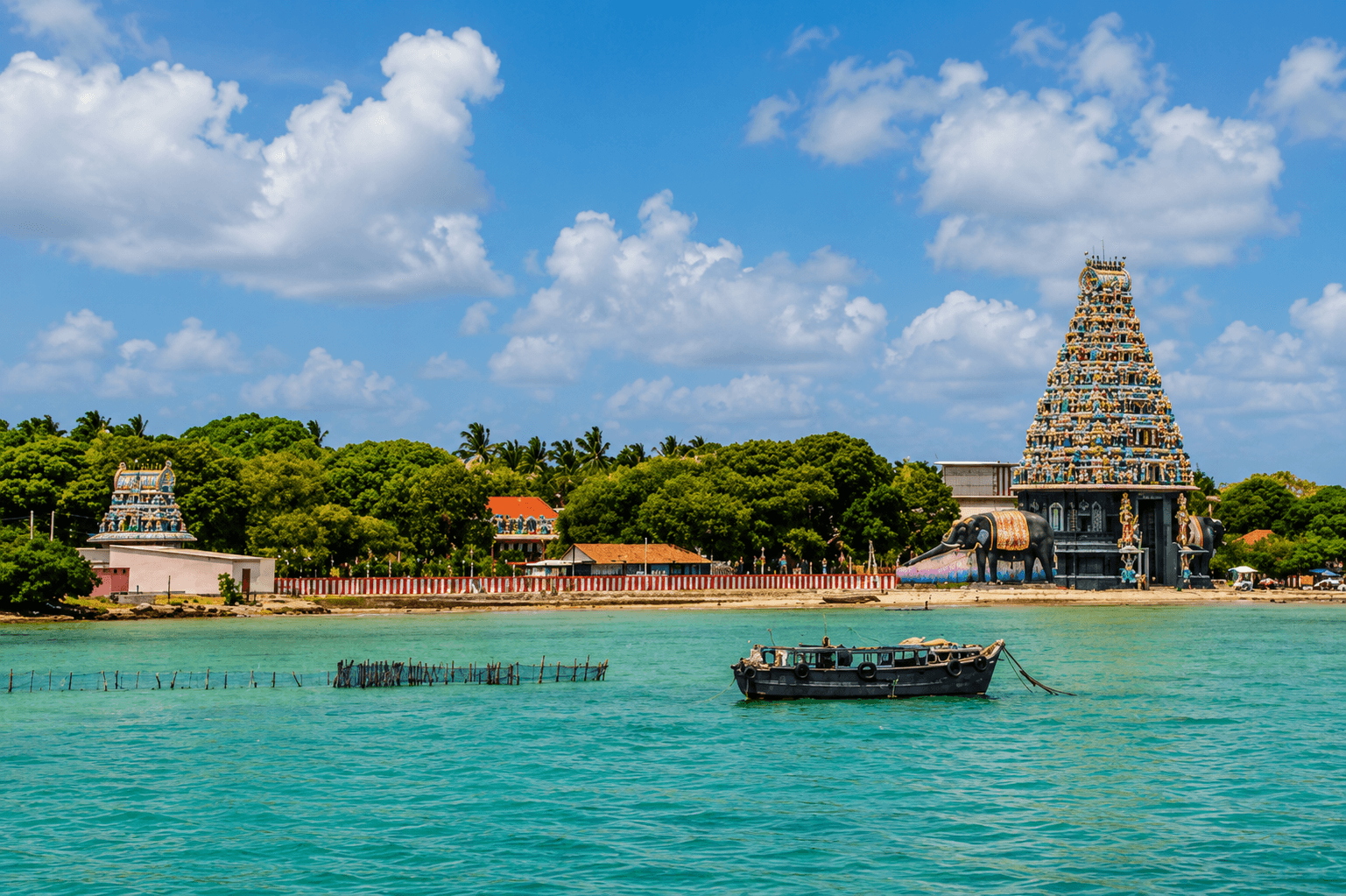
In Sri Lanka, Ramayana art is found mainly in Hindu temples, where gopurams (tower gateways) carry sculpted figures of Rama, Sita, Hanuman and other deities, and shrine walls are often painted with episodes. The Sri Bhakta Hanuman Temple at Ramboda has a tall granite Hanuman, and the Seetha Amman Temple has images of Rama, Sita, Lakshmana and Hanuman. Modern Sinhala art and statues increasingly portray Ravana as a great king.
Key takeaways
- Hindu temple gopurams carry sculpted Ramayana figures.
- Shrine walls in many kovils are painted with epic scenes.
- Ramboda's granite Hanuman is the island's best-known Ramayana image.
- Modern Sinhala art often portrays Ravana as a great king.
- Look closely and ask a guide to identify the figures.
Gopurams and sculpture
Hindu temples in Sri Lanka, especially in the north, east and Tamil areas of Colombo and the hills, are crowned by gopurams, tall tower gateways covered in brightly painted stucco figures. Among the gods and guardians, Rama, Sita, Lakshmana and Hanuman often appear.
Look for Hanuman carrying the Sanjeevani mountain, Rama with his bow, or the coronation of Rama with Sita at his side. Gopurams at Munneswaram, Koneswaram and Jaffna's major temples are rich in such figures.
The figures are repainted regularly, so colours are bright and fresh. Binoculars or a phone zoom help you pick out the details high up.
Gopuram sculpture follows a long South Indian tradition, and many Sri Lankan temples have employed craftsmen trained in Tamil Nadu. Watching repainting work in progress, with craftsmen on bamboo scaffolding, is a rare treat if you happen to visit during a renovation.
- →Look for Hanuman with the mountain.
- →Look for Rama with his bow.
- →Use binoculars or phone zoom.
Images in the shrines
The Seetha Amman Temple at Seetha Eliya has murtis of Rama, Sita, Lakshmana and Hanuman, dressed and garlanded for puja. Painted panels and images around the temple tell parts of the story.
The Sri Bhakta Hanuman Temple at Ramboda centres on a tall granite Hanuman, one of the most striking religious images in the hill country. Its calm, powerful presence moves many visitors.
In many Hindu kovils across the island, Hanuman has a shrine of his own, and his image is popular on temple walls and calendars.
- →Seetha Amman: Rama, Sita, Lakshmana and Hanuman.
- →Ramboda: tall granite Hanuman.
- →Hanuman shrines in many kovils.
Painted walls
Many Hindu temples have walls or ceilings painted with episodes from the epics, sometimes in a modern, colourful style. Scenes from the Ramayana, such as the bridge, the war and Rama's coronation, appear alongside stories of Shiva, Murugan and Ganesha.
Buddhist temple murals in Sri Lanka mostly depict the life of the Buddha and Jataka tales, not the Ramayana. Kelaniya's famous twentieth-century murals, for example, tell the history of Buddhism on the island.
Ask your guide to point out Ramayana scenes in each temple. They are easy to miss among the many other images.
Modern Ravana art
In recent decades, Sinhala popular culture has embraced Ravana as a great ancient king. Statues, paintings, posters and book covers show him as a regal, powerful figure, very different from the demon of many Indian traditions.
You may see Ravana images at roadside shrines, in shops and at sites linked to his legend, such as Ella. The Flying Ravana zipline in Ella uses his name and image too.
For film fans, comparing these images with Yash's on-screen Ravana is a fascinating exercise in how the same character is seen differently.
Some of this art is devotional, some patriotic and some simply commercial. Together it shows how a single figure from an ancient epic can carry very different meanings for different communities on the same island.
- →Statues and paintings of King Ravana.
- →Images at Ella and roadside shrines.
- →Compare with the film's Ravana.
Viewing tips
Visit temples in good light, morning or late afternoon, when the gopurams glow. Respect photography rules, especially inside shrines.
Lankan Stays & Trails guides can identify the figures and tell the stories behind them, turning a temple visit into an art tour.
Bring a small notebook or sketchbook. Many children enjoy drawing the figures they spot, which keeps them engaged at each temple.
Temple festivals are the best time to see art in use, with chariots, decorated images and processions. Ask your guide whether any festival falls during your visit.
Taking art home
Prints, small brass figures of Hanuman and other deities, and wood carvings are sold near major temples and in craft shops.
Buy from reputable shops, and check customs rules for antiques, which may need permits to export.
A small Hanuman figure from Sri Lanka makes a meaningful souvenir for film fans.
Frequently asked questions
Where can we see Ramayana art in Sri Lanka?
Mainly in Hindu temples: on gopurams at Munneswaram, Koneswaram and Jaffna's major kovils, in shrines such as the Seetha Amman Temple and Ramboda's Hanuman temple, and on painted temple walls across the island.
Do Buddhist temples have Ramayana murals?
Sri Lankan Buddhist murals mostly show the life of the Buddha and Jataka tales, not the Ramayana. Kelaniya's famous murals tell the history of Buddhism. Ramayana art is found mainly in Hindu temples and modern popular art.
What is a gopuram?
A gopuram is the tall tower gateway of a South Indian style Hindu temple, covered in painted stucco figures of gods, heroes and guardians. Ramayana figures such as Rama, Sita and Hanuman often appear among them.
How is Ravana shown in Sri Lankan art?
Modern Sinhala art often shows Ravana as a regal, powerful king, reflecting his popular image as a great ancient ruler. This differs sharply from the demon of many Indian portrayals and from the film's villain.
Can we photograph temple art?
Usually in outer areas, such as gopurams and courtyards, but ask before photographing inside shrines or during rituals. Never use flash during puja, and respect any signs prohibiting photography. Ask if unsure.
What Ramayana souvenirs can we buy?
Brass figures of Hanuman and other deities, prints, wood carvings and masks are sold near temples and in craft shops. Buy from reputable sellers and check rules on exporting antiques.
Is the Ramboda Hanuman worth seeing for art lovers?
Yes. The tall granite Hanuman at the Sri Bhakta Hanuman Temple is a striking modern religious image, set against tea country views. It is one of the most photographed Ramayana images in Sri Lanka.