
Quick answer
The Sri Bhakta Hanuman Temple stands at Ramboda on the Kandy to Nuwara Eliya road, roughly 1.5 to 2 hours from Kandy and 45 minutes to an hour from Nuwara Eliya. Built by the Chinmaya Mission and consecrated in the early 2000s, it houses a tall granite murti of Hanuman. Tradition links the Ramboda hills to Hanuman's search for Sita. A visit takes 30 to 45 minutes, and the terrace has wide views over the tea valley.
Key takeaways
- The temple is run by the Chinmaya Mission and was consecrated in the early 2000s.
- Its main murti is a tall granite figure of Hanuman, the focus of daily puja.
- Tradition links the Ramboda area to Hanuman's search for Sita in Lanka.
- The temple lies on the Kandy to Nuwara Eliya road, an easy stop on the drive.
- Hanuman Jayanti and Ram Navami bring special pujas and bhajans.
Hanuman in the Ramboda hills
In the Sundara Kanda, Hanuman leaps across the ocean to Lanka and searches the city and its gardens for Sita. Sri Lankan tradition places that search partly in the central hills, near the Ashok Vatika identified at Sita Eliya. The Ramboda area, one valley below, is said to be where Hanuman rested and surveyed the land.
Some devotees explain the name Ramboda as coming from Rama and a word for an army or camp, suggesting that Rama's forces gathered here. Linguists offer other explanations, and the tradition is best treated as local devotion. What pilgrims value is the sense of stepping into the landscape of the Sundara Kanda.
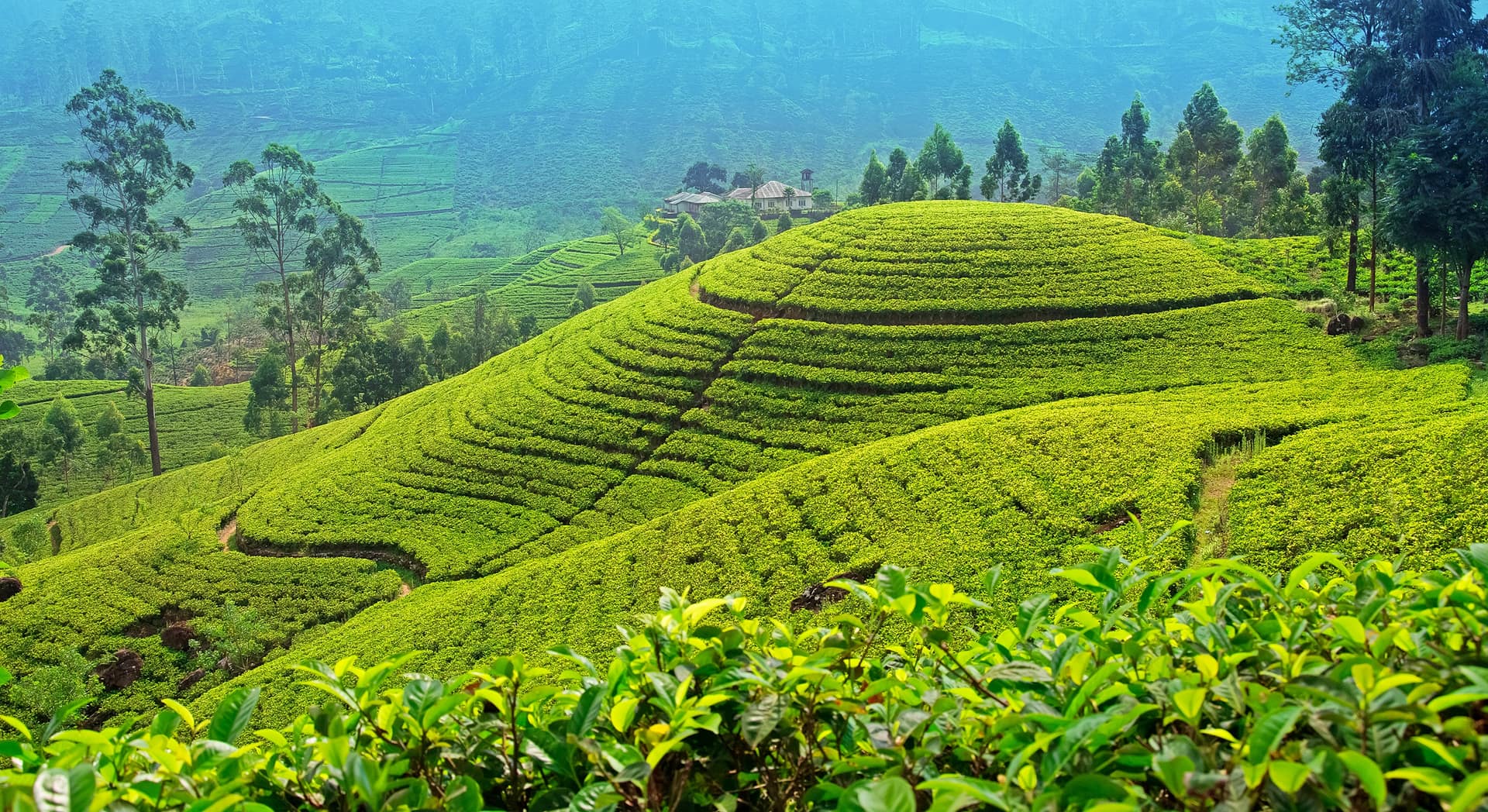
The temple's founders chose the site for this association and for its beauty. Standing on the terrace, with mist moving over the tea and the Kotmale valley below, many families find it easy to imagine Hanuman looking down from these hills towards the grove where Sita waited.
- →Sundara Kanda: Hanuman's search for Sita in Lanka.
- →Ramboda: linked by devotees to Rama's army.
- →One valley below the Ashok Vatika at Sita Eliya.
The temple and the murti
The Sri Bhakta Hanuman Temple was built by the Chinmaya Mission of Sri Lanka, the organisation founded on the teachings of Swami Chinmayananda, and consecrated in the early 2000s. The main shrine holds a tall granite murti of Hanuman, standing with folded hands, roughly five metres high, dressed and garlanded by priests each day.
Smaller shrines honour Rama, Sita and Lakshmana, and the complex includes a hall used for satsang and Vedanta classes. The temple is clean, calm and well organised, with signs in English, Tamil and Sinhala, and staff used to welcoming Indian visitors.
Behind the shrine, a terrace looks across the valley towards Ramboda Falls and the hills beyond. On a clear morning, the view is one of the finest on the road, and families often linger here after darshan with a cup of tea from the small canteen when it is open.
- →Main murti: tall granite Hanuman, roughly five metres high.
- →Shrines to Rama, Sita and Lakshmana.
- →A terrace over the valley and Ramboda Falls.
Puja and devotion
Daily pujas are held in the morning, at midday and in the evening, following a pattern similar to Chinmaya temples in India. Times can change, so ask your driver to check before setting off from Kandy or Nuwara Eliya. Arriving for the morning puja gives the quietest and most devotional visit.
Devotees offer betel leaves, flowers, fruit and oil lamps, and many offer sindoor or a vada mala on Saturdays and Tuesdays, the days most associated with Hanuman. Families often recite the Hanuman Chalisa together in front of the murti, and priests welcome group bhajans when the temple is not busy.
Special pujas can be arranged for a family occasion, a vow or a safe journey, with a dakshina to the temple. The temple also sells small prasad items and religious books, which make meaningful souvenirs for relatives at home.
- →Auspicious days: Tuesdays and Saturdays.
- →Offerings: betel leaves, flowers, fruit, oil lamps.
- →Group recitation of the Hanuman Chalisa is welcome.
Hanuman Jayanti and festivals
Hanuman Jayanti is the temple's largest festival. Sri Lankan Tamil tradition observes it in the month of Margazhi, usually December or January, while North Indian families keep the Chaitra date in March or April. The temple marks the occasion with abhishekam, bhajans and annadanam, and devotees travel from Colombo and Kandy.
Ram Navami, usually in March or April, is also celebrated with special pujas. Because temple calendars can differ from those in India, check the exact dates with the temple or through your guide if you wish to attend.
Festival days are busy, and parking along the narrow road fills quickly. Families with elders should arrive early in the morning and keep the rest of the day light, since the drive on to Nuwara Eliya is slow when traffic builds.
Stopping on the Kandy to Nuwara Eliya road
The temple sits just off the main road at Ramboda, about 55 kilometres from Kandy. The drive from Kandy takes roughly 1.5 to 2 hours on a winding hill road, and Nuwara Eliya is another 45 minutes to an hour beyond. Most pilgrims stop on the way up, often combining the temple with Ramboda Falls and a tea factory.
A short, steep driveway leads from the road to the temple, and there are a few steps between levels. Elders can usually be dropped near the entrance. The hills are cool and often misty, so carry a shawl or sweater, especially in the morning. Rain is common from roughly May to September.
Lankan Stays & Trails includes the Sri Bhakta Hanuman Temple on every Ramayana route through the hill country, usually as the last stop before Sita Eliya. Tell us if you would like a special puja arranged, and we will time the drive from Kandy accordingly.
Frequently asked questions
Where is the Sri Bhakta Hanuman Temple?
The temple is at Ramboda on the main road from Kandy to Nuwara Eliya, roughly 55 kilometres from Kandy. The drive takes roughly 1.5 to 2 hours from Kandy and 45 minutes to an hour from Nuwara Eliya, so it is an easy stop on the climb.
Who built the Hanuman temple at Ramboda?
The Chinmaya Mission of Sri Lanka built the temple, which was consecrated in the early 2000s. The mission follows the teachings of Swami Chinmayananda and also runs satsang and Vedanta classes at the temple.
How big is the Hanuman murti at Ramboda?
The main murti is a tall granite figure of Hanuman with folded hands, roughly five metres high. Priests dress and garland it daily, and it is the focus of every puja. Smaller shrines honour Rama, Sita and Lakshmana.
Why is Ramboda linked to the Ramayana?
Sri Lankan tradition places Hanuman's search for Sita in the central hills, close to the Ashok Vatika at Sita Eliya. Ramboda is said to be where Hanuman rested and surveyed the land, and some devotees link the name to Rama's army.
When is Hanuman Jayanti celebrated at Ramboda?
Sri Lankan Tamil tradition keeps Hanuman Jayanti in Margazhi, usually December or January, with abhishekam, bhajans and annadanam. North Indian families may know the Chaitra date in March or April. Confirm the temple's chosen date before planning a festival visit.
How long should we stop at the temple?
Thirty to forty-five minutes is enough for darshan and time on the view terrace. Allow an hour if you plan a special puja or a group recitation of the Hanuman Chalisa. Many families combine the stop with Ramboda Falls and a tea factory.
Is the temple suitable for elderly visitors?
Mostly. A short, steep driveway and a few steps lead between levels, but vehicles can usually drop elders near the entrance. Floors are smooth and the main shrine is easy to reach. Bring a shawl, since mornings in the hills are cool.