
Quick answer
A second Sri Lanka trip should prioritise the north and east, which most first itineraries skip entirely: Jaffna and its islands, Trincomalee and Nilaveli, Batticaloa and Pasikudah, and Arugam Bay. Beyond that, Sinharaja rainforest for endemic wildlife, Wilpattu instead of Yala for a quieter safari, and lesser-known ancient sites such as Yapahuwa, Avukana and Mihintale. Kalpitiya, Mannar and Riverston complete the list of places a first trip almost never reaches.
Key takeaways
- Jaffna and the northern peninsula are the single biggest gap in most first itineraries.
- The east coast, from Trincomalee to Arugam Bay, has its own season from May to September.
- Sinharaja rainforest is a UNESCO site with world-class endemic wildlife and few visitors.
- Wilpattu offers a quieter, wilder safari than Yala, with better sloth bear chances.
- Yapahuwa, Avukana and Mihintale deliver ancient Sri Lanka without the crowds.
The north: Jaffna and the islands
This is the biggest gap. Jaffna is eight to nine hours from Colombo by road or ninety minutes by air, and it does not fit a two-week first trip that also covers the standard loop. It is also the most culturally distinct part of Sri Lanka: Tamil-majority, Hindu, with its own cuisine built on palmyrah and tamarind, and a landscape of limestone, palmyrah palms and shallow lagoons that looks nothing like the south.
The islands off the peninsula are the highlight. Delft, reached by an hour's ferry, has free-roaming wild ponies, field walls built from quarried coral, Dutch fort ruins and a giant baobab. Nainativu holds a major Hindu kovil and one of Buddhism's sixteen holiest sites a few hundred metres apart. Give Jaffna three nights.
- →Jaffna: Tamil-majority, Hindu, with a completely distinct cuisine and landscape.
- →Delft island: wild ponies, coral walls, Dutch ruins, an hour's ferry.
- →Nainativu: a major kovil and a major Buddhist temple on one small island.
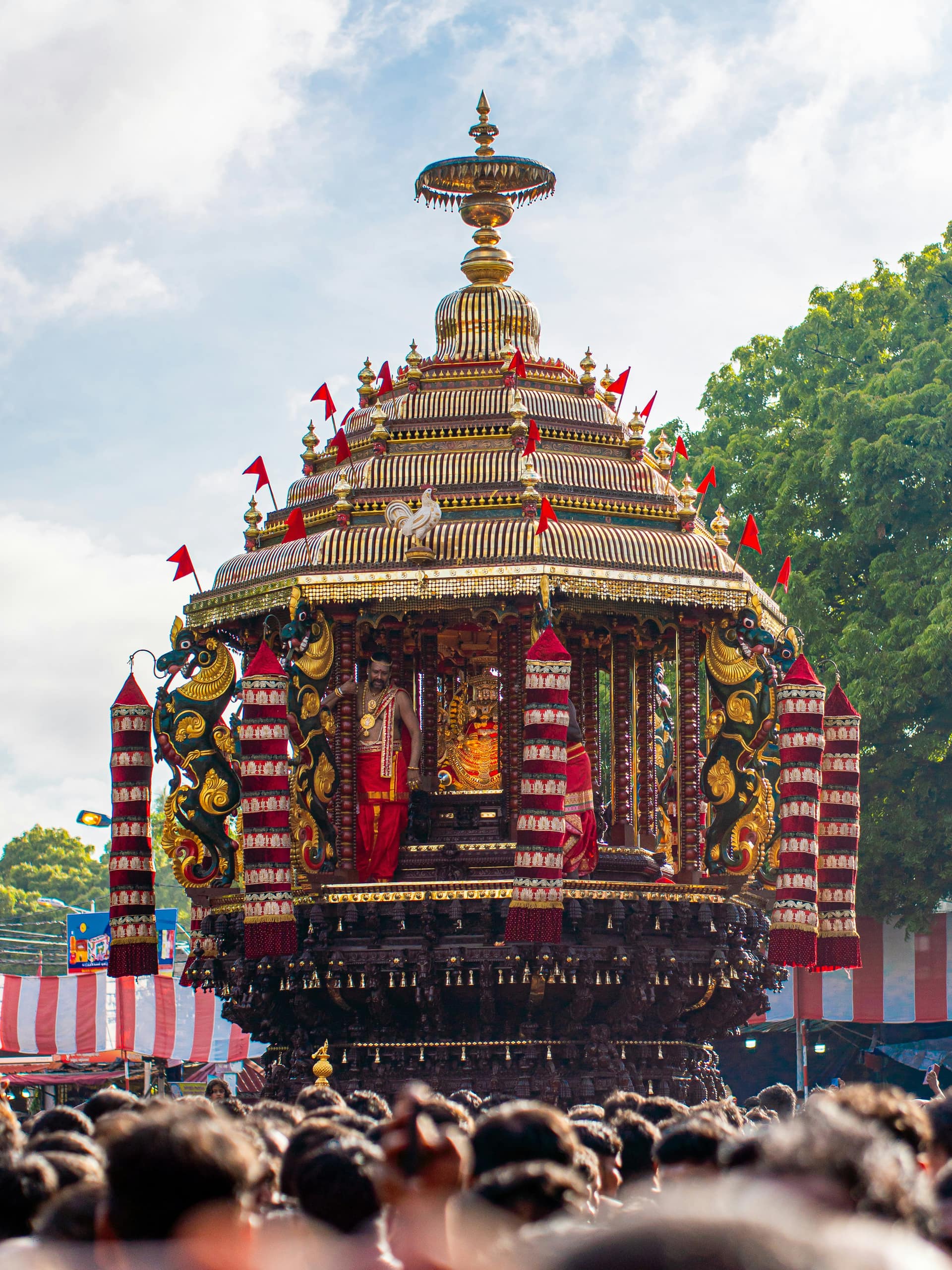
- →Nallur Kandaswamy Kovil, and its twenty-five day festival in July to September.
The east coast
The east runs on the opposite season to the south, which is precisely why first-time itineraries miss it: a December visit to Sri Lanka cannot include it. From May to September, Trincomalee and Nilaveli offer the best beaches in the country, with Pigeon Island providing the only genuinely world-class reef snorkelling on the island.
South of there, Pasikudah's reef-protected bay is shallow enough to wade a hundred metres, Batticaloa is a lagoon city with a Dutch fort and the singing fish tradition, and Arugam Bay has the long right-hand point break that draws surfers from across Asia. Kumana National Park, next to Yala but with almost no jeeps, closes the run.
- →The east coast season runs May to September, the reverse of the south.
- →Nilaveli and Uppuveli: the widest, quietest beaches in the country.
- →Pigeon Island: the best reef snorkelling in Sri Lanka, with reef sharks.
- →Pasikudah, Batticaloa, Arugam Bay and Kumana complete the coast.
Sinharaja and the wet zone
Sinharaja Forest Reserve is a UNESCO World Heritage lowland rainforest holding the large majority of Sri Lanka's roughly 33 endemic bird species, plus endemic lizards, amphibians and the purple-faced langur. Its mixed-species feeding flocks are among the most studied in the world.
It is genuinely world-class and almost entirely absent from standard itineraries, largely because it requires two nights, a guide, and a willingness to deal with leeches. Anyone with an interest in wildlife beyond leopards and elephants should make it a priority. A guided night walk here is one of the most underrated experiences in the country.
- →UNESCO-listed lowland rainforest with most of Sri Lanka's endemic birds.
- →Mixed-species feeding flocks among the most studied anywhere.
- →Needs two nights, a specialist guide and leech socks.
- →The guided night walk is one of Sri Lanka's most underrated experiences.
Wilpattu instead of Yala
If Yala's jeep congestion was the disappointing part of your first trip, Wilpattu is the answer. It is Sri Lanka's largest national park at around 1,300 square kilometres, defined by its villus, natural sand-rimmed lakes, and it receives a fraction of Yala's traffic.
Sightings take longer and are less certain, and when they come they are usually yours alone. It is also the best park for sloth bears, particularly during the palu fruiting season around June and July when bears climb the trees to feed. For a returning visitor who has already had a leopard, that trade is clearly worth making.
- →Sri Lanka's largest national park, around 1,300 square kilometres.
- →A fraction of Yala's jeep traffic; sightings are typically uncrowded.
- →Best park for sloth bears, especially the June and July palu season.
- →Season runs roughly February to October, longer than Yala's.
The ancient sites nobody visits
Yapahuwa, a rock fortress north of Kurunegala that served briefly as capital in the thirteenth century, has one of the finest carved staircases in South Asia and you will often have it entirely to yourself. Avukana's twelve-metre standing Buddha, carved from living rock in the fifth century, takes forty minutes and is astonishing.
Mihintale, twelve kilometres from Anuradhapura, is where Buddhism arrived in Sri Lanka in the third century BCE and is a dawn climb of 1,840 steps. Ridi Vihara, Panduwasnuwara and the Sasseruwa Buddha near Avukana complete a genuinely rewarding quiet-heritage circuit that runs alongside the main Cultural Triangle route.
- →Yapahuwa: thirteenth-century rock fortress with an exceptional carved staircase.
- →Avukana: a twelve-metre standing Buddha carved from living rock in the fifth century.
- →Mihintale: where Buddhism arrived, 1,840 steps, best at dawn.
- →Ridi Vihara, Panduwasnuwara and Sasseruwa for a quiet-heritage circuit.
The rest of the list
Kalpitiya on the north-west coast for kitesurfing from May to September, dolphins from December to April, and the Bar Reef, Sri Lanka's largest coral system. Mannar and Adam's Bridge for baobabs, wild donkeys and a chain of sandbanks running towards India.
Riverston and the Knuckles for serious trekking and Mini World's End, a thousand-metre drop reached in twenty minutes from the road. Haputale and Lipton's Seat for tea country without Ella's crowds. Batticaloa's singing fish. Kirinda and the Great Basses. All of these are two or three hours from somewhere you have already been.
- →Kalpitiya: kitesurfing, dolphins and the Bar Reef.
- →Mannar and Adam's Bridge: baobabs, wild donkeys, sandbanks towards India.
- →Riverston: Mini World's End, a thousand-metre drop, twenty minutes from the road.
- →Haputale and Lipton's Seat: tea country without Ella's crowds.
How to structure a return trip
Pick the season first, because it determines whether you get the east and north or the south and hills. A May to September return trip should run Cultural Triangle, Jaffna, Trincomalee and Nilaveli, down the east coast to Arugam Bay, and out through Ella. A December to April return should run Sinharaja, Wilpattu, the quiet ancient sites, Haputale and the deep south.
Second trips also benefit from staying longer in fewer places. You have already done the circuit; you do not need to prove you can. Four nights in Nilaveli or three in Sinharaja will give you more than another set of one-night stops.
- →May to September: Cultural Triangle, Jaffna, the east coast, Arugam Bay.
- →December to April: Sinharaja, Wilpattu, quiet ruins, Haputale, deep south.
- →Stay longer in fewer places; you have already done the circuit.
- →Consider flying the Jaffna leg to save most of two days.
Planning it
The single best decision a returning visitor can make is to commit to one half of the island rather than repeating the loop with additions. The north and east together are a completely different country from the south-west, and they are best experienced as their own trip rather than as an appendix.
Lankan Stays & Trails plans returning-visitor itineraries around what you did not see, and will happily build a trip that never goes near Sigiriya.
Frequently asked questions
Where should I go on a second trip to Sri Lanka?
The north and east, which most first itineraries skip entirely: Jaffna and its islands, Trincomalee and Nilaveli, Pasikudah, Batticaloa and Arugam Bay. Beyond that, Sinharaja rainforest, Wilpattu instead of Yala, and quieter ancient sites such as Yapahuwa, Avukana and Mihintale.
Is Jaffna worth visiting in Sri Lanka?
Yes, particularly on a second trip. It is the most culturally distinct part of the country, Tamil-majority and Hindu, with its own cuisine built on palmyrah and tamarind, a landscape unlike the south, and islands including Delft with its wild ponies and coral walls.
What is there to do in Sri Lanka besides the Cultural Triangle?
The east coast beaches and Pigeon Island snorkelling from May to September, Sinharaja rainforest for endemic wildlife, Wilpattu for a quiet safari, Kalpitiya for kitesurfing and dolphins, Mannar and Adam's Bridge, and the Knuckles range for serious trekking.
Is Wilpattu better than Yala for a return visit?
For a returning visitor who has already seen a leopard, yes. Wilpattu is Sri Lanka's largest park with a fraction of Yala's jeep traffic, so sightings take longer but are usually yours alone. It is also the best park for sloth bears in the June and July palu season.
Where can you go in Sri Lanka with no tourists?
Yapahuwa rock fortress, the Sasseruwa Buddha, Ridi Vihara and Panduwasnuwara among the ancient sites; Mannar and Adam's Bridge in the north-west; Kumana National Park in the south-east; and Riverston in the Knuckles. All are within a few hours of well-known routes.
When should I return to Sri Lanka to see the east coast?
May to September, which is the east coast season and the reverse of the south. That window covers Trincomalee, Nilaveli, Pigeon Island, Pasikudah, Batticaloa and Arugam Bay, all of which are wet and largely closed between November and February.
How should I structure a second Sri Lanka itinerary?
Commit to one half of the island rather than repeating the loop with additions. Pick the season first, since it determines whether you get the east and north or the south and hills, and stay longer in fewer places rather than adding more one-night stops.