
Quick answer
Sunrise around Sigiriya is cooler, often clearer and leaves the whole day free, but needs a 4.30 to 5 am start and a climb in the dark. Sunset lights Sigiriya rock gold from the west, needs no early alarm and is often less crowded, but is hotter and ends with a descent at dusk. Photographers often prefer sunset for the lit rock; hikers and early risers prefer sunrise. With two nights, do one of each.
Key takeaways
- Sunrise gives a backlit, often misty rock; sunset lights the rock's western face directly.
- Sunrise is cooler and generally clearer; sunset is warmer and hazier.
- Sunrise is busier on Pidurangala in the high season; sunset is usually calmer.
- Sunrise needs a start of about 4.30 to 5 am; sunset needs a torch for the descent.
- With two or more nights in Sigiriya, seeing both is the simplest answer.
Light on the rock
Light on the rock is the clearest difference between sunrise and sunset around Sigiriya. At sunrise, the sun comes up in the east, to the left of Sigiriya as seen from Pidurangala and behind it from many hotels. The rock is backlit or side-lit, often dark against a pastel sky, with mist in the forest below.
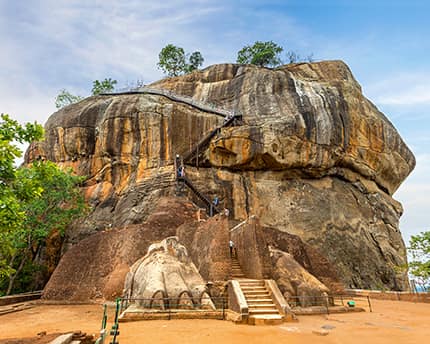
At sunset, the sun is low in the west, behind Pidurangala's summit and behind most viewpoints to the north and west. It lights Sigiriya's western face directly, and the granite turns gold, then orange. Shadows stretch across the forest and the gardens at the base.
Neither is better in itself. Sunrise is moodier and more atmospheric; sunset shows the rock's shape and colour.
- →Sunrise: silhouettes, mist and pastel skies.
- →Sunset: lit granite, gold and orange tones.
- →Both: short twilight, about 20 to 25 minutes.
Heat and weather
Heat and weather favour sunrise around Sigiriya. Dawn is the coolest part of the day, and the air is often clearer before dust and haze build. In the hottest months, roughly March to May, a sunrise climb is much more comfortable than a late-afternoon one.
Sunset climbs start in the warmest part of the late afternoon. The rocks have absorbed the day's heat, and the forest can feel close and still. Afternoon thunderstorms are also more likely in March, April and the wetter months from October, which can cancel a sunset.
In the cooler, clearer months from December to February, sunset is comfortable and the haze is lighter.
Crowds and atmosphere
Crowds and atmosphere differ too. Sunrise on Pidurangala is the busiest time on the rock from December to April, with queues at the scramble and a full summit. Sunset is usually calmer, as many tour groups leave the area by mid-afternoon.
The atmosphere is different as well. Sunrise is quiet and expectant, with people waiting in the dark. Sunset is more relaxed and social, with people sitting in small groups as the heat fades and the birds start their evening calls.
- →Sunrise: busier in the high season, quieter atmosphere.
- →Sunset: calmer, more social.
- →Both: quieter from May to November.
Effort and logistics
Effort and logistics usually decide the question. Sunrise means an alarm at about 4.30 to 5 am, a tuk-tuk booked the night before and a climb in the dark with a head torch. Many people find the early start the hardest part.
Sunset means no early alarm and a climb in daylight, but the descent comes at dusk. You need a torch for the lower forest path and a tuk-tuk waiting at the temple, as walking unlit roads after dark is unwise because of elephants.
- →Sunrise: early alarm, climb in the dark, descent in daylight.
- →Sunset: daylight climb, descent at dusk.
- →Both: tuk-tuk booked in advance.
How each fits your day
How each fits your day is often the deciding factor. A sunrise leaves the whole day free: Sigiriya at opening, a safari in the afternoon, a cooking class. A sunset fills the end of the day but leaves the morning for Sigiriya rock at opening or a lie-in.
On arrival days, sunset works best, especially if you reach Sigiriya by mid-afternoon. On departure days, sunrise works if you leave after breakfast. On a single full day, Sigiriya at opening and Pidurangala at sunset avoids two climbs in one morning.
Your energy matters too. Travellers with jet lag often wake early anyway, which makes the first sunrise easy.
- →Arrival day: sunset.
- →Departure day: sunrise, if leaving after breakfast.
- →One full day: Sigiriya at opening, Pidurangala at sunset.
How to choose
How to choose between sunrise and sunset around Sigiriya depends on who you are. Photographers who want the rock lit should choose sunset; those who want mist and silhouettes should choose sunrise. Families with young children usually prefer sunset or an easy sunrise from the tank bund. Couples often enjoy the quieter sunset. Keen hikers enjoy the dark climb at sunrise.
The best answer is both. With two or three nights, Lankan Stays & Trails guests usually take sunset on arrival day and sunrise on a later morning.
Frequently asked questions
Is sunrise or sunset better at Sigiriya?
Both are good, for different reasons. Sunrise is cooler, clearer and leaves the day free, but needs an early start. Sunset lights Sigiriya rock gold and is calmer, but is hotter and ends at dusk. With two nights, many travellers see one of each.
Which is better for photography, sunrise or sunset at Sigiriya?
Sunset is better for photographs of the lit rock, as the sun lights Sigiriya's western face directly. Sunrise is better for moody silhouettes, mist in the forest and colourful skies. Keen photographers usually try both from Pidurangala on different days.
Is Pidurangala less crowded at sunset?
Usually, yes. Many tour groups leave the Sigiriya area by mid-afternoon, so sunset is often calmer than sunrise. In the high season from December to April, the summit is still busy at sunset, but queues at the scramble are shorter.
Is it hotter at sunset than sunrise around Sigiriya?
Yes. Dawn is the coolest part of the day, while late afternoon follows the day's heat, with warm rock and still forest. In the hottest months, roughly March to May, sunrise is much more comfortable for climbing.
Which is better with children, sunrise or sunset?
Sunset usually suits children better, as it avoids a 4.30 am alarm. An easy sunrise from the Sigiriya tank bund or a hotel terrace is a good alternative. If you climb Pidurangala at sunset with children, carry head torches for the descent.
Can I see both sunrise and sunset at Sigiriya in one day?
Yes, but it makes a long day. A more comfortable pattern is sunset on one day and sunrise on another. If you have only one full day, climb Sigiriya at opening and Pidurangala at sunset, resting in between.
Does the weather favour sunrise or sunset at Sigiriya?
Generally sunrise. Mornings are usually clearer and drier, while afternoon thunderstorms are more likely in March, April and from October to December. From December to February, both sunrise and sunset are often clear.