
Quick answer
January is one of the best months for snorkelling and diving on Sri Lanka's south and west coasts, with calm seas, warm water of about 27 to 28°C and good visibility. Hikkaduwa, Unawatuna, Jungle Beach and the Weligama area are top choices, with reefs, wrecks and turtles. The east coast, including Pigeon Island and Trincomalee, is out of season until about May.
Key takeaways
- The south and west coasts are in season in January.
- Water is warm, about 27 to 28°C.
- Visibility is usually best in the morning.
- Wrecks near Galle and Hikkaduwa suit divers.
- Pigeon Island and the east coast are out of season.
Why January works
The north-east monsoon brings rough seas to the east coast in January, but it leaves the south and west sheltered and calm. Visibility improves through December and is usually good by January, especially in the morning before the wind picks up.
Water temperatures of about 27 to 28°C mean most snorkellers do not need a wetsuit, though divers often wear a thin shortie for comfort on longer dives.
Dive centres on the south and west coasts are fully open in January, with daily trips and courses for beginners.
- →Calm, sheltered south and west.
- →Good morning visibility.
- →Warm water, about 27 to 28°C.
Best snorkelling spots
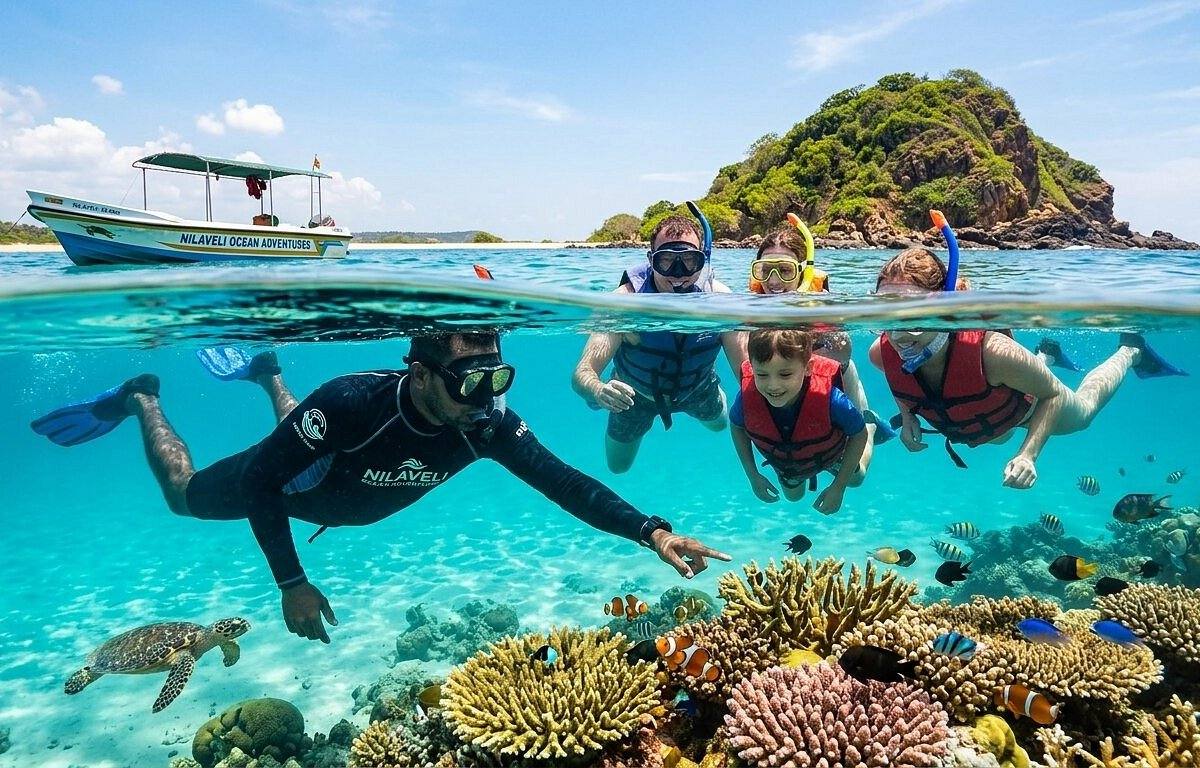
Hikkaduwa's coral reef, protected as a marine sanctuary, is close to the shore and full of fish. Green turtles often feed in the shallows nearby, though they should never be fed or touched.
Unawatuna's bay and nearby Jungle Beach offer calm water with coral and fish. Dalawella, a little further east, has rock pools and occasional turtles.
Polhena, near Matara, has a shallow lagoon protected by a reef, ideal for beginners and children. Mirissa's Secret Beach also has clear water and small coral areas.
- →Hikkaduwa reef and turtles.
- →Unawatuna and Jungle Beach.
- →Polhena lagoon for beginners.
Best dive sites
Hikkaduwa has several dive sites, including reefs and wrecks such as the Conch, an oil tanker that sank in the early twentieth century and is now home to marine life.
Unawatuna and Galle have reef sites and wrecks, with dive centres offering trips for all levels. Weligama and Mirissa have offshore rocks and reefs with schools of fish, rays and sometimes reef sharks.
Lankan Stays & Trails works with licensed dive centres on the south coast and can arrange courses or guided dives as part of a January beach stay.
Kalpitiya, on the north-west coast, has the Bar Reef, one of Sri Lanka's largest coral reefs. In January, calm seas make trips possible, and dolphins are often seen on the boat ride out. It suits travellers combining diving with dolphin watching.
Out of season: the east coast
Pigeon Island near Nilaveli, one of Sri Lanka's best-known snorkelling sites, is out of season in January. The sea is rough, and boats may not run.
Trincomalee's dive sites, including wrecks and reefs, are also out of season. The east coast diving season runs roughly from May to September.
Plan any east coast diving for the summer months, when the south coast is in turn rough under the south-west monsoon.
- →Pigeon Island closed for the season.
- →Trincomalee dive sites out of season.
- →East coast: May to September.
Safety and reef care
Snorkel in calm, protected areas, and avoid swimming alone. Currents can form even on calm days. Ask local dive centres about the best spots and times.
Never stand on coral, touch marine life or feed fish and turtles. Use reef-safe sunscreen, which is better for the coral, and wear a rash vest to protect your back from the January sun.
Choose licensed dive centres with qualified instructors, well-maintained equipment and clear safety briefings.
Turtles are a special attraction in January, and some operators encourage feeding them to guarantee photos. Choose operators who let turtles behave naturally. Watching from a respectful distance gives longer, calmer encounters and protects the animals.
- →Snorkel in calm, protected areas.
- →No touching or feeding.
- →Licensed dive centres only.
Gear and practicalities
Snorkelling gear can be hired in all the main beach towns, but bringing your own mask ensures a good fit. Fins with booties or reef shoes protect your feet.
Dive centres provide full equipment. Bring your certification card and logbook if you are already qualified.
Morning sessions offer the best visibility. Afternoon wind can make the water choppy and cloudy, especially at exposed sites.
- →Bring your own mask if possible.
- →Fins with booties or reef shoes.
- →Morning sessions are best.
Frequently asked questions
Is January good for snorkelling in Sri Lanka?
Yes. January is one of the best months for snorkelling on the south and west coasts, with calm seas, warm water and good visibility. Hikkaduwa, Unawatuna, Jungle Beach and Polhena are top spots. The east coast, including Pigeon Island, is out of season.
Can I dive at Pigeon Island in January?
No. Pigeon Island and the Trincomalee dive sites are out of season in January because of rough seas under the north-east monsoon. The east coast diving season runs roughly from May to September. Dive on the south and west coasts instead.
Where is the best diving in Sri Lanka in January?
Hikkaduwa, Unawatuna, Galle, Weligama and Mirissa offer the best diving in January, with reefs, wrecks and good visibility. Licensed dive centres run daily trips and courses for beginners. Mornings usually have the best conditions.
Do I need a wetsuit in Sri Lanka in January?
Most snorkellers do not, since the water is about 27 to 28°C. Divers often wear a thin shortie or rash vest for comfort on longer dives. A rash vest is also useful for sun protection while snorkelling in the strong January sun.
Can I see turtles while snorkelling in January?
Yes, often. Green turtles feed in the shallows at Hikkaduwa and are sometimes seen at Unawatuna, Dalawella and Mirissa. Keep your distance, do not touch them and avoid feeding them, which disrupts their natural behaviour and diet.
Can beginners learn to dive in Sri Lanka in January?
Yes. January is a good month to learn, with calm water and good visibility on the south and west coasts. Licensed dive centres in Hikkaduwa, Unawatuna and Weligama offer beginner courses and try-dives with qualified instructors.
Is Kalpitiya good for diving in January?
Yes. Kalpitiya's Bar Reef can be reached in calm January conditions, and the season roughly matches the dolphin-watching season from November to April. It is more remote than the south coast, so plan a few nights there and check conditions with local operators.