
Quick answer
February is one of the best months for snorkelling and diving on Sri Lanka's south and west coasts. Seas are calm and visibility is often 10 to 15 metres or more. Hikkaduwa and Unawatuna have reefs close to shore with turtles and reef fish. Dive centres offer trips to reefs and wrecks, including the Conch near Hikkaduwa and wrecks off Galle and Weligama. The water is around 27 to 28°C. Pigeon Island and the east coast reefs are better from about May to September.
Key takeaways
- February is in season for the south and west coasts.
- Visibility is often 10 to 15 metres or more on calm days.
- Hikkaduwa and Unawatuna have reefs close to shore with turtles.
- Wreck diving is a highlight, including the Conch near Hikkaduwa.
- Pigeon Island and the east coast are better from about May.
The south and west coast season
The south and west coasts are sheltered from the north-east monsoon and enjoy calm seas from about November to April. February is one of the calmest months, with good visibility and warm water around 27 to 28°C.
Visibility varies with conditions but is often 10 to 15 metres or more on the best days. Mornings are usually clearest, before the wind picks up.
The east coast season, including Trincomalee and Pigeon Island, runs from about May to September. In February the sea there can be choppy and murky.
Plankton and river run-off can reduce visibility on some days, even in February. Dive centres choose sites according to conditions each morning, so staying flexible and diving with local operators gives the best results.
- →South and west: November to April.
- →Visibility: often 10 to 15 metres or more.
- →East coast: May to September.
Best snorkelling spots
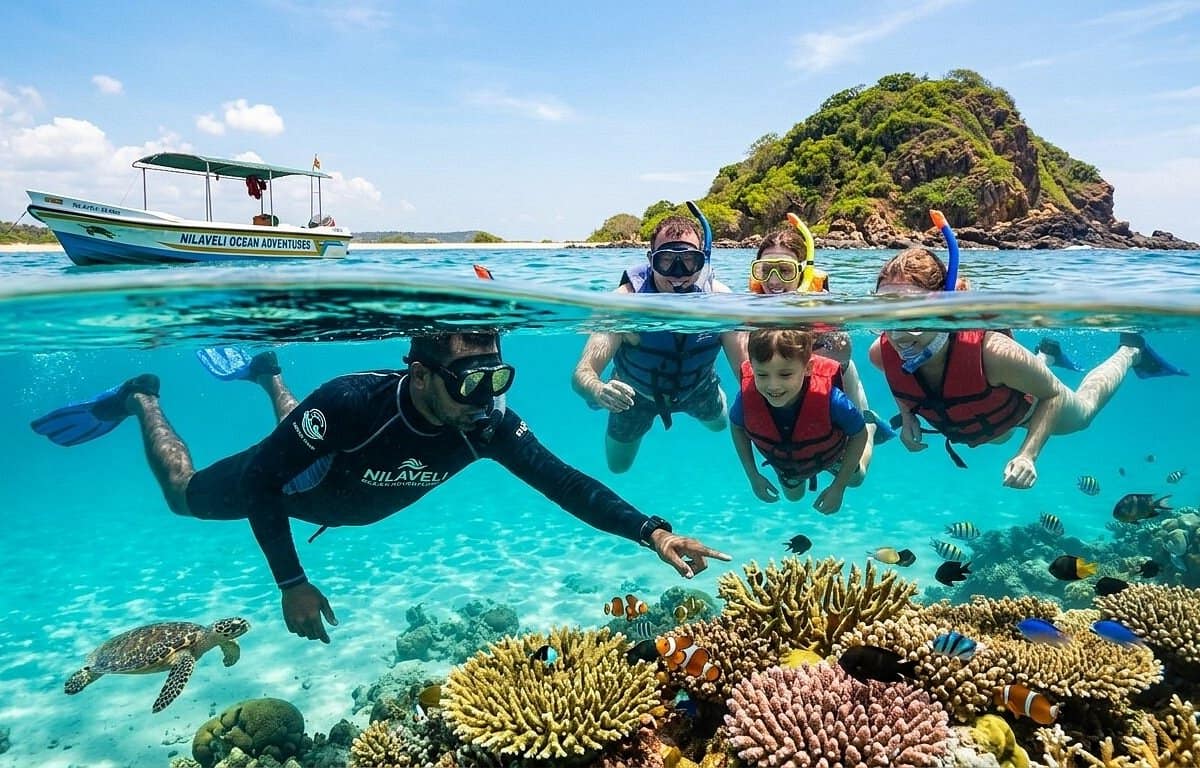
Hikkaduwa's protected reef, close to shore in the northern part of the beach, has fish, coral and sea turtles feeding in the shallows. It is the easiest place to snorkel with turtles in Sri Lanka.
Unawatuna has a reef at the western end of the bay, and Jungle Beach, nearby, has clear water and fish around the rocks. Coral Island near Polhena, close to Matara, is a shallow reef with turtles.
Secret Beach near Mirissa has a natural rock pool good for snorkelling on calm days.
- →Hikkaduwa: turtles and reef.
- →Unawatuna and Jungle Beach.
- →Polhena's Coral Island.
- →Secret Beach near Mirissa.
Diving sites
Hikkaduwa has the most dive centres on the south-west coast, with trips to reefs and wrecks. The Conch, a 19th-century oil tanker, lies in shallow water and is popular with beginners and experienced divers alike.
Unawatuna and Galle have dive centres offering trips to reefs and several wrecks in the area. Weligama and Mirissa offer dives on rocky reefs and wrecks, sometimes with turtles and reef sharks.
Courses for beginners, from try dives to open water certification, are available at most centres.
Dive centres usually run two boat dives each morning in February, returning before the wind rises in the afternoon. Many also offer night dives on the reef and specialty courses such as wreck diving, which suits Sri Lanka's waters particularly well.
- →The Conch near Hikkaduwa.
- →Wrecks off Galle and Unawatuna.
- →Reefs and wrecks off Weligama.
What you can see
Reef fish such as parrotfish, angelfish, butterflyfish and moray eels are common. Sea turtles, mainly green and hawksbill, are often seen around Hikkaduwa and Polhena.
Wrecks attract schools of fish, lionfish and occasionally reef sharks and rays. Coral health varies, as Sri Lanka's reefs have been affected by bleaching and damage.
Whales and dolphins are seen on boat trips from Mirissa, though snorkelling with them is not permitted.
Small creatures reward patient snorkellers and divers. Nudibranchs, cuttlefish, octopus and shrimp hide among the rocks and coral, and a slow swim along the edge of the reef often reveals more than a fast one across the middle.
Responsible snorkelling and diving
Do not touch or stand on coral, feed fish or turtles, or chase marine life. Use reef-safe sunscreen and avoid glass-bottom boats, which can damage reefs.
Choose dive centres with good safety records, certified instructors and well-maintained equipment.
The planners at Lankan Stays & Trails can arrange snorkelling or diving days with reputable operators on a February itinerary, usually based in Hikkaduwa or Unawatuna.
- →Do not touch coral or turtles.
- →Use reef-safe sunscreen.
- →Choose certified dive centres.
Frequently asked questions
Is February good for snorkelling in Sri Lanka?
Yes, on the south and west coasts. February brings calm seas and good visibility. Hikkaduwa, Unawatuna, Jungle Beach and Polhena are among the best spots. The east coast, including Pigeon Island, is better from about May to September.
Where can I snorkel with turtles in Sri Lanka?
Hikkaduwa is the easiest place, with turtles feeding in the shallows near the reef. Polhena's Coral Island, near Matara, also has turtles. Do not touch or feed them, and keep a respectful distance while snorkelling.
Is diving good in Sri Lanka in February?
Yes, on the south and west coasts. Seas are calm and visibility is good. Hikkaduwa, Unawatuna, Galle and Weligama have dive centres offering trips to reefs and wrecks. Courses for beginners are widely available.
Can I visit Pigeon Island in February?
Boat trips to Pigeon Island run mainly from about May to September, when the east coast sea is calm and clear. In February trips may be limited or not running, and visibility is often poor. The south coast is better in February.
What is the water temperature for diving in February?
Around 27 to 28°C. Most divers use a shorty or a thin full wetsuit for comfort on longer dives. Snorkellers need only a rash vest for sun protection. Water this warm also means no need for heavy gear in your luggage.
Do I need to be certified to dive in Sri Lanka?
No. Try dives for beginners are available at most dive centres, with an instructor in shallow water. Open water courses take about three to four days. Certified divers can join guided dives on reefs and wrecks.
Is snorkelling safe for children in Sri Lanka?
Yes, at calm, shallow spots such as Hikkaduwa's protected reef and Unawatuna's western end, with close supervision. Use well-fitting masks, buoyancy vests for younger children and reef shoes. Snorkel in the morning, when the sea is calmest, and avoid areas with boat traffic.